Online leak sealing equipment and tools are the clamps, enclosures, injection pumps, instruments, PPE and isolation devices a live-repair crew needs to stop a pressurised leak while the plant keeps running. The inventory is not a wish list; every item closes a specific failure path in the job.
This guide is written for maintenance superintendents, HSE leads and procurement officers who have to accept or reject a leak sealing contractor’s equipment manifest — often at the gate, at night, with the leak still running. It sets out the six categories a competent crew must carry, what each tool does, what happens when it is missing, and the two items whose absence should stop the job before a single bolt is turned.
What Is Online Leak Sealing Equipment and Tools?
Online leak sealing equipment and tools is the complete toolset a crew uses to build a temporary pressure boundary around a leak, inject sealant into it and verify the result, all without depressurising the line. It divides into six functional groups: clamps and enclosures that carry the pressure, injection pumps and their accessories, mechanical tools that prepare and tighten the installation, instrumentation that measures the job, PPE and safety equipment, and isolation and containment devices that bound the work. According to ASME PCC-2, the repair of in-service pressure equipment depends on a documented method statement, and the tool list is the physical evidence that the method statement can actually be executed. Formal industry standards covering this work are catalogued through the American Petroleum Institute standards library.
Why the Tool List Is a Safety Document, Not a Shopping List
A leak sealing manifest describes the pressure boundary that will be built. Every item maps to a hazard: the enclosure contains the jet, the pump delivers sealant at a controlled rate, the gauge proves the pressure, the detector proves the atmosphere, and the harness prevents a fall when the leak is on a rack. When a category is missing, the hazard is not removed — it is transferred to the technicians standing next to the leak.
Three consequences recur on site:
- Improvisation. A crew without the correct clamp adapts a wrong one, and a field-modified enclosure is an untested pressure boundary carrying live product.
- Blind injection. Without a readable gauge, sealant is pushed at whatever the pump will deliver, which can over-pressurise the enclosure or the pipe wall behind it.
- Atmosphere guesses. Without a gas detector, “it smells fine” becomes the flammable-gas control, and smell is not a measurement.
Buyers who treat the manifest as paperwork rather than engineering tend to discover the gap at the point of highest risk. The wider method families behind these tools are described under online leak sealing technology and methods. The safety framework that governs the crew itself is set out by bodies such as the UK Health and Safety Executive, whose permit-to-work and risk-assessment expectations map closely onto live-leak practice.
Clamps, Enclosures and Bands: The Pressure-Boundary Hardware
This is the category that actually holds the leak. Three sub-families cover most jobs.
- Box and plate clamps. Fabricated enclosures bolted or banded over a local defect — pitting, a pinhole, a short seam leak — with an injection port. They suit flat or gently curved surfaces where the surrounding plate is still close to full thickness.
- Flange and valve enclosures. Containment shells sized to a specific flange or gland, with sealant injected along the gasket path to rebuild the seal. The discipline is covered in detail under flange leak online sealing and valve online leak sealing.
- Bands and straps. Flexible or segmented enclosures used along a leaking seam or a run of pitting where a single box would concentrate stress at its edges. Bands need a sound substrate and correct bolt spacing.
The stock question is not “how many clamps” but “how many sizes and pressure ratings.” A manifest that lists ten clamps in two sizes will fail on the third line it meets, and the vehicle will have driven to the wrong site with the right idea.

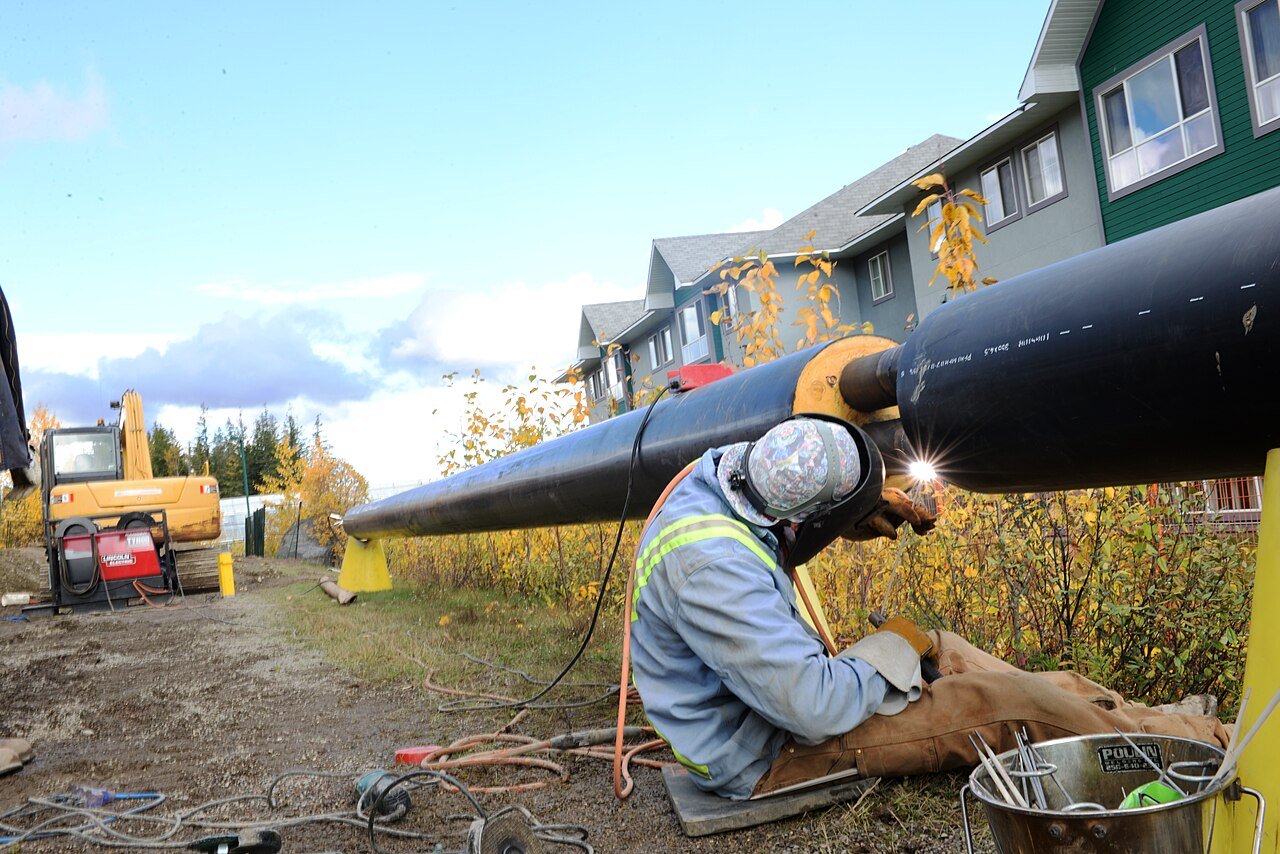
A completed repair on a pressurised pipe: the visible hardware is only the last step — behind it sit the clamp stock, the injection rig, the calibrated gauge and the gas detector that made the seal possible without a shutdown.
Injection Pumps and Accessories
The injection pump converts sealant from a cartridge or pail into a controlled pressure at the leak. Two properties matter more than brand or price.
- A pressure gauge readable from the operator position. The operator must be able to read the discharge pressure from the spot he stands in while the pump is running. A gauge mounted on the far side of the rig, or one obscured by the hose reel, is functionally absent at the moment it is needed.
- Controllable delivery. Manual, air-driven and hydraulic pumps differ in how finely the operator can hold a target pressure. High-pressure work calls for a pump whose stroke or air regulator allows small increments rather than coarse jumps.
Accessories are the items most often forgotten in the van: high-pressure hoses rated above the maximum injection pressure, spare relief fittings, quick-disconnect couplings compatible with the sealant port, a manifold to split flow to several injection points, and cleaning tools so a partially cured line does not block the next job. A blocked hose mid-injection forces the crew to stop, and a stopped injection leaves an open leak behind a partially seated enclosure. Sealant choice is a separate discipline — the chemistry must match fluid, temperature and gap size, as set out in the online leak sealing sealant selection guide — but the pump is what delivers it.

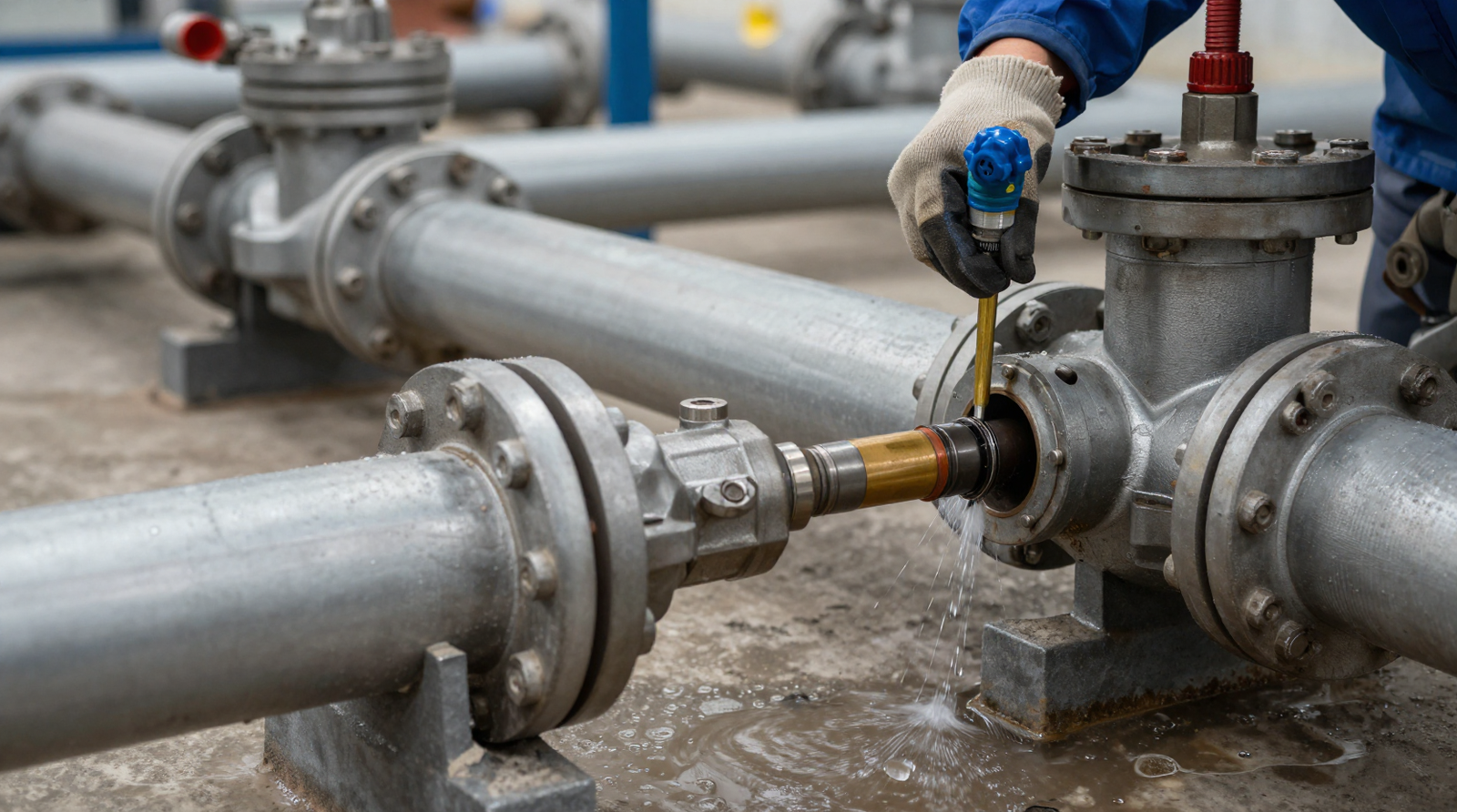
Live pipe repair in progress: the position of the injection rig, the hose runs and the operator’s sightline to the pressure gauge are all decided before sealant is introduced, because none of them can be changed once the injection has started.
The Complete Equipment Matrix
The table below is the working manifest. It is deliberately blunt about the consequence of each missing category, because that consequence is what justifies the weight carried in the vehicle.
| Category | Equipment | Function | Consequence if absent |
|---|---|---|---|
| Clamps and enclosures | Box clamps, plate clamps, flange and valve enclosures, bands and straps, spare gaskets | Forms the temporary pressure boundary around the leak point | No containment; the leak cannot be approached or sealed and the job aborts |
| Injection pumps and accessories | Manual, air-driven and hydraulic injection pumps, high-pressure hoses, manifold, couplings, relief fittings | Delivers sealant to the cavity at a controlled, measurable pressure | No injection possible, or uncontrolled delivery that over-pressurises the enclosure |
| Power and hand tools | Angle grinder, low-pressure or air drill, calibrated torque wrench, spanners, taps and dies | Prepares surfaces, adapts enclosures and tightens fasteners to specification | Enclosure fitted by guesswork; uneven bolt loads; sealant escapes at the joint |
| Instrumentation | Calibrated pressure gauges, infrared thermometer, LEL and H2S gas detectors | Measures injection pressure, surface temperature and the surrounding atmosphere | Blind injection; thermal limits exceeded; ignition or toxic exposure without warning |
| PPE and safety equipment | Chemical-resistant apron, face shield, gloves, fall-arrest harness, intrinsically safe radios | Protects against spray, heat, chemical and fall hazards during the work | Injuries from the first release; no voice contact between pump operator and enclosure |
| Isolation and containment | Plugs and blinds, drain and drip containment, absorbent, temporary seals and covers | Bounds the work area and controls the release if any step fails | Product spreads to drains; escalation from a contained leak into a reportable spill |
Read the last column as a risk register. Each line is a hazard a plant accepted when it awarded the job to that crew.
Power Tools and Torque Control
Power tools are chosen for the environment, not the workshop. Two rules apply on a live hydrocarbon, hydrogen or steam service.
- Low-pressure or air-driven drills and grinders. On a classified line, spark-capable tools are used only under a hot-work permit, or replaced with air tools and hand tools. Grinding a corroded flange face next to a leaking gasket needs its own risk assessment and a fire watch.
- Calibrated torque wrenches. An enclosure that is under-torqued leaks at the joint; one that is over-torqued distorts the gasket or cracks a casting. The wrench must carry a current calibration certificate, and the target torque must be written on the job card before the first bolt is tightened.
Hand tools still matter. Taps and dies cut a new thread when a bolt is seized, and a seized bolt on a flange enclosure is one of the most common mid-job problems a crew meets at 03:00.
Instrumentation: Pressure, Temperature and Gas Detection
Instrumentation is the smallest category by weight and the one most likely to stop a job.
- Pressure gauges. At minimum one gauge on the injection pump discharge, readable from the operator position, plus a gauge to confirm the line’s operating pressure independently. Every gauge must be in date for calibration.
- Infrared thermometer. Used to confirm the surface temperature at the leak and to check that the sealant’s rated service temperature covers it. A contact probe is a fallback where infrared readings are unreliable on shiny or insulated metal.
- Gas detectors. A portable combustible gas detector reading in percent LEL, and an H2S monitor where sour service is possible. The detector is worn at the breathing zone, not left on a bench, and it must be bump-tested before the shift begins.
Where a leak is on a high-pressure system rather than a low-pressure one, the instrument requirements tighten further; see high pressure leak sealing solution for the envelope that governs those jobs.

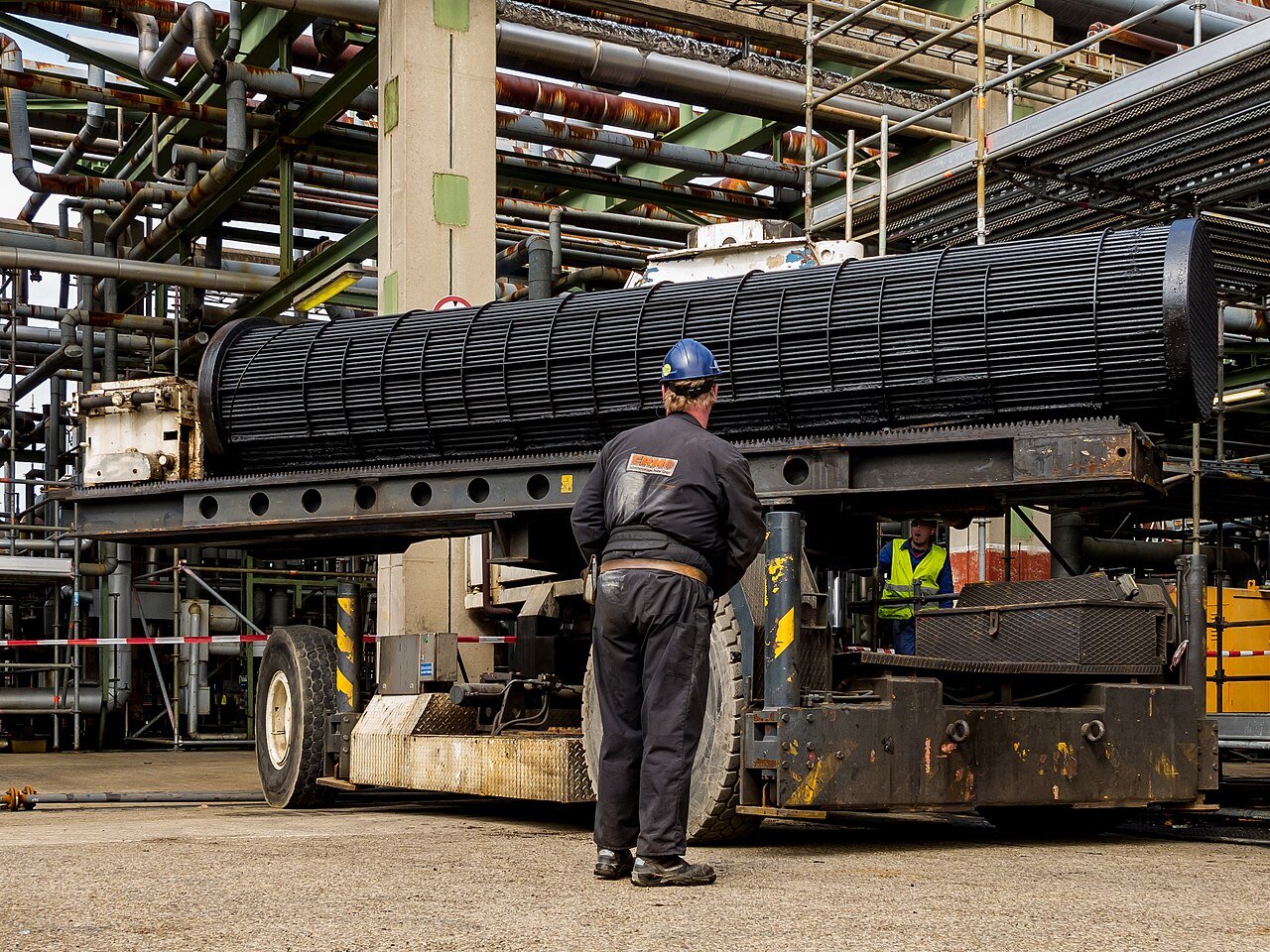
Refinery process units and interconnecting piping: on a site of this density, the instruments a crew carries — pressure gauges, IR thermometer and gas detectors — are what make a live injection a measured operation instead of an estimate.
Calibration Evidence: The Paperwork That Makes a Reading Real
A pressure gauge without a calibration certificate is a decorative dial. The same applies to the infrared thermometer and the gas detector. Calibration is what turns a number into evidence, and on a live leak the number is what the process engineer signs against.
- Calibration certificates on site. Certificates should be present in the crew’s document pack, not emailed later, with the instrument serial number matched to the physical device in the technician’s hand.
- Current within the calibration interval. Gauges, thermometers and detectors each carry their own interval; an expired certificate is treated the same as no certificate at all.
- Traceable, and where required accredited. The calibration should reference traceable standards, and instruments used for permit-critical gas testing may need an accredited laboratory behind them.
- Bump test before use. A gas detector that has not been bump-tested that shift is not a gas detector; it is a plastic box with a display, and it will not warn anyone.
This is also where national practice enters. In Indonesia, work on oil and gas installations sits inside the framework administered by Ditjen Migas, and instrument and permit requirements are typically written into the operator’s own HSE management system on top of that.
PPE and Safety Equipment for Live-Leak Work
PPE on a live leak is selected against the fluid, not against a generic checklist. Under OSHA and comparable frameworks, the employer must select PPE based on a hazard assessment — and a pressurised release is a hazard that reaches the face and body directly.
- Chemical-resistant apron and outer layer. For caustic, acid and solvent service, where a splash is more likely than a fire.
- Face shield over safety glasses. The eyes are the first target of a jet; a shield is a minimum, not an option.
- Heat-resistant clothing. For steam and hot-oil service, where the exposure is thermal rather than chemical.
- Fall-arrest harness. Wherever the leak is on a rack, a tank roof or an elevated pipe bridge. A harness is only useful with a rated anchor point identified before the climb, not after.
- Intrinsically safe communication. Radios rated for the classified zone, so the pump operator and the technician at the enclosure can talk directly without a runner relaying instructions through the noise.
The communication item is underrated. On a multi-point injection, the difference between a controlled seal and an over-pressure event is often one clear sentence between two people who cannot see each other.
Isolation and Containment Devices
Isolation devices are what keep a contained leak from becoming a spill. The kit includes plugs and blinds for connected small-bore lines, temporary seals for drains and vents, drip trays and absorbent under the work area, and a defined method for controlling any product that leaves the enclosure during fitting.
Where the leak is on a pipeline rather than a plant line, isolation and containment planning follows the discipline described in our pipeline emergency leak repair notes, which extend the same tool categories to long-distance transmission lines with additional pigging and station isolation checks. The point of the category is that a crew plans for a failed step, not only for a successful one.
Why a Crew Without a Calibrated Gauge and a Gas Detector Must Not Start
Two items are absolute. A crew that arrives without a calibrated pressure gauge and without a functioning gas detector must not begin work, and a client who allows the job to start is accepting a risk the contractor cannot manage.
- No calibrated gauge means no known injection pressure. Injection pressure acts on the enclosure and on the pipe wall behind it. Without a readable, in-date gauge, the crew cannot demonstrate that it stayed inside the agreed limit, and the process engineer’s written maximum becomes unverifiable in the field.
- No gas detector means no known atmosphere. Hydrocarbon vapour, hydrogen and H2S are not reliably detected by smell, and a live leak is exactly where concentrations change from minute to minute. Working without continuous monitoring is working blind at the point of highest consequence.
The refusal is the correct output, not an inconvenience. The same discipline that makes a vendor say no to an unsafe job is what makes the rest of its method statements credible; the crew-side safety expectations around this work are set out in detail in our guide to emergency leak online sealing technician safety.
How to Audit an Equipment Manifest Before You Award the Job
The manifest can be checked in an afternoon, and the check is worth more than a rate comparison, because it tests capability rather than price.
- Ask for the six categories by name. Clamps and enclosures; injection pumps and accessories; tools; instrumentation; PPE and safety; isolation and containment. A response that omits a category has answered the question for you.
- Request calibration certificates with serial numbers. Match each certificate to the instrument it covers and confirm the interval has not expired.
- Confirm the gauge is readable from the operator position. This is a design question about the injection rig, and it should be answered before mobilisation, not at the leak point.
- Check gas detector coverage. LEL, and H2S where sour service is credible, with a bump-test record for the current shift.
- Ask what the crew does if a category fails on site. A vendor with a spares strategy and a written stop-work rule is a different proposition from one that improvises under pressure.
- Tie the manifest to the job card. The equipment list should appear in the method statement alongside the maximum injection pressure and the torque values, as described in the emergency leak online repair solution checklist.
Good-practice guidance on equipment assurance and safe execution at hydrocarbon facilities is published by the International Association of Oil and Gas Producers, and it is a useful external benchmark when a vendor’s own documentation looks thin.
Key Takeaways
- Online leak sealing equipment and tools fall into six categories: clamps and enclosures, injection pumps and accessories, power and hand tools, instrumentation, PPE and safety, and isolation and containment devices.
- The injection pump must carry a pressure gauge the operator can read from the position he stands in; a gauge out of sight is a gauge that cannot control the job.
- Calibration certificates for every gauge, thermometer and detector belong on site with serial numbers matched, and an expired certificate is the same as no certificate.
- A crew arriving without a calibrated pressure gauge and a functioning gas detector must not start work — that refusal is the correct engineering output.
- Torque wrenches need current calibration and a written target torque; an under-torqued enclosure leaks and an over-torqued one distorts or cracks.
- Every missing tool category transfers a hazard to the technicians: improvisation, blind injection and atmosphere guesswork are the three predictable outcomes.
- Audit the manifest by category, by certificate and by spares strategy before awarding the job, because a rate comparison tests price rather than capability.
FAQ: Online Leak Sealing Equipment and Tools
What equipment does a live leak sealing crew bring?
A competent crew carries six categories: clamps and enclosures for the pressure boundary; injection pumps with high-pressure hoses, manifolds and couplings; power and hand tools including a calibrated torque wrench; instrumentation such as pressure gauges, an infrared thermometer and LEL and H2S detectors; PPE including chemical-resistant outerwear, face shield, harness and radios; and isolation and containment devices for drains and spill control.
Why must the injection pump have a readable pressure gauge?
Injection pressure acts directly on the enclosure and on the pipe wall behind it, so it is a pressure-boundary decision rather than a contractor preference. The operator has to hold the target pressure while watching the leak respond. A gauge he cannot see from his own standing position gives him no control, and the agreed maximum injection pressure becomes unverifiable.
How do I verify that instruments are properly calibrated?
Ask for calibration certificates to be present on site, not emailed afterwards, and match each certificate serial number to the physical instrument. Confirm the certificate is still inside its calibration interval. Gas detectors should also show a bump test from the current shift, because an untested detector will not warn anyone of a flammable or toxic atmosphere.
Can a crew start work without a gas detector?
No. A crew that arrives without a functioning gas detector, or without a calibrated pressure gauge, must not begin work. Hydrocarbon vapour, hydrogen and hydrogen sulphide are not reliably detected by smell, and concentrations at a live leak change minute by minute. Working without continuous monitoring is working blind at the point of highest consequence.
Which standards apply to leak sealing equipment and tools?
ASME PCC-2 frames the method statement and fitness-for-service basis for repairing in-service pressure equipment, and it requires the procedure to address the hazards of the repair itself. API publishes the standards library covering piping, tanks and valves, and in Indonesia operators also work within the regulatory framework administered by Ditjen Migas alongside their own HSE management system.
Leak still running and the plant is on limited time? Our response desk is staffed around the clock. Message the emergency team on WhatsApp or send a site brief with the line ID, medium, operating pressure and temperature, and we will confirm scope before mobilisation.
Conclusion
The equipment a crew brings is the most honest statement it makes about its capability. Clamps in the wrong sizes, a pump without a visible gauge, tools chosen for a workshop rather than a classified area, and instruments with expired certificates are all visible failures of preparation — and they are visible before the job starts, which is exactly when a buyer should look. A manifest that names all six categories, carries matched calibration certificates and includes a written stop-work rule describes a crew that can be trusted at the leak point.
For plants across Indonesia’s refining, petrochemical and terminal corridors, the practical step is to audit equipment before the emergency, not during it. Ask for the manifest by category, request the calibration evidence, and confirm how the crew handles a failed item on site. Where the answer is complete, mobilise with confidence; where it is not, the crew has already told you what will happen at 03:00. For a technical discussion of a specific live leak, or to review our own equipment and tool inventory against your site requirements, reach the emergency desk with the line ID, the fluid, and the operating pressure and temperature, and the scope can be confirmed before mobilisation.