Leak management program preventive sealing turns scattered emergency call-outs into a planned, risk-ranked maintenance routine. Instead of waiting for a flange to spray product across a pipe rack, the program records every known leak, scores it, and schedules the sealing work that can safely wait. The outcome is fewer midnight mobilisations, a lower total cost of containment, and a documented trail that holds up under inspection and safety audit.
This guide is written for maintenance managers, reliability engineers, turnaround planners and operations superintendents who own the leak backlog at refineries, petrochemical plants and process facilities in Indonesia. It explains how to build a leak register, how to score and rank leaks, how a four-quadrant decision model separates immediate work from work that can be planned, which key performance indicators actually prove the program is working, and what a credible first 90 days looks like. It assumes the reader already understands how online leak sealing services in Indonesia are executed, and focuses instead on how to govern them.
What Is a Leak Management Program?
A leak management program is the controlled process of finding, recording, ranking and resolving leaks across a plant on a planned basis rather than an emergency one. It treats every leak, from a weeping flange to failed valve packing, as a record with an owner, a risk score and a target date. Preventive sealing is the maintenance arm of that program: rather than sealing a joint only when it fails, the program schedules sealing work on known-degraded joints before they fail, ideally inside a window that costs no production.
The distinction matters because emergency sealing and planned sealing use broadly the same methods but carry very different economics. Emergency work is priced with a call-out premium, competes with every other outage activity and forces technical decisions under time pressure. Planned work is scoped from inspection data, executed in daylight with a full crew, and slotted into an existing outage. The same defect, handled in a planned window, removes the premium and the production loss from the equation entirely.
Why Reactive Sealing Fails as a Strategy
A purely reactive stance — seal it when it leaks — has three structural problems that no amount of contractor skill can fix.
- You lose the choice of timing. The leak decides when the work happens, not the planner. That guarantees the repair lands in the worst possible window, often at night or during a peak production period.
- The backlog grows silently. Without a register, no one can say how many leaks are currently contained by a temporary seal, how long each has been in place, or which ones are overdue for permanent repair. Unrecorded risk is unmanaged risk.
- Repeat failures are never diagnosed. When each leak is treated as an isolated event, the pattern that connects them — the same service, the same alloy, the same joint type — stays invisible. That pattern is usually the most valuable information on the site.
None of this means emergency leak online sealing is unnecessary. It means emergency response should be the exception that a program is designed to minimise, not the default operating mode. A plant with a mature program still keeps a response capability, but it uses it for the small number of leaks that genuinely cannot wait. The economics of that shift are examined in the analysis of emergency leak online sealing cost.

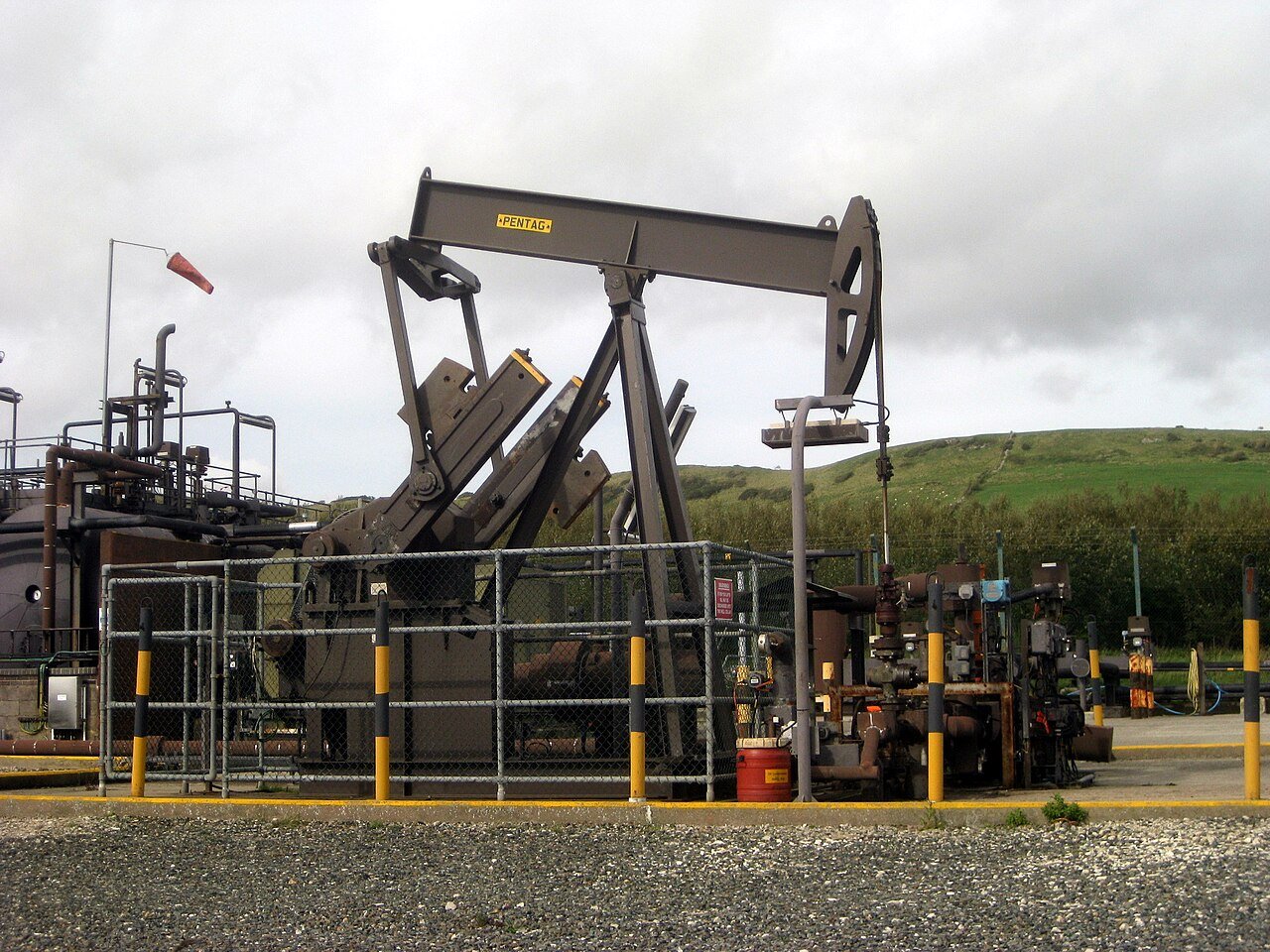
Wellheads and their valve stacks are a common source of recurring packing and flange leaks. A register captures each event so that the pattern, not just the individual leak, becomes visible.
Step 1: Build the Leak Register
The leak register is the backbone of the program. It is a single, maintained list of every known leak, whether currently active, temporarily sealed or recently repaired. A register that lives only in a shift logbook is not a register; it must be a controlled document with a revision history and a named owner.
At minimum, each record should carry the following fields, because each one drives a later decision:
- Unique identifier and asset tag — the line number, equipment tag and precise location so the same point can be found again without guesswork.
- Leak description — the component type (flange, valve gland, pipe wall, thermowell, nozzle) and the nature of the defect.
- Service data — fluid, operating pressure, operating temperature and the presence of hydrogen sulphide, hydrogen or other hazardous constituents.
- Observed leak rate — even a qualitative band such as weep, drip, steady stream or spray is enough to rank the item.
- Detection method and date — whether the leak was found by operator round, ultrasonic survey, gas detection or infrared thermography, and when.
- Containment status — uncontained, temporarily sealed, or permanently repaired, with the date of the last intervention.
- Consequence notes — proximity to ignition sources, occupancy of the area, and whether isolation is even possible without a shutdown.
Once the register exists, the backlog becomes finite and countable for the first time. Most sites that build one for the first time discover a larger number of temporary seals than anyone expected, and a smaller number of genuinely urgent ones.
Step 2: Assess and Rank Leak Risk
Ranking is where the program earns its value. The goal is not to rank by leak size, because a small leak of a toxic fluid can outrank a large leak of steam. Five factors should be assessed for every record, and they combine into a risk band.
| Risk factor | What to assess | Why it changes the ranking |
|---|---|---|
| Leak rate | Weep, drip, steady stream, spray or two-phase release | A spray can reach an ignition source metres away; a weep may persist safely for months |
| Fluid type | Toxicity, flammability, corrosivity, temperature and phase | A small leak of hydrogen sulphide or hydrogen is a far higher hazard than a larger water leak |
| Location | Congestion, elevation, proximity to ignition sources and occupied areas | A leak inside a congested module or above a hot surface is harder to reach and more dangerous |
| Access and isolation | Scaffolding, insulation, confined space, availability of an isolation point | If the line cannot be isolated, the repair method and the safety controls change completely |
| Consequence | Potential for fire, release to atmosphere, product loss, regulatory breach | Consequence sets the ceiling on how long a leak can be tolerated at all |
Ranking by these factors produces a defensible order of work. It also exposes the records that cannot be resolved by sealing at all, which is the subject of a later section.
The Four-Quadrant Decision Model
Once ranked, every leak should be assigned to one of four action quadrants. This is the operational heart of the program: it converts a risk band into a specific instruction with a deadline, so that the decision is made once, calmly, and not re-argued at every shift handover.
| Quadrant | Criteria | Action | Deadline |
|---|---|---|---|
| Immediate | Uncontained leak of a flammable, toxic or high-pressure fluid; spray reaching a hazard; leak rate increasing | Emergency online sealing or controlled shutdown; isolate and reduce inventory where possible | Same shift — hours |
| Planned | Contained or contained-able leak of moderate risk; isolation available; method proven for the service | Schedule preventive online sealing in the next available maintenance window | Within 30 to 90 days |
| Monitor | Low-rate weep of a low-hazard fluid; stable over successive surveys; low consequence | Trend at each round or survey; re-rank if rate or service conditions change | Review monthly |
| Replace at turnaround | Repair is technically possible live but permanent replacement is the correct fix; the component is due for renewal anyway | Add to the turnaround scope; apply a temporary seal only if conditions degrade | Next planned turnaround |
The value of the model is that it makes the trade-off explicit. A leak in the “planned” quadrant is not being ignored; it is being deliberately scheduled at a time when the work costs less and disrupts nothing. A leak in the “monitor” quadrant is not being left to chance; it has a defined review cycle and a trigger that moves it up. And a leak in the “replace at turnaround” quadrant is recognised for what it is — a component that has reached the end of its service life, where a temporary seal would only postpone the real fix.
Assigning quadrants also protects the response team. When an emergency call-out arrives, the register already tells the duty manager whether this is a known item that should have been scheduled, or a genuinely new defect. Both answers are useful, and both are invisible without a register. The end-to-end process behind every quadrant is set out in the emergency leak online repair solution guide.
A ranked register lets a maintenance planner move a known defect from the immediate column into the planned column, where the same sealing method is executed without an emergency premium.
Step 3: Schedule Planned Sealing
Planned sealing is not simply sealing that happens later. It is work that is scoped, resourced and sequenced in advance. Three conditions make it worthwhile:
- A technical method exists for the service. The defect geometry, pressure, temperature and fluid must fall inside the envelope of a proven online sealing method. If they do not, the item belongs in the turnaround scope, not the planned-sealing list.
- A window exists. Planned sealing can be done live, but it still needs a window with adequate access, permits and process stability. Bundling several seals into one mobilisation is where the real savings appear, because mobilisation is often a large share of the total cost.
- The permanent repair is also scheduled. A temporary seal is a postponement, not a resolution. Every planned seal should generate a follow-up entry that schedules the permanent fix — a joint replacement, a section renewal or an alloy upgrade.
Grouping work by area and by window is the practical lever. Ten separate call-outs across a year cost far more than one planned campaign that seals ten known joints in a single visit, using the same crew, the same equipment and one set of permits. The technical methods themselves are unchanged; only the timing and the packaging are improved, which is precisely the point of the program. The wider financial case is covered under leak repair cost and downtime reduction, while flange leak online sealing and valve online leak sealing show how planned work is scoped on the two most common component types.
Step 4: Measure With KPIs
A program without measurement decays into good intentions. Four indicators are enough to show whether preventive sealing is working, and each one is drawn directly from the register.
| KPI | What it measures | Direction of improvement |
|---|---|---|
| Emergency call-outs per year | How often the plant is forced into reactive sealing | Falling |
| Response time to emergency | Hours from report to crew on site for urgent leaks | Falling and stable |
| Repeat leaks at the same point | How many records return to the register at the same location | Falling, with each repeat escalated for root cause |
| Cost per leak | Total containment cost divided by the number of leaks resolved | Falling, as work migrates from emergency to planned |
Two of these deserve emphasis. Emergency call-outs per year is the headline number for management, because it translates directly into unplanned disruption. Repeat leaks at the same point is the headline number for engineering, because it is the signal that the program is treating symptoms instead of causes. Reported together, these four indicators tell a complete story: how often the plant is surprised, how fast it responds, whether it is learning, and what each resolution costs.
When a Leak Keeps Coming Back
A leak that recurs at the same point is not a sealing problem. It is a symptom. When a joint is sealed, holds for a period, and then leaks again at the same location, the repeated failure points to an underlying cause that a better seal will not fix: a design issue such as inadequate bolt load, a misaligned flange face, an unsuitable gasket for the service (a question addressed in the guide to online leak sealing sealant selection), thermal cycling beyond the joint’s design, or systemic corrosion thinning the wall or the component itself.
The correct response is escalation, not another seal. Recurring leaks should be raised to the materials and corrosion engineer, and to the process engineer who owns the service conditions, for a root-cause assessment. That assessment may conclude that the alloy is wrong for the fluid, that the operating envelope has drifted beyond design, or that a section of the system is corroding faster than the inspection interval assumed. Sealing the same point a third time, without that analysis, simply buys another interval and hides a developing problem.
This distinction is one of the clearest markers of a functioning program. A reactive organisation seals the same joint repeatedly and records nothing. A program-driven organisation records the second failure, flags it, and routes it to the people who can change the design or the material.

When a leak returns to the same point, the register should trigger a root-cause review by materials and process engineers, not a third temporary seal.
Connecting the Program to LDAR and API 570
Preventive sealing does not exist in isolation. It sits alongside two established disciplines that already generate the data a program needs.
Leak detection and repair (LDAR) is the systematic survey and repair of fugitive emissions, historically driven by environmental regulation. LDAR programs already walk components with detection instruments, tag them, and record findings. That data is a ready-made input to the leak register: a component flagged by an LDAR survey is a candidate for the monitor or planned quadrant, and the survey interval provides the review cycle the monitor quadrant needs.
API 570, the standard for in-service inspection of process piping published by API, provides the condition data that turns sealing from a guess into a plan. Under an API 570 inspection program, wall thickness is measured and trended, and remaining life is estimated. A joint or section approaching its calculated retirement thickness can be moved into the planned or turnaround quadrant long before it leaks. The inspection findings and the leak register should therefore share the same asset tags, so that a thinning trend and a leak history meet on the same record, with the corrosion interpretation supported by bodies such as AMPP.
The same logic applies to related inspection regimes for other asset types, and to the international repair and composite standards that govern how live sealing is designed and executed. Where a temporary seal is installed to a recognised post-construction repair standard such as those published by ASME, the program gains an auditable engineering basis rather than an undocumented intervention. Facilities operating under Indonesian upstream oversight should also keep the register aligned with the reporting and safety expectations of Ditjen Migas, and with the process-safety principles set out by OSHA for work on live hydrocarbon systems.
The First 90 Days
A program does not need a full year to prove itself. The first 90 days should be structured to produce visible results quickly, while building the register that everything else depends on.
- Days 1 to 15 — inventory. Walk the plant and compile every known leak into a single register. Include temporary seals, operator reports, LDAR findings and inspection notes. Name a single owner for the register.
- Days 16 to 30 — rank. Apply the five risk factors to every record and assign each one to a quadrant. Identify the immediate items first; these are the only ones that need action this month.
- Days 31 to 60 — act on the immediate and the quick wins. Resolve the immediate quadrant. Then pick a small set of planned items that share an area or a window and bundle them into one mobilisation, so the saving from grouping is demonstrated early.
- Days 61 to 90 — set the cycle. Establish the review rhythm: monthly re-ranking, a defined escalation path for repeat leaks, and the four KPIs reported to management. Agree the format in which planned sealing work is handed to contractors.
By the end of 90 days, the plant should be able to state, without qualification, how many leaks it has, which are urgent, which are scheduled, and what the trend is. That single capability is the foundation for every efficiency the program delivers afterwards.
Key Takeaways
- A leak management program converts an unbounded emergency problem into a finite, ranked, scheduled backlog.
- The leak register is the foundation; without it, risk is invisible and repeat failures go undiagnosed.
- Rank leaks by rate, fluid, location, access and consequence — not by leak size alone.
- The four-quadrant model (immediate, planned, monitor, replace at turnaround) turns a risk score into a specific action with a deadline.
- Planned sealing saves money because mobilisation is grouped and the emergency premium disappears.
- A leak that recurs at the same point signals a design or systemic corrosion issue and must be escalated to a materials engineer, not sealed again.
- Four KPIs — emergency call-outs, response time, repeat leaks and cost per leak — are enough to prove the program works.
FAQ: Leak Management Program Preventive Sealing
What is a leak management program?
A leak management program is a controlled process for finding, recording, ranking and resolving leaks across a plant on a planned basis. It keeps a register with an owner and a risk score for every record, assigns each leak to an action quadrant, and schedules preventive sealing in maintenance windows rather than reacting to failures. The goal is fewer emergency call-outs, lower containment cost and an auditable trail.
How does preventive sealing differ from emergency sealing?
The sealing methods are often the same; the difference is timing and economics. Emergency sealing is mobilised after a leak becomes urgent, carrying a call-out premium, safety pressure and production risk. Preventive sealing is scoped from inspection data and executed in a planned window, with grouped mobilisation. Planned work costs less per seal and disrupts nothing, which is why the program aims to migrate work into it.
What should a leak register contain?
Each record should carry a unique identifier, the asset tag and precise location, a description of the component and defect, the service data (fluid, pressure, temperature, hazardous constituents), an observed leak rate band, the detection method and date, the containment status, and consequence notes. The register must be a controlled document with a revision history and a named owner, not a shift logbook.
Why is a repeated leak at the same point a warning sign?
Because a second failure at the same location points to an underlying cause that sealing cannot fix — misalignment, inadequate bolt load, a wrong gasket, thermal cycling or systemic corrosion. Sealing it again only postpones the problem. A recurring leak should be escalated to materials and process engineers for a root-cause assessment, and the finding should change the design, the material or the inspection interval.
Which KPIs show a leak management program is working?
Four indicators are sufficient: emergency call-outs per year, which should fall; emergency response time, which should fall and stay stable; repeat leaks at the same point, which should fall as root causes are addressed; and cost per leak, which should fall as work moves from emergency to planned. Reported together from the same register, they show whether the plant is being surprised less often and learning from each event.
Leak still running and the plant is on limited time? Our response desk is staffed around the clock. Message the emergency team on WhatsApp or send a site brief with the line ID, medium, operating pressure and temperature, and we will confirm scope before mobilisation.
Conclusion
Moving from reactive to preventive sealing is a management decision before it is a technical one. The methods already exist and are already proven; what changes is when and why they are used. A leak register makes the backlog visible, a risk ranking makes it orderable, and a four-quadrant model makes the response repeatable instead of improvised. Each of those steps is inexpensive compared with the cost of a single unplanned outage.
The plants that get the most from preventive sealing are the ones that treat the register as a living document and the repeat leak as a diagnostic signal rather than an inconvenience. Record every leak, rank it honestly, schedule what can wait, escalate what recurs, and measure the four indicators that matter. Within a single operating cycle, the reduction in emergency call-outs and in cost per leak will be visible, and the program will have paid for itself.