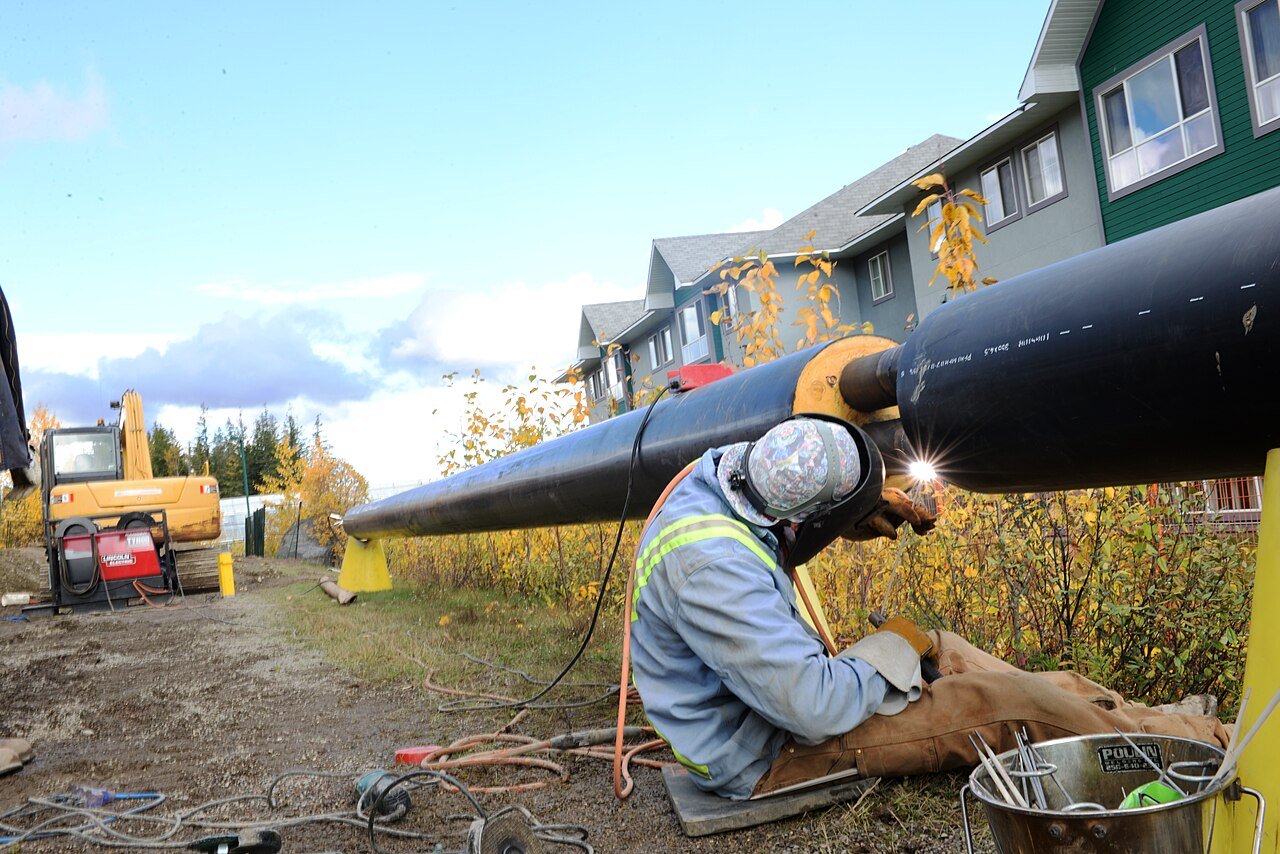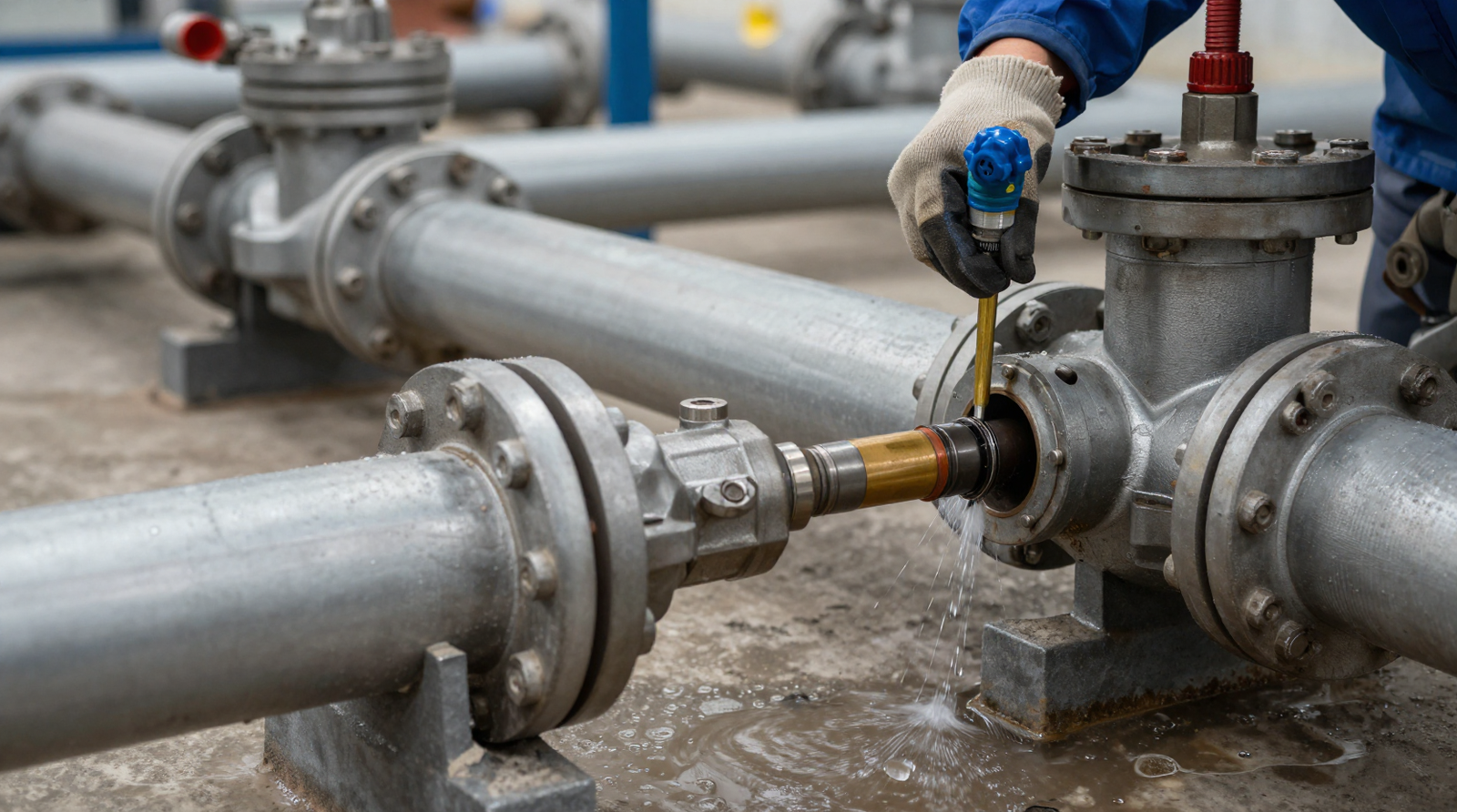
Emergency leak online sealing Surabaya is live leak repair performed on pressurised piping, flanges, valves, storage tanks and process equipment across East Java’s industrial corridor — Gresik, Surabaya, Sidoarjo, Tuban and Probolinggo — without shutting the unit down, depressurising the line or breaking containment. A specialist crew fits an engineered enclosure over the leak path and injects sealant under controlled pressure until the leak is stopped while the plant stays in production.
This guide is written for maintenance managers, process engineers, HSE officers and procurement teams at refineries, petrochemical complexes, fertiliser plants, smelters, power stations and fuel terminals across East Java. It explains what online sealing is, why the Gresik–Surabaya–Tuban corridor is a difficult place to take a unit down, how a call-out runs hour by hour, and how to screen a contractor before you need one at two in the morning.
What Is Emergency Leak Online Sealing?
Online leak sealing is a family of techniques that stop an active leak on a system that remains in service. Rather than isolating, draining and purging, the repair is built around the leak: a clamp, box enclosure or injection ring is fitted over or around the defective area, and a sealing compound is forced into the cavity between the enclosure and the parent surface. The compound cures in place and forms a pressure-tight barrier. The engineering basis for clamps, enclosures and composite repairs on pressure equipment is set out under ASME PCC-2.
The word “online” is load-bearing. It means full operating pressure, full flow and full temperature at the moment of the repair — which is why the method exists: in a refinery, fertiliser complex or power station, the cost of stopping a unit normally dwarfs the cost of the repair itself.
In East Java practice, online sealing covers five recurring families of work:
- Flange and bolted joint injection — sealant is injected into the gasket annulus to rebuild a gasket that has lost seating through thermal cycling or bolt relaxation.
- Mechanical clamp sealing — a fabricated steel clamp with controlled bolt torque is fitted over a local defect such as a pinhole, pit or short crack.
- Box or coffin enclosure — a fabricated enclosure wraps complex geometry such as tees, elbows, branch connections, valve bodies or pump casings.
- Valve gland, bonnet and stem sealing — packing or injection work on valves that cannot be isolated because there is no usable upstream block valve.
- Composite wrap repair — engineered composite applied over thinned wall to ISO 24817 or ASME PCC-2 principles, where the defect is general wall loss rather than a discrete hole.
For the full method family and its limits, see the emergency leak online sealing reference page.

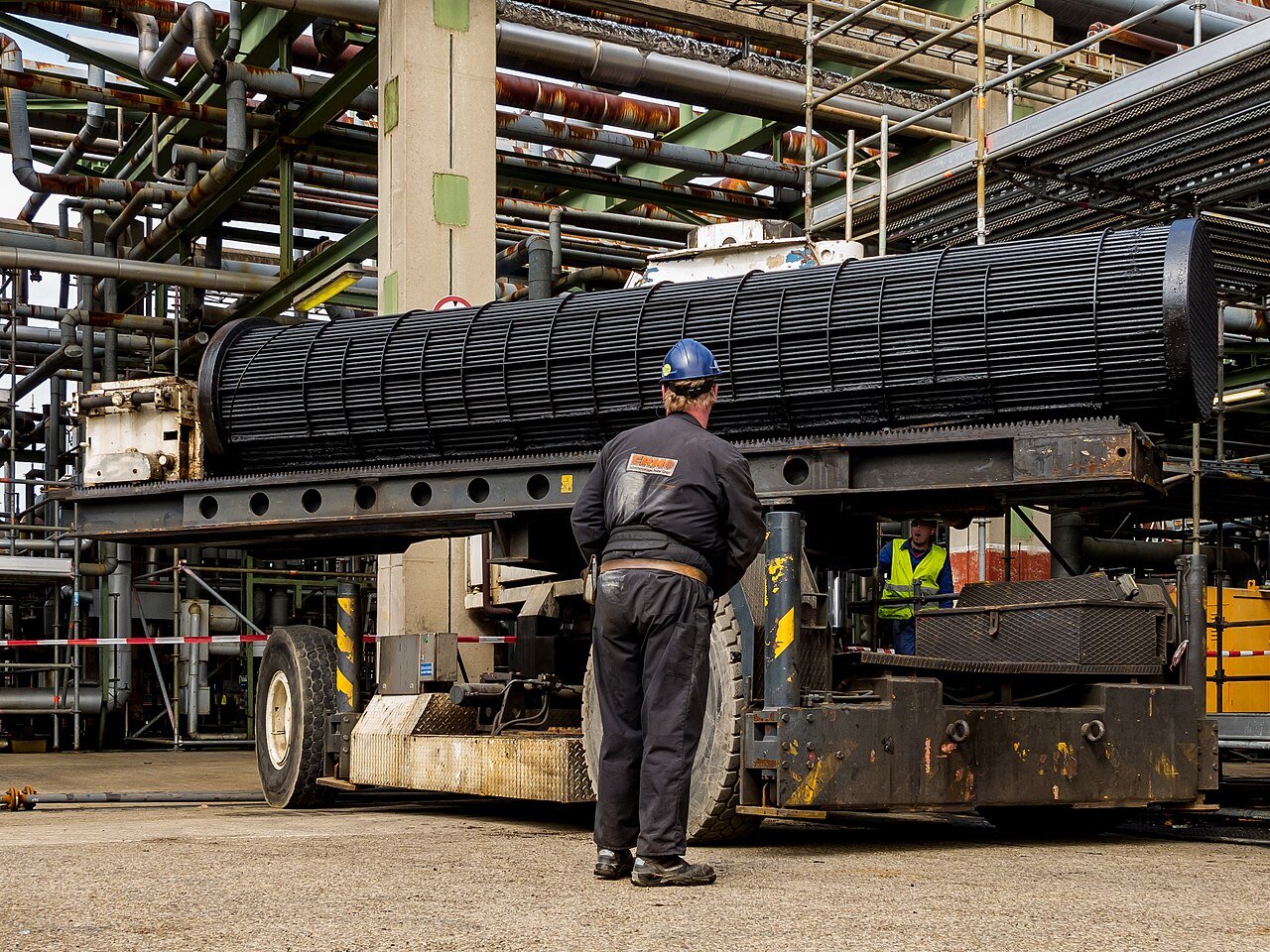
Process columns and interconnecting pipe racks concentrate hundreds of flanged and welded joints in a small footprint — that joint density is what makes flange and small-bore work the bulk of live sealing call-outs in East Java.
Why East Java’s Industrial Corridor Cannot Simply Shut Down
The strip from Gresik through Surabaya to Tuban and Probolinggo holds an unusual concentration of continuous-process assets. That geography changes the risk calculus for every leak, however small.
- Single-train exposure. Many process units in the corridor have no installed spare. Stopping one removes the entire production stream, not a fraction of it.
- Restart cost and delay. Restarting after an unplanned shutdown requires purging, inerting, verification and, in most cases, third-party inspection before feed is reintroduced — adding days to the loss.
- Population proximity. The Surabaya metropolitan area and the Gresik industrial estates sit close to process plant and product pipelines, so tolerances for vapour release are tighter than at a remote site.
- Ageing pipework. Much of the manifold, utility and terminal piping in the corridor has been in service for decades, with wall thinning, gasket relaxation and fatigue as routine findings.
East Java Assets That Drive Live Sealing Call-Outs
The table below maps the recurring asset types in the corridor against the leak locations that generate most call-outs.
| Asset type in East Java | Common leak location | Why live repair is usually preferred |
|---|---|---|
| Oil refinery process units | Flanges on hot hydrocarbon lines, pump discharge piping, exchanger nozzles | Single-train units have no spare capacity; restart needs purge, verification and inspection |
| Petrochemical and oleochemical plants | Valve glands, reactor nozzles, transfer line flanges | Continuous feed contracts and downstream customer dependencies |
| Fertiliser and ammonia/urea plants | High-pressure synthesis loop joints, steam and condensate lines | Synthesis loops are slow and awkward to depressurise safely |
| Copper smelters and mineral processing | Cooling water circuits, slurry and acid piping, off-gas ducts | Furnace campaigns cannot be interrupted without major reline cost |
| Combined-cycle power (PLTGU) and captive plants | Steam and feedwater piping, HRSG tube joints, gas skids | Grid dispatch commitments and penalty exposure |
| Fuel terminals and depots | Loading arms, manifold flanges, pump seals, tank nozzles | A terminal stop interrupts regional distribution |
Two categories dominate call volume. Flanged joints on hot and cyclic service account for the largest share, which is why flange leak online sealing is the most requested single service in the region. Valve-related leaks come second, particularly where a block valve has failed and no second barrier exists; that work is covered under valve online leak sealing.
How a Surabaya Call-Out Runs, Hour by Hour
Response time is where regional vendors differ most. The table below sets out realistic timing for a well-organised East Java response, assuming the work is technically executable and site access is granted. It is deliberately a range, not a promise.
| Phase | Typical duration | What happens |
|---|---|---|
| Call intake and triage | 0–30 minutes | Fluid, pressure, temperature, line size, joint type, leak rate and access confirmed |
| Technical feasibility decision | 30–60 minutes | Enclosure family, sealant family and maximum injection pressure agreed with the site |
| Mobilisation within East Java | 1–4 hours | Crew, injection equipment, sealant and clamp stock dispatched from the Surabaya warehouse |
| Site entry and permit | 30–90 minutes | Induction, gas test and permit-to-work issued |
| On-site survey and verification | 30–60 minutes | Geometry measured, wall condition assessed, injection parameters reconfirmed |
| Enclosure fitting or fabrication | 1–4 hours | Clamp adapted from stock or fabricated to field dimensions |
| Sealant injection and cure | 1–3 hours | Staged injection with leak-rate monitoring until containment is achieved |
| Verification and handover | 30–60 minutes | Leak check, parameter record, work report and recommendation for permanent repair |
For straightforward flange or pinhole work, total on-site time can be a single shift. Complex geometry, high temperature, sour service or poor access push it out. Any vendor quoting a fixed completion time before a site survey is guessing; ask for a range with the assumptions stated.
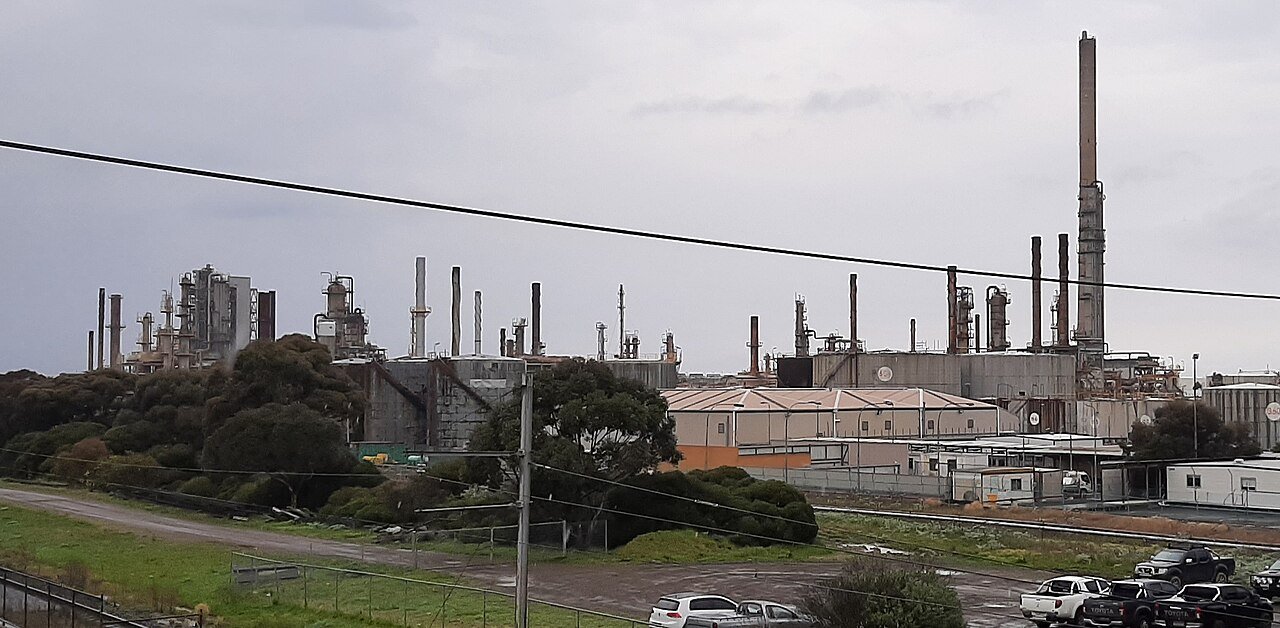
Elevated racks and congested pipeways slow enclosure fitting more than the sealing itself — access scaffolding, working-at-height controls and structural load limits often set the pace of a live repair.
Mobilisation: Juanda, the Trans-Java Toll and Port Access
Mobilisation to an East Java site is a logistics problem before it is a technical one. Specialist crews can also fly into Juanda International Airport and be met by a loaded road vehicle. Four realities shape the arrival window.
- Surabaya warehouse as the forward stock point. A crew based in East Java draws clamps, injection fittings and sealant stock from a Surabaya warehouse rather than waiting for a shipment from Jakarta — often removing half a day from the response.
- Toll corridor access. The Trans-Java toll road links Surabaya westward to Gresik and eastward to Sidoarjo, Pandaan and Probolinggo, though heavy equipment still faces peak-hour congestion around the Waru and Dupak interchanges.
- Port-linked estates. Sites at Pelabuhan Tanjung Perak and the Gresik / Java Integrated Industrial and Port Estate (JIIPE) sit inside or beside port security perimeters, adding a separate gate and escort process on top of plant induction.
For a national view of how mobilisation works outside Java, and where the logistics get harder, see the online leak sealing services in Indonesia overview, or the parallel Sumatra corridor guide.
Permits, Gas Testing and Local Regulation
Most East Java plants operate a formal permit-to-work system with unit-specific rules on hot work, confined space entry and simultaneous operations. A sealing crew arriving without pre-agreed permits, contractor induction and a job safety analysis will stand at the gate while the leak runs. The fix is a standing service agreement that pre-qualifies the contractor and agrees a permit pathway before an emergency exists.
Hydrocarbon and H2S service demands continuous gas monitoring at the workface, and terminals handling benzene or other aromatics carry tighter limits still. Instruments and the competence to interpret them must arrive with the crew. Before any bolt is loosened, the crew must know where they will stand, where they will go if the enclosure fails, and which valves define the pressure boundary.
Upstream and midstream facilities align with SKK Migas expectations, while downstream processing and terminals follow Directorate General of Oil and Gas (Ditjen Migas) requirements, published through Ditjen Migas. The decisive factor for any live repair is documented engineering basis and a proper risk assessment, not the method itself.
Standards a Surabaya Contractor Should Work To
Live leak repair is a code-driven discipline, and the difference between a contractor who can justify a design and one who cannot usually shows up in which references they cite without prompting.
- ASME B31.3 — process piping, the reference for design, material and inspection expectations in plant piping.
- ASME PCC-2 — Repair of Pressure Equipment and Piping, which frames the engineering basis for clamps, enclosures and composite repairs.
- ISO 24817 — composite repairs for pipework, used where wall loss rather than a discrete hole is the defect.
- API standards for valves, flanges and in-service equipment, alongside inspection practices for tanks and pressure vessels.
- AMPP guidance on corrosion management, which matters when the leak is a symptom of ongoing wall loss rather than an isolated mechanical failure.
Ask a prospective contractor how a specific clamp thickness or maximum injection pressure was derived; a confident, standards-based explanation beats a glossy brochure.
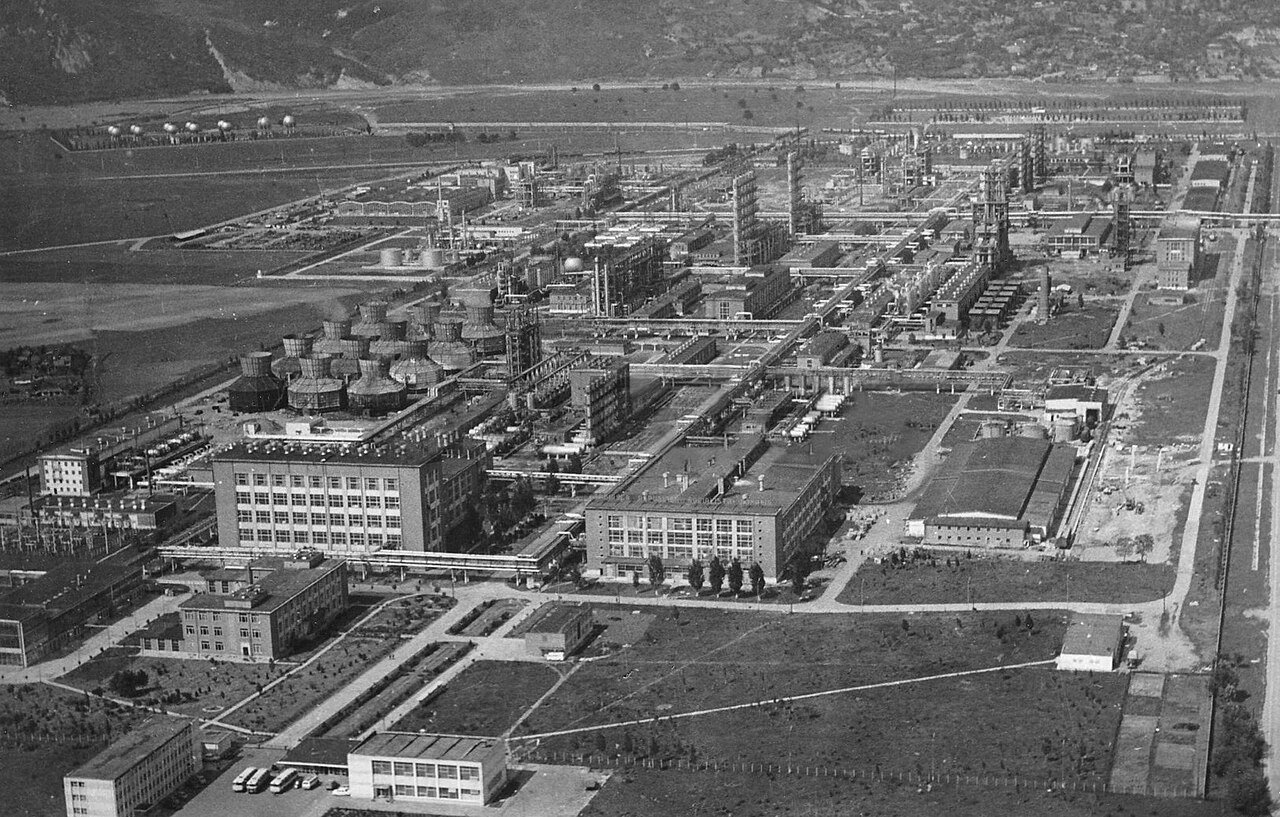
At plant scale, live sealing is a planned capability as much as an emergency service — operators who map their highest-risk joints in advance mobilise faster and seal on the first attempt more often.
Vendor Screening Checklist for East Java Sites
Use these questions before you sign anything. The answers tell you whether a contractor can perform under a real emergency.
- Response commitment. What is the contractual mobilisation time to our site, and is it backed by a service level agreement with a penalty clause?
- Local stock depth. What clamp, enclosure and sealant inventory is held in Surabaya, and how much can reach us inside the agreed window?
- Crew status. Is the response crew directly employed and continuously available, or assembled from subcontractors on demand?
- Comparable experience. Provide two examples of live sealing at pressures and temperatures comparable to ours, including the method used.
- Material competence. Which sealant families do you stock, and how do you confirm chemical compatibility with our specific fluid?
- Injection discipline. How do you establish the maximum allowable injection pressure, and who signs it off?
- Documentation. Do you issue a job safety analysis, method statement and post-job report with parameters and photographs as standard?
- Insurance and compliance. Confirm liability cover, crew certifications, medical fitness verification and induction readiness for our estate or port area.
For work on transmission pipelines rather than plant piping, the same screening applies with added emphasis on isolation philosophy; the dedicated pipeline emergency leak repair reference covers those cases, and the Greater Jakarta live repair guide shows how the same method is applied in a denser urban setting.
Key Takeaways
- Emergency leak online sealing Surabaya means repairing a live pressurised system — no shutdown, no depressurisation, no drain.
- The Gresik–Surabaya–Tuban–Probolinggo corridor concentrates single-train process assets, so the cost of stopping a unit usually outweighs the cost of the repair.
- Flanged joints and valve-related leaks generate the largest share of East Java call-outs.
- A Surabaya-based crew drawing on local warehouse stock can reach most East Java sites within a working window.
- Realistic on-site completion for simple work is one shift; complex geometry, high temperature or sour service takes longer.
- Never accept a fixed price or completion time quoted without a site survey, and ask contractors to explain their design basis under ASME PCC-2, ASME B31.3, ISO 24817, API and AMPP.
Cost Logic: Why the Comparison Is Rarely Close
The meaningful comparison is never repair cost against repair cost. It is the cost of a live seal plus the residual risk of a planned replacement, set against lost production during a shutdown, restart cost, purge and inspection effort, and displaced turnaround work. For a single-train asset in the corridor, the shutdown-side items routinely exceed the sealing-side items by a wide margin — which is why operators keep a qualified partner on retainer. A fuller model is set out in the leak repair cost and downtime reduction breakdown.
FAQ: Emergency Leak Online Sealing Surabaya
Can a leaking flange really be sealed without shutting the plant down?
Yes, provided the flange is structurally sound and the fluid parameters sit inside the enclosure and sealant envelope. Sealant is injected into the gasket annulus through a fitted injection ring or clamp, rebuilding the seal while the line stays in service. If the flange faces are badly eroded or the bolts are yielding, the repair changes from a seal to a structural job and isolation should be reconsidered.
How quickly can a crew reach a plant in East Java?
For a pre-qualified site with permits arranged, mobilisation from the Surabaya warehouse is typically one to four hours from technical agreement, depending on distance and traffic. Sites in Gresik or Sidoarjo are faster than those near Tuban or Probolinggo. Telephone triage begins immediately and usually completes before the crew leaves the depot.
Which East Java industrial areas do you cover?
The service covers the corridor from Gresik and the Java Integrated Industrial and Port Estate through Surabaya, Sidoarjo and Pandaan, out to Tuban and Probolinggo. That includes refinery, petrochemical, fertiliser, smelter, combined-cycle power and fuel terminal assets, as well as the port-linked estates around Pelabuhan Tanjung Perak.
Is online sealing allowed by Indonesian regulators?
Live leak repair is an accepted industrial maintenance practice when it follows recognised engineering standards and the operator’s own management-of-change and permit systems. Upstream operators align with SKK Migas expectations, downstream facilities with Ditjen Migas requirements. The decisive factor is documented engineering basis and a proper risk assessment, not the method itself.
Does the seal count as a permanent repair?
No. A live seal is an engineered containment that restores the pressure boundary and buys operating time; it is not a substitute for replacing a degraded component. Best practice is to record the seal, monitor it, and schedule permanent replacement or an inspected composite repair at the next planned shutdown. Some seals last for years, but that is an outcome, not a design assumption.
Leak still running and the plant is on limited time? Our response desk is staffed around the clock. Message the emergency team on WhatsApp or send a site brief with the line ID, medium, operating pressure and temperature, and we will confirm scope before mobilisation.
Conclusion
In East Java, the question is rarely whether a leak can be sealed live — it is whether the operator has a partner who can be on site with the right enclosure, the right sealant and the right paperwork before the situation escalates. The technical method is well established and code-backed. What separates a controlled night from a week-long outage is preparation: pre-qualified crews, pre-agreed permits, forward sealant stock in Surabaya and an honest assessment of whether sealing is the right answer at all.
Treat the online sealing capability as part of your emergency response plan rather than a shop-around purchase. Identify your highest-risk assets in the corridor now, confirm the parameters you would report in a first call, and secure a contractor whose answer to “what is your mobilisation commitment” is a number, not an adjective.