Emergency leak online sealing technician safety rests on a single principle: the crew is working immediately beside a live pressure boundary that they have temporarily altered themselves, so every control — JSA, PPE, gas testing, stand-off distance and the agreed maximum injection pressure — exists to keep that boundary predictable.
This page is written for HSE managers, maintenance engineers, and contractor supervisors who have to approve, supervise, or audit live leak repair work at refineries, gas plants, terminals, and process facilities. It covers the controls that actually determine whether a sealing job finishes as a repair, explains what an experienced HSE lead will demand to see in writing before the injection rig is connected, and sets out the hazard-by-hazard reasoning behind each requirement.
What Does Technician Safety Mean in Live Leak Sealing?
Live leak sealing is the practice of repairing a pressurised system without depressurising it, and that definition is also its principal hazard: the system stays energised throughout the operation. Emergency leak online sealing technician safety, therefore, is not a list of PPE items distributed at the gate. It is the discipline of managing three simultaneous risks — stored energy, released process fluid, and human factors under production pressure — while the plant continues to run. Sequence the controls correctly and the work is routine; skip one and you have placed a person within reach of a hydrocarbon jet at pressure.
What makes this discipline distinctive is that the hazard is not static. During fitment and injection, the enclosure becomes part of the pressure-containing envelope, and the leak path itself changes as sealant fills the cavity. A crew that does not understand this will treat the job as a mechanical assembly task rather than a managed pressure-boundary intervention. The training and competency requirements behind that understanding are covered separately in our guide to online leak sealing services in Indonesia.
The Pressure Boundary Is the Concept Everyone Must Share
Before any JSA can be written, the team must agree what constitutes the pressure boundary for this specific job. In service, that boundary is the pipe wall, the valve bodies, the flange faces and gaskets, and the instrument connections. Once sealing work begins, the boundary temporarily expands to include the enclosure or clamp, its bolts, its injection ports, the injection manifold, and the hoses connecting the pump.
Two consequences follow. First, every item now inside the boundary has a pressure rating, and the lowest rating governs the job — not the line’s design pressure. Second, a failure of any boundary element releases stored energy in the direction the geometry dictates, which is why the exclusion zone is drawn for the worst credible release rather than the visible leak today.
| Boundary element | What can go wrong | Control before work starts |
|---|---|---|
| Pipe wall and welds | Thinned wall bulges or ruptures under enclosure and injection loads | Wall-thickness data reviewed; fitness-for-service accepted before fitment |
| Flange faces and gaskets | Joint opens further when bolts are disturbed or retorqued | Torque values agreed; no retorquing on live joints without a documented decision |
| Enclosure or clamp | Seal extrusion, bolt yield, port failure | Rating verified against line conditions; staged pressurisation and visual monitoring |
| Injection ports and fittings | Thread or fitting failure at injection pressure | Rated fittings only; pressure-tested before connection; no improvised adaptors |
| Injection pump and manifold | Overpressure beyond the agreed limit | Maximum injection pressure agreed with the process engineer and recorded on the job card |
| Hoses and couplings | Hose whip if a coupling releases | Restrained hoses, whip checks, personnel clear of the hose path during pressurisation |
Stand-off distance is the practical expression of this analysis. The technician operating the injection pump should be positioned so that a failure at the leak point does not reach them, using the natural protection of structure, a change in direction, or simply distance. Where remote or long-hose injection is feasible, using it removes the operator from the line of fire entirely and should be the default on high-pressure or toxic service.
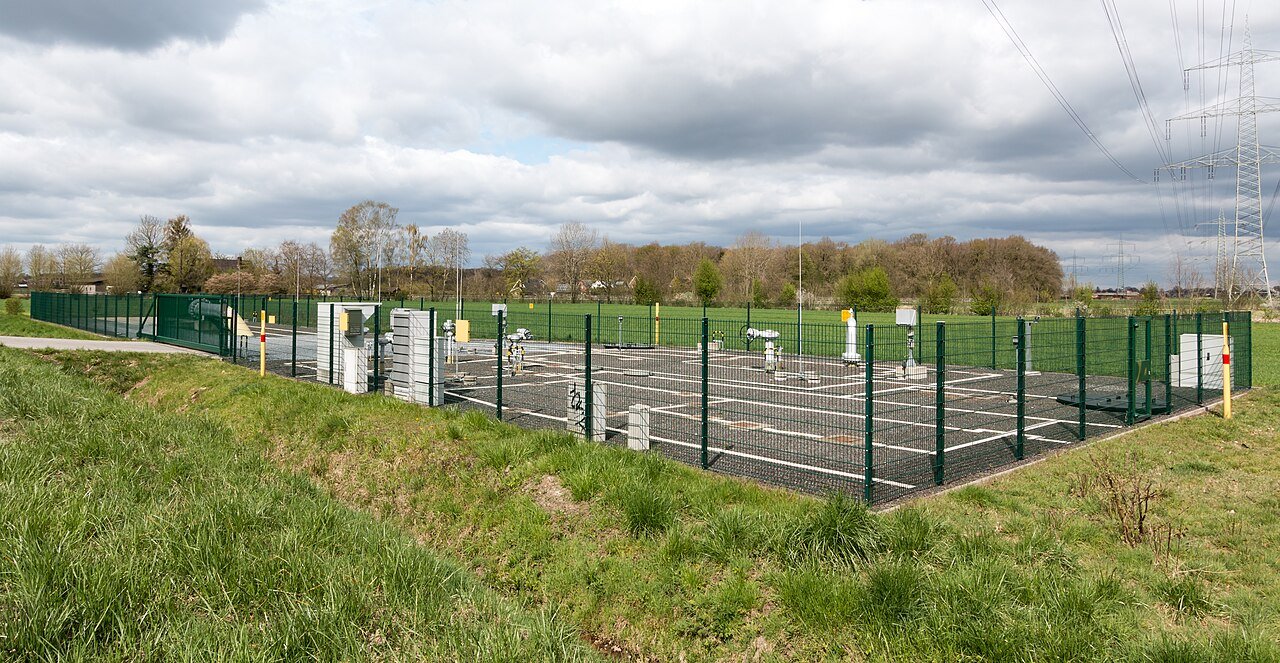
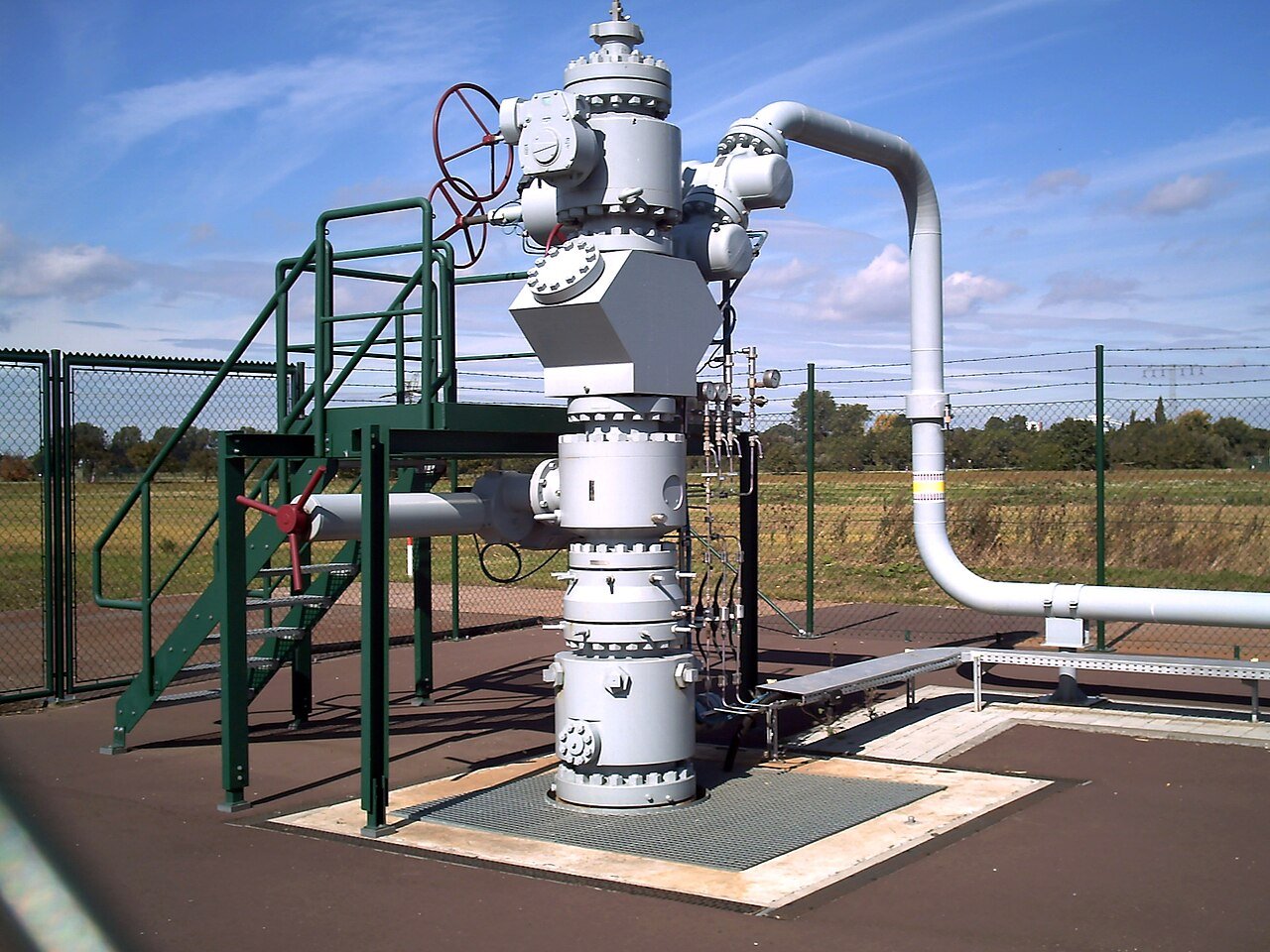
Pressurised pipework and valve assemblies — the boundary a sealing crew temporarily alters, and the reason stand-off distance is planned before fitment begins.
Job Safety Analysis: What a Real JSA Contains
A live leak sealing JSA is not a generic form with the words “hot work” circled. It has to be specific enough that a technician who arrives at the leak point could execute the job from the document alone. Under a competent safety management system, and consistent with the expectations set out by bodies such as the UK Health and Safety Executive, the document should contain the following elements.
- Description of the task in sequence. Access and preparation, refrigeration or cooling if used, enclosure fitment, injection, verification, and clean-down, each as a separate step.
- Fluid and process conditions. Composition, phase, pressure, temperature, whether sour or toxic, and the direction the process engineer expects a release to travel.
- Hazards per step. Not a general list, but the hazard attached to each individual step, including the transient hazard created by disturbing a joint.
- Controls per hazard. Engineering controls first — isolation of ignition sources, remote operation, splash shielding — then administrative controls, then PPE as the last layer.
- Pressure limits and boundaries. The agreed maximum injection pressure, the boundary elements involved, and the person authorised to approve any change.
- Stand-off and retreat. Where each person positions themselves, the retreat route, and the assembly point, described in terms of physical landmarks on site.
- Stop conditions. The observable circumstances that require the job to pause, listed explicitly, with the name of the person who holds stop-work authority.
- Emergency response. Alarm method, first-aid provision, fire watch arrangements, escape sets where relevant, and how the plant’s emergency response team is alerted.
The JSA must be reviewed with the whole crew on site, out loud, before work begins. A document signed in a site office and left in a folder has no effect on the person who is about to place their hands on a leaking flange. The briefing also gives every technician the chance to identify something the planner could not see from an office, which is precisely why the signature at the bottom is not a formality.
Hazard and Control Matrix for Live Leak Sealing
The matrix below is the working version a sealing crew should carry. It is deliberately specific, because generic hazard tables produce generic controls — and because the geometry of the leak changes the hazard. A bolted flange leak online sealing job behaves differently from a valve online leak sealing job, where the hazard sits behind a gland or bonnet that may move when disturbed.
| Hazard | How it presents | Primary control | Backup control |
|---|---|---|---|
| Pressurised release during fitment | Jet or spray when a joint is disturbed or a clamp is seated | Approach from the side, splash shielding, exclusion zone | Face shield and chemical-resistant outer layer, retreat path clear |
| Escalation after disturbance | Leak rate increases beyond the enclosure design case | Written stop condition and pre-briefed shutdown route | Process engineer on standby with authority to isolate |
| Flammable atmosphere | Vapour migration into a confined or low-lying area | Continuous gas detection, ignition-source control | Fire watch with extinguishing media, hot work permit where required |
| Hydrogen sulphide exposure | Sour service leak, odour threshold unreliable | Personal H2S monitor with audible alarm at the breathing zone | Escape set per technician, upwind assembly point |
| Thermal injury | Steam or hot-oil spray, contact with hot equipment | Heat-resistant clothing, insulated gloves, task lighting safe for wet areas | Cooling station and burn first-aid provision on site |
| Chemical injury and sensitisation | Sealant components contacting skin or eyes | Safety data sheets reviewed; nitrile gloves and eye protection | Wash facilities and eyewash within reach of the work area |
| Enclosure overpressure | Gauge rises beyond the agreed injection limit | Maximum injection pressure on the job card; calibrated gauge | Relief provision in the manifold; authority to stop injection |
| Slips, trips and falls | Hoses, sealant containers, scaffolding in a congested unit | Housekeeping and hose routing before injection | Task lighting and handrails; harness where height requires it |
| Fatigue and human error | Decision quality falls during a long night call-out | Defined maximum hours and rest before high-risk work | Crew rotation, and a second competent lead on standby |
The Role of Pressure Standards in Technician Protection
Technical standards are often treated as compliance paperwork, but in this discipline they are safety documents. Under ASME PCC-2, a repair procedure for in-service pressure equipment must account for the hazards generated by the repair operation itself, including the temporary pressure boundary created by the enclosure. Read as a safety instruction rather than a design requirement, that clause tells a supervisor three things: the enclosure must be designed for the loads the job will impose, the injection pressure must be controlled rather than maximised, and the procedure must state how the repair affects the pipe it is attached to.
Under ISO 24817, composite repairs on piping must have a documented design with defined limits on the operating envelope. For the crew on site, the practical translation is that every sealing job has a defined envelope for pressure, temperature and fluid, and that working outside that envelope is not a judgement call for the technician. When a leak changes character — hotter, faster, or carrying a different phase — the correct response is to stop and re-plan, not to push the existing approach harder.
Two additional standard families inform the safety envelope. Fitness-for-service assessment work for in-service piping, framed by API 570 and supported through the standards library of the American Petroleum Institute, determines whether the wall can carry the enclosure and injection loads at all. Corrosion and materials guidance from AMPP, the association formed from the merger of NACE International and SSPC, shapes how that wall condition is characterised and how sealant compatibility with the process fluid is judged. A crew briefed on these principles understands why the fitness-for-service check is not bureaucratic delay.
Injection Pressure: The Control That Protects the Boundary
The single most important control in live leak sealing is also the one most often treated as a formality: the maximum injection pressure. Injection pressure does not only push sealant into a cavity. It acts on the enclosure, on its bolts and ports, on the manifold and hoses, and on the pipe wall around the leak point. A pump capable of far higher pressure than the line’s design pressure provides no benefit and considerable risk.
No sealant injection should proceed without a defined maximum injection pressure agreed with the process engineer and recorded on the job card. This is not a suggestion to be adjusted at the gauge by an optimistic technician. The agreed figure should be written where the person operating the pump can see it, and the gauge used to control injection should hold a current calibration record.
- The limit should be established from the enclosure rating, the pipe wall condition, and the process parameters — and the lowest of those governs.
- Staged injection is preferred: bring the pressure up, hold, observe the leak rate and the enclosure, then advance. Rushing to the limit defeats the purpose of having one.
- Any request to exceed the limit must come from the process engineer in writing, after a re-assessment of the boundary.
- A leak that will not seal within the agreed pressure is evidence that the method or the sealant is wrong, not that the pressure is too low.
- The pressures actually reached should be logged and reported, so the plant has a record of what the boundary experienced.
Competing management systems sometimes encourage the opposite behaviour. A crew measured only on whether the leak stopped has an incentive to keep raising pressure. That is why the KPI set for sealing work should include compliance with the agreed pressure limit and correct refusals, not only successful seals. A refusal recorded honestly is a safety outcome, and it should be treated as one in contractor performance reviews.
Personal Protective Equipment and Materials Safety
PPE is the last layer of control, but it still has to be specified correctly for the fluid and the task. The following table sets out the reasoning; site rules and the sealant safety data sheets always take precedence.
| PPE item | Service where it is essential | Notes on selection |
|---|---|---|
| Flash-rated coverall and underlayer | Hydrocarbon and other flammable service | Worn as a system; not substituted with general work clothing |
| Chemical-resistant outer layer and face shield | Acid, caustic, amine, solvent service | Selected against the specific fluid using the SDS, not a generic “chemical suit” |
| Heat-resistant clothing and insulated gloves | Steam, condensate, hot oil | Rated for the surface temperature and contact duration expected |
| Nitrile or laminated gloves | Sealant handling and mixing | Changed when contaminated; sensitisation risk is cumulative |
| Safety eyewear plus face shield | All injection and fitment work | Eye protection alone is insufficient near a pressurised leak path |
| Personal gas detector | Flammable, toxic or oxygen-deficient atmospheres | Worn at the breathing zone, bump-tested before each shift |
| Escape set | Sour gas and other immediately toxic services | One per technician, within reach, checked before entry to the work area |
| Hearing protection | High-pressure steam or gas leaks | Noise from a pressurised release changes faster than hearing damage is noticed |
Alongside PPE, the chemical inventory used on site needs the same discipline applied to process chemicals. Sealants and their hardeners have safety data sheets, storage temperature limits and shelf lives. Products stored in a hot vehicle or a tropical store past their expiry can cure unpredictably, which converts a sealing job into a leak escalation. Batch numbers used on a job should be recorded in the handover documentation, and out-of-date stock should be removed from the rig rather than carried as emergency spare.
Emergency Response Planning for a Sealing Job
A live leak job needs its own emergency plan, agreed with the plant’s emergency response organisation before work starts, and it should be built around the same emergency leak online sealing principles that govern the technical method. The plan should be short enough to be remembered and specific enough to be executed under pressure.
- Alarm and communication. How the crew raises the alarm, which channel or number, and who calls the plant’s emergency response team.
- Evacuation route and assembly point. Described by landmarks, briefed to every crew member, and confirmed clear of the release path.
- Isolation plan. The valves, the location of the actuators, and the authority who can initiate isolation — agreed in advance so that isolation is a decision, not a search.
- Fire watch and extinguishing provision. Positioned for the release direction, with the media matched to the fluid class.
- Medical arrangements. Nearest first-aid station, stretcher route, and arrangements for a standby ambulance or site medical team during high-risk injection.
- Mutual aid. Who else is on site, their location, and how they are informed — particularly if the leak is near a boundary with another operator.
- Stand-down criteria. The circumstances that end the job, written down before the work starts rather than argued about during it.
The plan should be rehearsed at the toolbox talk level at minimum: the crew walks the retreat route, confirms the assembly point, and physically locates the isolation valves. Two minutes spent walking is worth more than a page of description, particularly on a night call-out in an unfamiliar part of the plant.
What the Client Should Verify Before Work Starts
Sealing safety is shared between the contractor and the operator, and a competent client checks a small number of things before allowing a crew to touch the line. The following list is a practical pre-work verification for a maintenance or HSE representative.
- Competency evidence for the individuals on site. Names, unit-by-unit certification, and current supporting training such as gas testing and working at height.
- The JSA, signed by everyone present. Not a template, but a task-specific document reviewed aloud with the crew.
- The agreed maximum injection pressure. Confirmed with your own process engineer, written on the job card, and visible to the pump operator.
- Equipment condition. Enclosure rating, calibrated gauges, whip checks on hoses, and sealant batch dates within shelf life.
- Gas detection and PPE. Monitors bump-tested, calibration current, and PPE appropriate to the specific fluid in the line.
- The emergency plan. Retreat route walked, assembly point identified, isolation valves located, and fire watch in position.
- The stop conditions. Understood by the client’s own shift team as well as the crew, so that either side can stop the job without negotiation.
The most effective safety measure an operator can add is a named client-side authority who is present, empowered, and technically able to discuss the pressure limit with the sealing lead. Where that person is absent, the crew is left making boundary decisions alone — exactly the situation that ASME PCC-2’s requirements on repair hazards are designed to prevent. Our page on high-pressure leak sealing solutions describes how these controls tighten further as line pressure rises.
Human Factors and Shift Discipline
Most incidents in live leak work involve a decision, not a component failure. The same conclusion drives the operational disciplines described in our guide to the 24-hour emergency leak online sealing response. The conditions that degrade decisions are predictable, which makes them manageable. Regulators publish the underlying expectations for high-hazard work — the Occupational Safety and Health Administration for the United States, and the UK Health and Safety Executive — while Indonesian operators must also satisfy the requirements published by Ditjen Migas. Useful field guidance on managing fatigue and decision quality is available from the International Association of Oil and Gas Producers.
- Production pressure. When a unit’s output depends on a job finishing, crews feel the pressure to accept a marginal seal. Pre-agreeing stop conditions removes that from the technician’s shoulders.
- Fatigue from call-out patterns. A technician who has worked a full day should not begin a high-risk injection at 23:00. Rest rules should be written, not implied.
- Authority confusion. No one should have to guess who can approve exceeding a limit. Name the authority in the JSA.
- Plan fixation. Once a crew has decided on a clamp, evidence that the clamp is wrong can be filtered out. A short pause after the first injection attempt to re-check observations counters this.
- Communication under noise and PPE. Face shields and hearing protection reduce speech clarity; agree hand signals for “hold”, “back away” and “stop” before work begins.
- Shift handover. If a job runs across shifts, the incoming team must receive the pressure limit, the sealant used, and the stop conditions verbally, not by email.
Client-side controls matter here too. Resisting the temptation to ask “how long will it take?” during a delicate injection is a genuine safety intervention, because an unanswerable question invites a rushed answer. The better framing is to ask what the crew needs to finish correctly.
Key Takeaways
- Live leak sealing keeps the system energised, so technician safety depends on managing stored energy, released fluid and human factors simultaneously.
- The pressure boundary temporarily expands during sealing to include the enclosure, ports, manifold and hoses; the lowest-rated element governs the job.
- No sealant injection should proceed without a defined maximum injection pressure agreed with the process engineer and written on the job card.
- ASME PCC-2 requires repair procedures on in-service equipment to address the hazards created by the repair itself; ISO 24817 requires a documented design envelope.
- The JSA must be reviewed aloud with the full crew on site, with hazard and control listed per step, plus pre-agreed stop conditions.
- Continuous gas detection at the breathing zone, one escape set per technician for toxic service, and a walked retreat route are non-negotiable.
- Contractor KPIs should reward correct refusals and pressure-limit compliance, not only leaks successfully stopped.
FAQ: Emergency Leak Online Sealing Technician Safety
Is it ever safe to work next to a pressurised leak?
Yes, when the job is engineered: the leak geometry is understood, the wall condition has been assessed, an enclosure rated for the conditions is used, the release direction controls where people stand, and a maximum injection pressure is agreed in writing. The work is routine for trained crews. It becomes unsafe when those conditions are absent and the job proceeds on urgency alone.
What should never be done during a live sealing injection?
Injection must never exceed the maximum pressure agreed with the process engineer. Technicians should also never stand directly in the leak path or in line with hoses under pressure, never retorque live flange bolts without a documented decision, never improvise rated fittings, and never continue when an agreed stop condition has occurred.
Which standards govern live leak sealing safety?
ASME PCC-2 governs repair procedures for pressure equipment and piping in service, including the hazards created by the repair itself. ISO 24817 governs the design of composite repairs. Fitness-for-service work on in-service piping is framed by API 570, and corrosion and materials practice follows guidance from AMPP.
How often should gas detectors be checked?
Personal monitors should be bump-tested before each shift and carry a current calibration record. Hoses, pumps and electrical equipment used in a potentially flammable atmosphere should also be inspected before every job. Detection should be positioned at the breathing zone, since low-lying vapours and heavier-than-air gases behave differently from methane.
Who can approve a change to the job plan on site?
The JSA should name the authority in advance. In practice, pressure-limit changes require the process engineer, method changes require the sealing technical lead, and any change affecting isolation or the plant’s operating envelope requires the client’s shift or operations authority. If the named person cannot be reached, the job pauses rather than proceeds.
Leak still running and the plant is on limited time? Our response desk is staffed around the clock. Message the emergency team on WhatsApp or send a site brief with the line ID, medium, operating pressure and temperature, and we will confirm scope before mobilisation.
Conclusion
Emergency leak online sealing technician safety comes down to controlling a boundary that the crew itself alters. The controls that matter are unglamorous and specific: a task-level JSA read aloud to the people doing the work, an enclosure rating that matches the line, gas detection worn where the technician breathes, a retreat route that has been walked, and a maximum injection pressure agreed with the process engineer and written on the job card. Add a fatigue rule, a named change authority, and an emergency plan agreed with the plant before work begins, and the job becomes a controlled intervention rather than an act of nerve.
For HSE managers in Indonesia’s refining, terminal and process sectors, the most useful audit question is not whether the contractor has a safety manual, but whether the crew on your site can explain their stop conditions and their pressure limit without consulting a folder. If they can, the safety system is real. If they cannot, no amount of documentation will protect the person standing next to the leak. For a technical discussion about a specific live leak, contact the duty team on 082199001706.