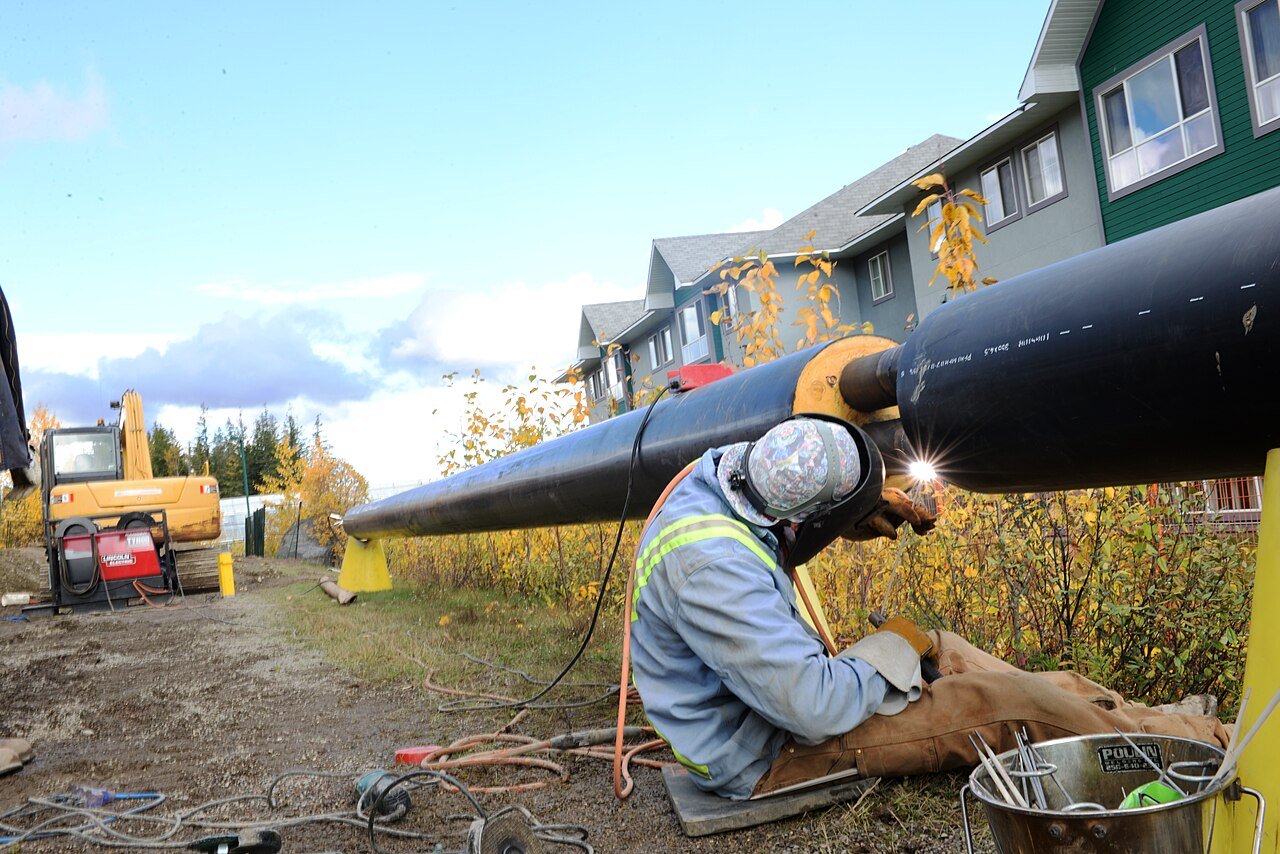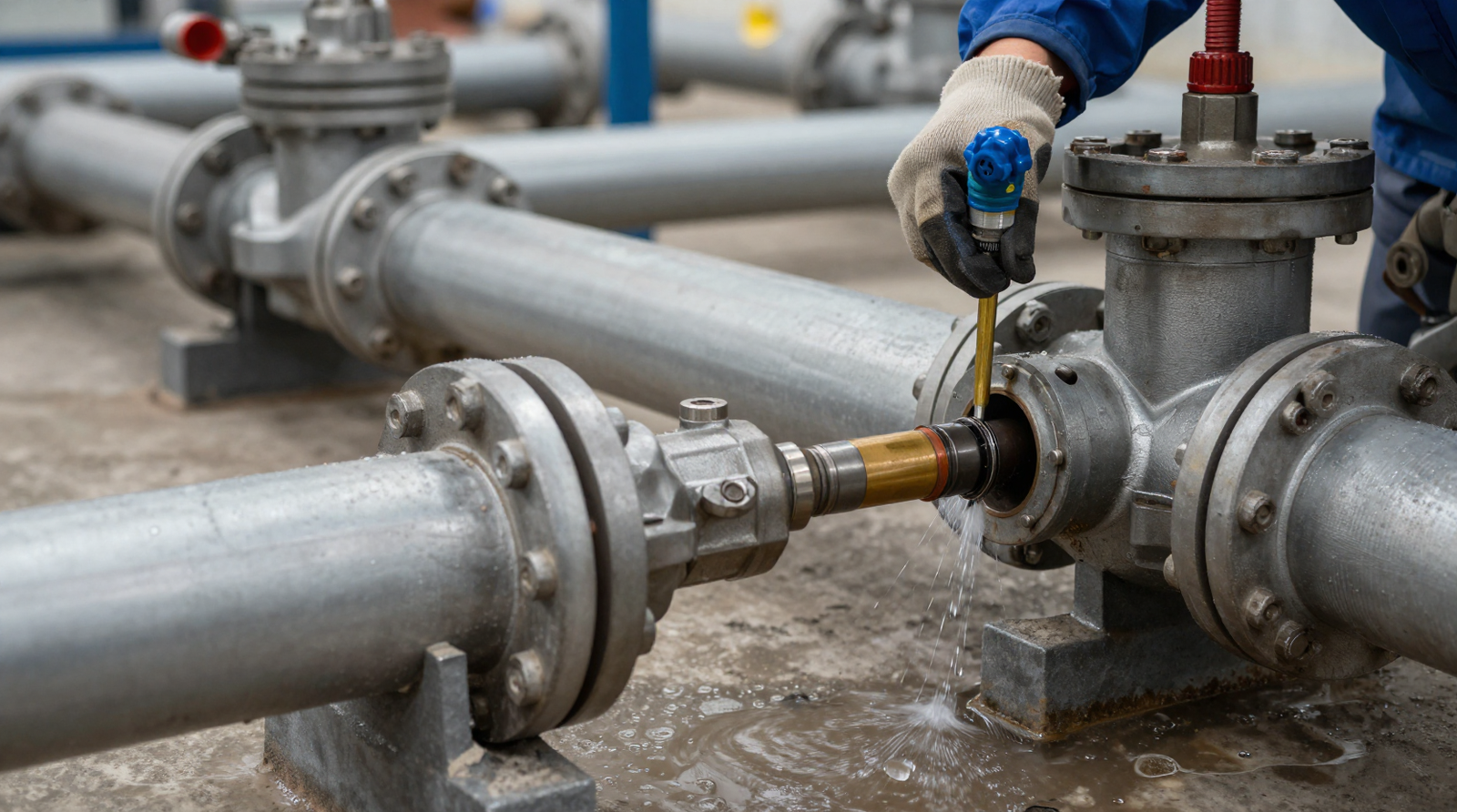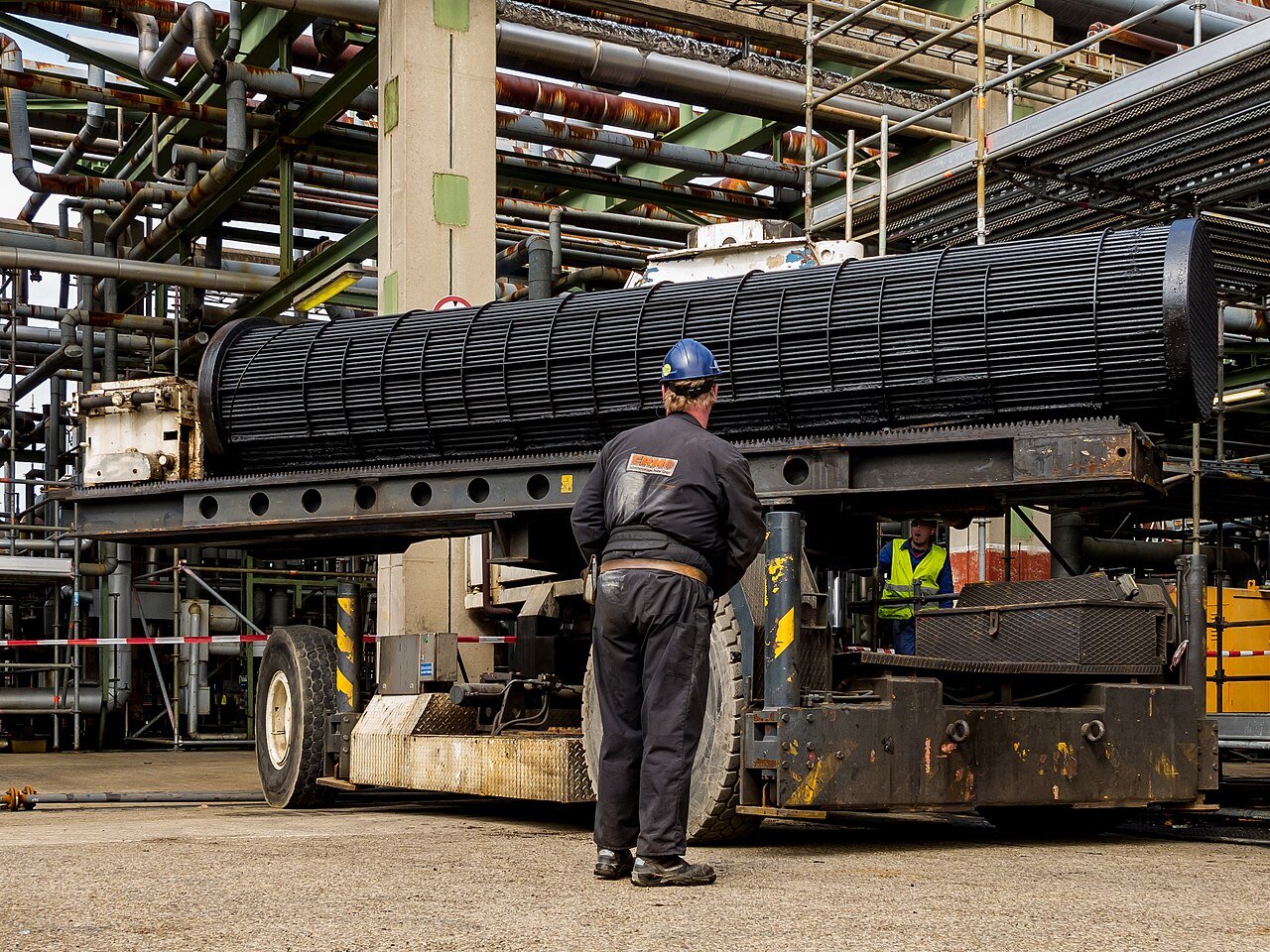
Storage tank leak online sealing stops an active leak on a tank shell, roof, nozzle, manway or floating roof seal while the tank stays in service and keeps its product. It is a controlled containment repair on a live pressure boundary, not a structural rebuild.
This guide is for tank farm supervisors, inspection engineers and maintenance planners running atmospheric and low-pressure tanks at refineries, petrochemical plants, terminals and depots in Indonesia. It maps where tanks leak, which points can be sealed in service, which cannot be sealed from outside, what API 653 and API 650 require, and why gas control and confined space entry — not tank pressure — decide whether work is permitted.
What Is Storage Tank Leak Online Sealing?
Storage tank leak online sealing is the repair of a leaking tank component — shell plate, roof plate, shell-to-bottom junction, nozzle or manway flange, floating roof seal or drain connection — without draining, cleaning or gas-freeing the tank. An enclosure, clamp or injection fitting is placed over the leak path, sealant is injected at controlled pressure, and the seal is verified while the tank holds product.
Under API 653, which covers tank inspection, repair, alteration and reconstruction, any repair to a tank pressure boundary must be designed and documented against the original construction code — normally API 650 — and the tank’s inspection history. Online sealing sits inside that framework, as our online leak sealing technology and methods overview also stresses: the technique must match the component and the service.
Why Tank Leaks Behave Differently From Piping Leaks
A tank is a large, thin-walled, low-pressure shell with a vapour space above the liquid. That geometry changes the engineering and the safety case, which is why a method that works on a 6-inch process line cannot simply be scaled up for a 40-metre tank.
- Large surface, low design pressure. Atmospheric tanks are designed for a few millibar, so the driving force across a leak is small compared with process piping.
- Product head does the work. A leak near the base sees the full static head above it, so the same hole passes far more liquid low on the shell.
- The vapour space is the hazard. Hydrocarbon vapour can sit inside the flammable range, and shell or roof work brings an ignition source close to it.
- Access is a foundation problem. Ringwalls, insulation, foam pourers, stairs, mixers and heating coils restrict the path to the leak point.
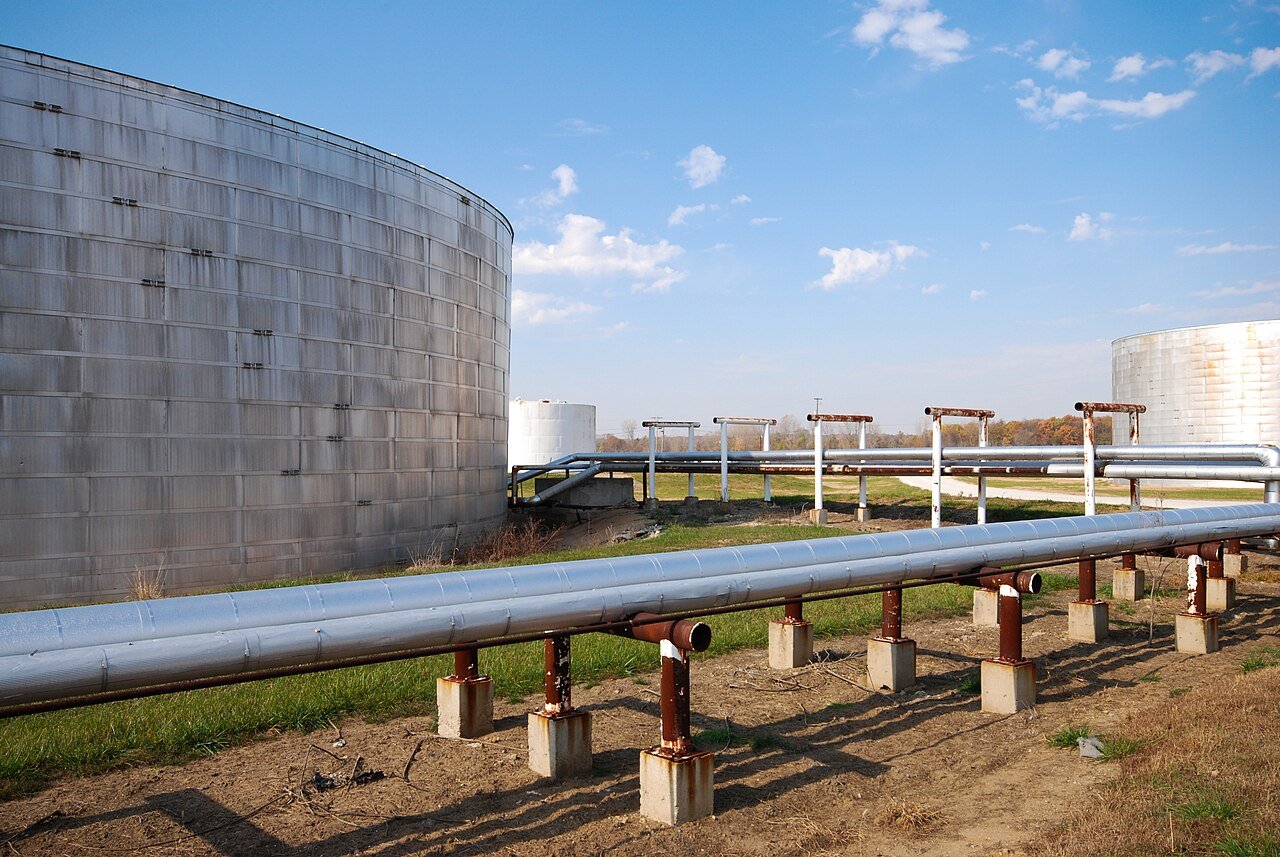
A tank farm is a different repair environment from a pipe rack: thin-wall shells, ringwalls and vapour spaces mean access, gas control and inspection history drive the method as much as the leak itself.
Where Storage Tanks Leak: A Location-by-Location Map
Each location has its own failure mechanism, repair method and hard limit. This is the triage map.
| Leak location | Typical sealing method | Key limitation | Governing reference |
|---|---|---|---|
| Shell plate — seam, pitting, pinhole | Enclosure or box clamp with injected sealant; banded enclosure along a seam | Only where surrounding plate is sound; wall loss needs thickness assessment | API 653 repair rules; API 650 thickness |
| Shell-to-bottom junction, annular plate | External clamp or corner enclosure with sealant injection | Often buried behind insulation or ringwall; soil-side corrosion not visible | API 653 shell and bottom inspection |
| Roof plate — fixed roof, deck seams | Plate clamps, patches or injected sealant on seams | Thin plate, not pressure-retaining; vapour space demands ignition control | API 650 roof thickness; API 653 |
| Nozzle and manway flanges | Flange enclosure with sealant injected through the gasket path | Corroded bolts or damaged face may need machining or replacement | ASME PCC-2 clamp and injection repair |
| Floating roof rim seal | Replacement or adjustment of seal elements | Seal wear is mechanical; sealant is not a rim seal | API 650 Appendix C; API 653 |
| Drain lines, sumps, water draw-off | Clamp or enclosure on the connected piping | Isolation depends on the drain valve being operable | API 653; applicable piping code |
| Bottom plate (tank floor) | Not sealable from the outside | Beneath the tank; needs draining, cleaning, gas-freeing, entry | API 653 bottom inspection |
Methods Used on Each Leak Location
Online sealing is a family of techniques, not a single product. Selection depends on leak geometry, shell thickness, product head and access.
- Box and plate clamps. Enclosures bolted or banded over a local defect with a sealant injection port — best where the plate around the leak is still full thickness.
- Banded enclosures. Used along a leaking seam or short crack where a box clamp would be too small and too concentrated.
- Flange enclosures. A containment shell around a leaking nozzle or manway joint, with sealant injected to rebuild the gasket seal path — the principle behind our flange leak online sealing work on process piping.
- Valve and drain-line sealing. Applied where the leak is at a drain or isolation valve rather than the shell, as covered under valve online leak sealing.
- Composite wrapping over a prepared surface. Used to restore structural capability over a thinned area, following the logic in our composite repair wrap versus online leak sealing comparison.
What Cannot Be Sealed From Outside
Honesty about limits separates a competent contractor from a sales conversation. Several tank leak paths cannot be sealed from outside.
- Bottom plate leaks. A floor leak sits beneath the tank and behind the foundation. There is no external surface to clamp and no injection path, so the tank must be drained, cleaned, gas-freed and entered.
- Double-bottom and double-shell tanks. The space between the two boundaries is an interstitial or annular gap. A leak there may come from the primary boundary, the secondary boundary or a connection between them, so the diagnosis must be confirmed before a repair is designed.
- Annular plate under the shell. Once covered by the foundation or ringwall, external access is gone.
- Generalised wall loss or active cracking. A clamp contains a local leak; it does not restore a shell thinned across a wide area, and sealing a growing fatigue or stress-corrosion crack only delays the next failure.
Atmospheric Tanks Are More Tolerant — But the Vapour Space Is Not
Atmospheric and low-pressure tanks are mechanically the most forgiving assets in a plant. Design pressure is measured in millibar, and a small shell leak rarely produces the jet velocities seen on a pressurised line. That tolerance is real, and it is why online sealing is feasible on tank shells at all.
It is also a trap. The deciding factor on a tank job is almost never the tank pressure — it is the hydrocarbon vapour in the vapour space, and the fact that much of the work happens in, on or immediately above a confined space. Work on a floating roof deck or inside the vapour space of a fixed-roof tank brings people and tools into a flammable atmosphere and a space with restricted entry and exit. On a pressurised line the controlling hazard is stored energy; on a tank it is atmosphere and access.
Gas Control, Confined Space Entry and Permit Conditions
Because atmosphere and access dominate, the safety case on a tank seal is built around gas monitoring, ventilation and entry control. The framework broadly follows the permit-to-work practice published by HSE UK.
- Continuous gas monitoring. Lower explosive limit, plus hydrogen sulphide and benzene where applicable, measured at the work face and entry point and logged at fixed intervals.
- Ignition source control. Hot work, non-essential vehicles and spark-capable tools are controlled within the classified zone, whose boundary is set by the gas reading and wind direction.
- Confined space entry procedure. Entry into the vapour space or onto an internal floating deck requires a written permit, an attendant outside, a rescue plan and the equipment to execute it.
- Isolation of connected systems. Inlet, outlet, drain, mixer, heater and instrument connections are isolated and proven, with positive isolation where the consequence justifies it.
- Emergency readiness. Fire watch, water curtain where appropriate, and a confirmed access route for emergency services before any technician approaches.

The flare system is part of the tank sealing safety case: vapour displaced from a tank vapour space during purging or pressure balancing must have a defined, safe destination.
How to Decide: Seal Now or Take the Tank Out of Service
Work down this list. The first condition that matches decides the path, and the decision should be recorded with the name of the engineer who made it.
- Is the leak on a bottom plate, an interstitial space, or a location with no external access? If yes, plan the tank out of service — there is no online seal for a floor plate.
- Is the leak on a shell or roof surface with sound plate around it? If yes, a clamp, enclosure or banded seal is feasible and the job moves to permit and gas control.
- Is the atmosphere within permit limits and maintainable for the duration? If no, the job does not start; pressure rating is irrelevant if the gas reading fails.
- Does the repair need to restore strength, not just contain a leak? If yes, the design basis must come from an engineering assessment, not a containment enclosure alone.
API 653 and API 650: The Inspection and Construction Context
Two standards frame almost every tank repair decision. API 650 sets the construction requirements — shell and roof minimum thicknesses, weld details, nozzle reinforcement, and floating roof and seal requirements in its appendices. API 653 sets what happens after commissioning: inspection intervals, bottom and shell evaluation, suitability for service, and the rules under which repairs, alterations and reconstructions may be carried out.
An online seal enclosure is therefore not designed in isolation. It is assessed against the original design thickness, the measured remaining thickness, the inspection history and the current service conditions. Where a documented design basis is required, that design is produced before the crew starts work. Formal API standards are catalogued through the API standards programme, and tankage material and corrosion assessment commonly follows guidance associated with AMPP, formed from the merger of NACE International and SSPC. In Indonesia, tank work also sits inside the framework administered by Ditjen Migas. Where the leak is on a high-pressure connected system rather than the shell, the techniques shift toward our high pressure leak sealing solution notes.
What the Crew Needs Before It Starts
Response time depends on the information supplied before mobilisation: tank identification and current level, the leak location against the shell courses or nozzle schedule, nominal and latest measured plate thickness, whether the tank is single- or double-bottom, access constraints, gas test results, and a named contact authorised to approve the maximum injection pressure.
Verification and Follow-Up After a Live Tank Seal
Verification is a separate activity with its own hold point. The seal is not accepted because the visible leak has stopped.
- Visual inspection of the full enclosure perimeter after injection pressure is released, and again once the tank level is back to normal.
- Hold-period observation with the tank at normal operating level, recording any weeping at enclosure joints.
- Gas detection around the repair using a portable combustible gas indicator, particularly for vapour-phase leaks.
- Level and volume check over a defined interval, since a slow shell leak is invisible on a large tank.
- Interstitial or annular space check on double-bottom and double-shell tanks, confirming the secondary boundary is not carrying product.
- Documentation and follow-up — enclosure drawing reference, sealant type and batch, injection pressures, photographs, and a thickness survey at the sealed location scheduled under the API 653 inspection plan.

Pressure and vacuum relief, and the flare route that supports it, must stay functional throughout a live tank repair — a seal that blocks a relief path converts a contained leak into a tank integrity event.
Key Takeaways
- Online sealing works on shell, roof, shell-to-bottom, nozzle, manway, floating roof seal and drain leaks — but never on a bottom plate leak.
- Double-bottom and double-shell tanks have an interstitial or annular space, so the leaking boundary must be identified before a repair is designed.
- Atmospheric tanks are low-pressure and mechanically tolerant, but hydrocarbon vapour and confined space access — not pressure — are the deciding safety factors.
- Under API 653, every tank repair is judged against the API 650 construction basis and the tank’s inspection history.
- No work starts without a maintained gas test, a valid permit, and a confined space entry plan with rescue provision.
- Verification is a hold point: visual check, gas detection, level trend, interstitial check and a recorded thickness survey.
- A seal that hides a growing crack or generalised wall loss is a deferred failure, not a solved problem.
FAQ: Storage Tank Leak Online Sealing
Can a storage tank leak be sealed while the tank is still in service?
Yes, for leaks on the shell, roof, shell-to-bottom junction, nozzle and manway flanges, floating roof seal areas and drain connections, provided the surrounding plate is sound and access permits. The tank keeps its product while an enclosure is fitted and sealant injected at controlled pressure.
Why can a tank bottom leak not be repaired from the outside?
The bottom plate sits on the foundation, so there is no external surface to clamp and no injection path. Repair requires draining, cleaning, gas-freeing and internal access. An external fix only conceals the defect while the floor thins.
Are atmospheric storage tanks easier to repair online than pressurised piping?
Mechanically, yes. Atmospheric tanks are designed for only a few millibar, so the driving force at a leak is modest. That tolerance is genuine. However, the vapour space and confined space access make the safety case harder, so gas control and entry permits decide whether work proceeds.
Which standards apply to storage tank leak repair?
API 653 governs inspection, repair, alteration and reconstruction of tanks in service, and API 650 governs their original construction, including minimum plate thicknesses and floating roof seal requirements. Repair enclosures and injection methods are also assessed against recognised repair methodology such as ASME PCC-2.
What happens after an online tank seal is completed?
The repair is verified with a visual inspection of the enclosure, gas detection around the seal, a level and volume trend over a defined interval, and an interstitial check on double-bottom tanks. Records enter the tank history, and a thickness survey at the repaired location is scheduled under the inspection plan.
Leak still running and the plant is on limited time? Our response desk is staffed around the clock. Message the emergency team on WhatsApp or send a site brief with the line ID, medium, operating pressure and temperature, and we will confirm scope before mobilisation.
Conclusion
Storage tank leak online sealing is genuinely useful and genuinely limited. It can stop an active leak on a shell, roof, shell-to-bottom junction, nozzle, manway, floating roof seal or drain connection while the tank stays in service. It cannot reach a bottom plate, cannot resolve an interstitial space it has not diagnosed, and cannot restore a shell thinned over a wide area. Knowing which case you are in is the first engineering decision.
The second is a safety decision, and on tanks it turns on atmosphere and access rather than pressure. A low-pressure tank is forgiving of its contents; it is not forgiving of an unmaintained gas test, a lapsed entry permit or an enclosure that blocks a relief path. If your site needs a tank shell, roof or nozzle leak contained without taking the tank out of service, our emergency leak online sealing team can triage it against the map above, and the online leak sealing services in Indonesia page sets out how mobilisation and permits are handled on site. Preparing a leak data pack in advance, as described in the emergency leak online repair solution checklist, shortens a tank leak response from days to hours.