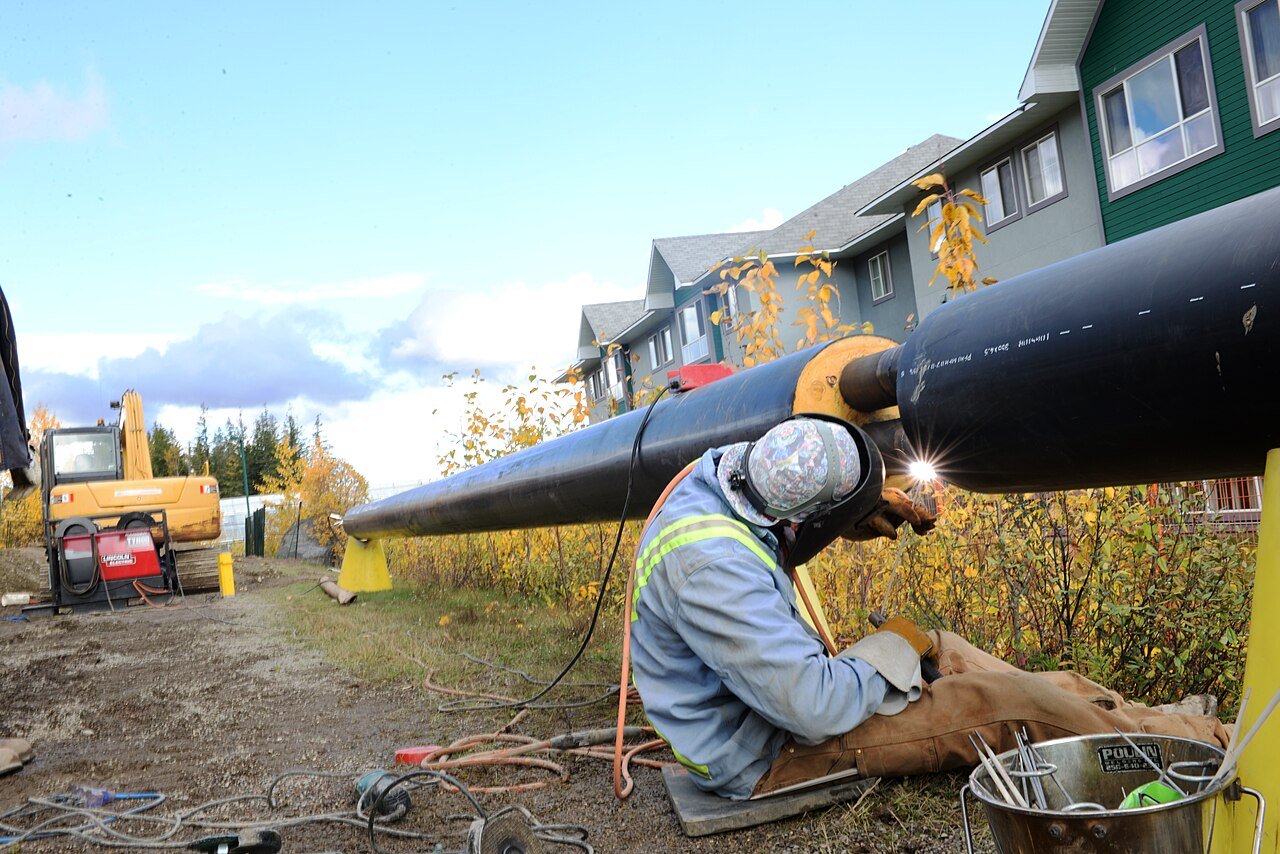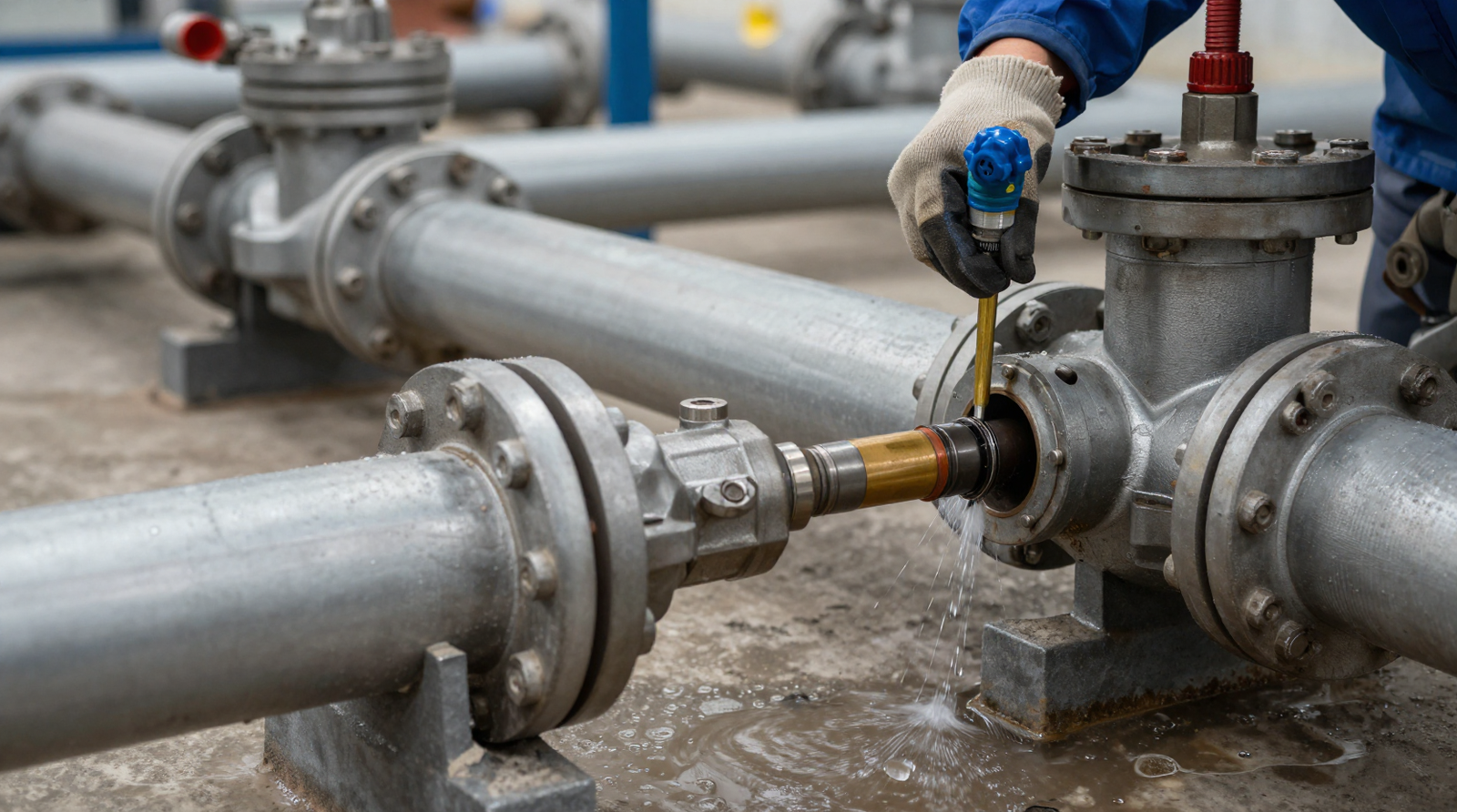
Emergency leak online sealing sumatra is live repair of pressurised pipelines, flanges, valves and process equipment across Riau, South Sumatra and Aceh without shutting the unit down. A specialist crew fits an engineered enclosure over the leak path and injects sealant under controlled pressure while the line keeps running.
This guide is for maintenance managers, plant engineers, HSE officers and procurement teams at refineries, gas processing plants, terminals, compressor stations and pipeline operators across Sumatra. It covers what online sealing is, why mature fields and long corridors change the planning, how mobilisation windows work, and how to vet a contractor before an emergency forces the decision.
What Is Emergency Leak Online Sealing in the Sumatra Context?
Online sealing stops an active leak on a system that remains in service. Instead of isolating, draining and purging, the repair is built around the leak: a mechanical clamp, box enclosure or injection ring is fitted over the defective area, and a sealing compound is forced into the cavity between the enclosure and the parent surface, curing in place to restore the pressure boundary. “Online” means full operating pressure, full flow and full temperature at the moment of the repair.
The technique does not change with geography; the underlying method is described in our reference on emergency leak online sealing. What changes on Sumatra is everything around it: long distances between sites, mature infrastructure with advanced corrosion, peat terrain and river crossings, and a small pool of specialist crews mean that planning, not the injection work, dominates the job.
Why Sumatra’s Mature Fields and Long Corridors Change the Repair Plan
Sumatra is the historical heartland of Indonesian oil and gas. The Dumai–Pekanbaru–Prabumulih–Plaju corridor carries refineries, gas processing and trunklines that have been in service for decades, while North Sumatra and Aceh add the Arun and Lhokseumawe industrial belt. Much of this infrastructure is older than the crews who now maintain it.
- Advanced corrosion. Decades of service on flowlines, trunklines and terminal pipework produce wall thinning, pitting and gasket relaxation as routine findings.
- Long transmission distances. A pipeline may run hundreds of kilometres between a field and its processing hub, so a leak can be many hours from the nearest workshop or sealant store.
- Distances between sites. Unlike Java, where one crew can serve several plants in a day, Sumatra forces a choice of which site to base from and what stock to hold forward.
- Higher baseline leak frequency. Mature fields leak more often, which is why a standing maintenance arrangement is worth more here than on a newer asset base — the call-outs are not hypothetical.
Under the Indonesian upstream and downstream split, oil and gas activity in Sumatra falls under the oversight of SKK Migas and Ditjen Migas within the Ministry of Energy and Mineral Resources (KESDM). The practical effect is that permits, notifications and inspection records must be current before a crew mobilises, not assembled on arrival.
The Sumatra Corridor: Assets, Weak Points and Mobilisation Windows
There is no single “Sumatra” site profile. The corridor is a chain of distinct industrial nodes, each with its own asset mix and access reality. The table below is the planning framework we use for a live leak repair on the island; timings are typical industry ranges, not guarantees.
| Corridor / node | Typical assets | Characteristic weak points | Realistic mobilisation window |
|---|---|---|---|
| Dumai–Pekanbaru (Riau) | Refinery, crude and product terminals, gathering lines | Ageing tank-farm pipework, flange joints on hot lines, corroded trunkline sections | 4–12 h for a crew staged in Dumai or Pekanbaru |
| Prabumulih–Plaju (South Sumatra) | Gas processing, refinery, long transmission pipelines | Sour service on gathering lines, wall thinning on trunklines, compressor station piping | 6–24 h, longer for interior field locations |
| Arun–Lhokseumawe (Aceh) | Gas processing, fertiliser and heavy industry | Legacy piping on converted assets, bolted joints, valves without upstream isolation | 12–48 h including a commercial flight plus road transfer |

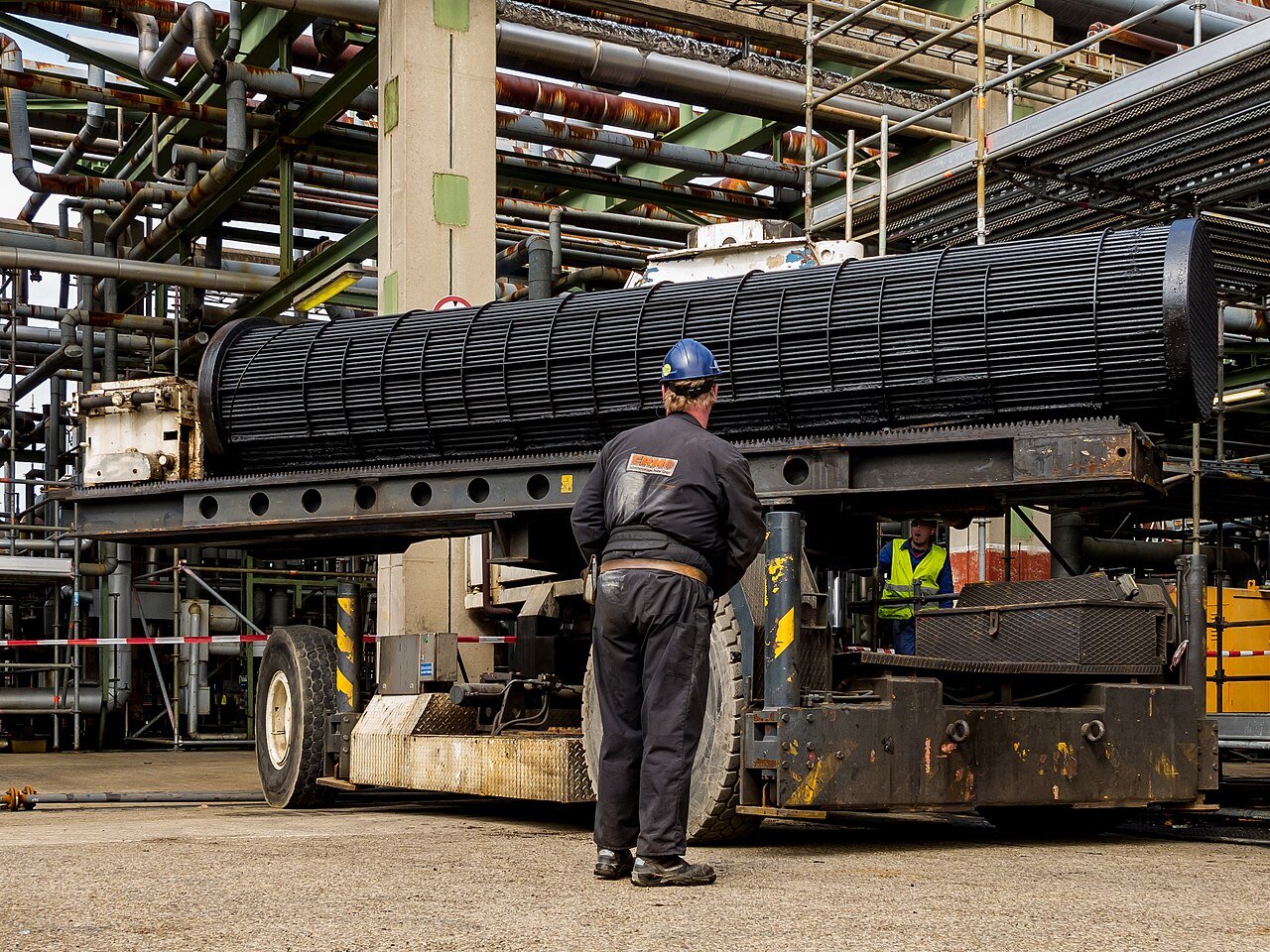
Compressor station piping and its bolted flanged joints are among the most frequent live sealing targets along Sumatra’s gas transmission corridor, because a station outage propagates straight to pipeline throughput.
Dumai and Plaju: The Refinery Hubs That Set the Clock
Dumai in Riau and Plaju in South Sumatra are the two refinery anchors of the island, each surrounded by terminals, jetty infrastructure, machine shops and sealant suppliers. At a hub a crew can be staged locally; hundreds of kilometres away, the transfer dominates the clock, not the repair.
The countdown starts not when the leak is discovered but when the crew and kit are confirmed at a hub. A team mobilised from Jakarta or Surabaya needs a commercial flight, a transit and a second leg by road, barge or aircraft. Building that sequence into a response plan, rather than improvising it during an incident, is the single largest lever on total downtime. The national picture is set out in our overview of online leak sealing services in Indonesia.
The Pre-Positioning Rule: Why Overnight Delivery Does Not Exist
On Sumatra the distances between sites are large enough that next-day delivery cannot be assumed. A leaking flange at 02:00 at a site six hours from the nearest industrial supplier is a multi-day event if the required sealant grade is not already in the store. Every facility should hold a minimum live-leak response kit on site, sized to its assets, with central stock held forward at Dumai or Plaju.
- Sealant in multiple grades — general purpose, high-temperature and chemical-resistant — in sealed cartridges with visible expiry dates.
- Injection equipment — guns, hoses, fittings, pressure gauges and a spare set of the small parts that always go missing.
- Standard clamps and boxes for the most common line sizes and flange ratings on site, plus their sealing elements.
- Composite repair materials for wall-thinning defects, with the surface preparation and curing consumables to apply them correctly under ISO 24817.
- Documentation — clamp drawings, sealant data sheets, the leak register and the pre-agreed maximum injection pressure for each system.
Stock is only useful if it is usable. Rotate sealant before expiry, confirm that gauges are within calibration, and run at least one drill a year in which the crew opens the kit and installs a clamp on a spool piece; expired cartridges and seized fittings look like readiness on an audit and behave like nothing on the night of the leak. Minimum kit contents for field pipelines are listed in our pipeline emergency leak repair reference.
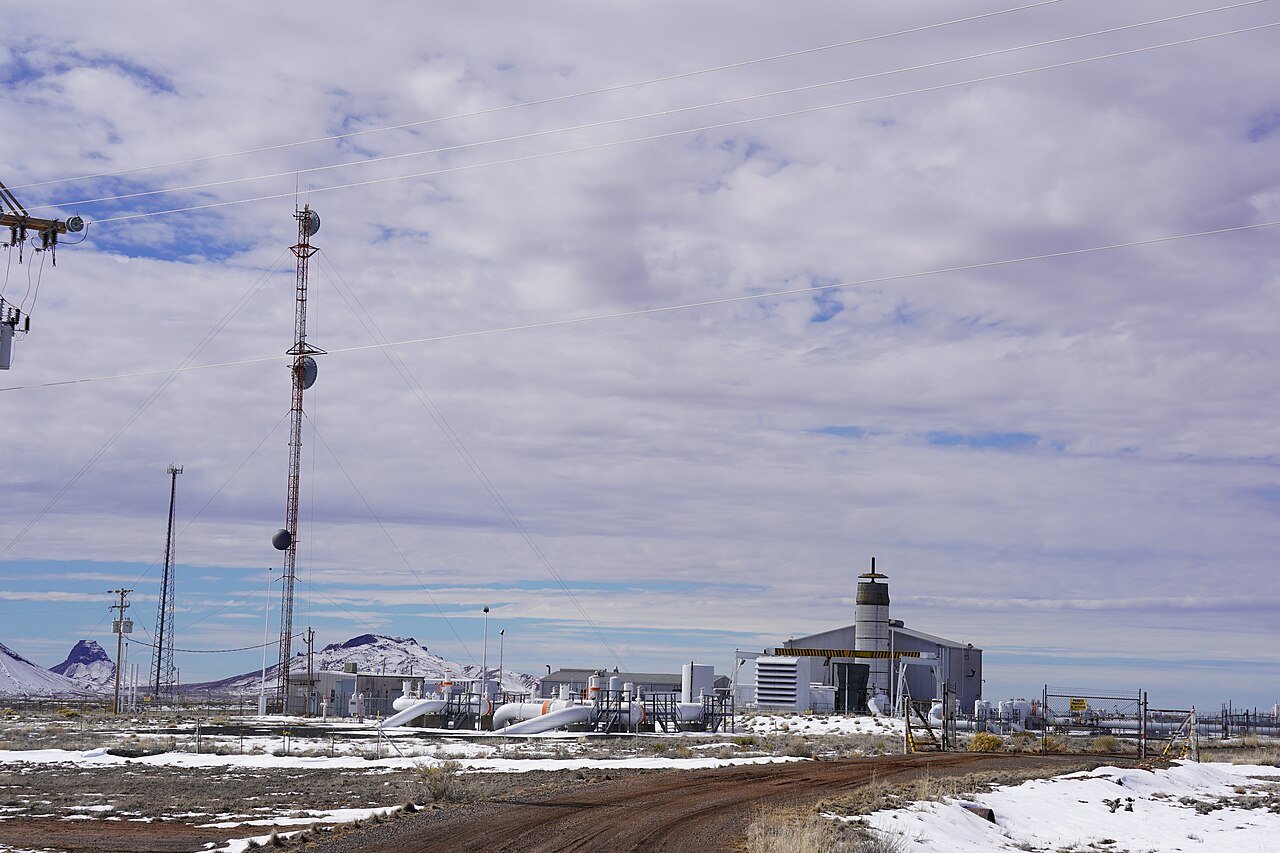
Remote transmission stations cannot rely on next-day delivery, so sealant, standard clamps and injection gear must already be on site or held at a corridor hub such as Dumai or Plaju.
Peat, Rivers and Access: The Physical Constraints
Access on Sumatra is written by water and terrain. Plan the work window around these constraints and the repair proceeds; ignore them and the crew waits while the leak continues.
- Peat terrain. Soft ground restricts axle load and travel speed, and can make an otherwise short route impassable in the wet season.
- River and tidal crossings. A leak at a crossing may have no road access at all, and barge loading at river jetties is governed by tide — a missed window can cost half a day.
- Weather and working conditions. Monsoon rainfall affects haul-road condition, heat and humidity change sealant pot life, and live hydrocarbon work after dark should be limited to essential steps with lighting planned before sunset.
Sour Service, Ageing Infrastructure and the Standards That Apply
A significant share of Sumatra production is sour, with hydrogen sulphide present in the fluid. This matters for online sealing in three ways. Material selection for clamps, bolts and enclosures must satisfy NACE MR0175 / ISO 15156 rather than inheriting the pipe specification by convenience. The hazard profile of the work changes, requiring continuous gas monitoring and a defined escape and rescue plan. And sealant chemistry must be verified as compatible with the service rather than assumed from a general-purpose grade.
Ageing flowlines are the second theme. Many lines in the corridor have been in service for decades, with supports corroded, coatings degraded and wall thickness in places undocumented. Before sealing, the question “is the boundary still structural?” must be answered with actual readings wherever possible, not with the original design thickness.
Live leak repair is a code-driven discipline. According to ASME B31.3 Process Piping, plant piping design and material expectations are defined by recognised code, and clamp or enclosure design should be traceable to that basis and to ASME PCC-2. In-service inspection and corrosion management follow API standards such as API 570 for piping and API 510 for pressure vessels, with corrosion control guidance published by AMPP. For permit-to-work and major-hazard practice, guidance from the International Association of Oil & Gas Producers underpins most operators’ frameworks. Ask a contractor to explain how a clamp thickness or maximum injection pressure was derived.
What a Sumatra Call-Out Looks Like in Time
Downtime is rarely the sealing operation itself. On a well-prepared job, on-site sealing work is commonly measured in hours; the elapsed time from discovery to production restored is dominated by mobilisation, access and permitting.
| Phase | Typical duration | Dominated by | How to compress it |
|---|---|---|---|
| Detection and triage | 0.5–2 h | Gas monitoring, hazard classification, data capture | Pre-written checklist, trained shift team |
| Technical screening and enclosure selection | 2–6 h | Accuracy of the data pack sent to the contractor | Standard data template held on site, photographs ready |
| Mobilisation to a hub | 6–24 h | Flight availability, crew call-out, kit staging | Standby agreement with pre-agreed call-out terms |
| Onward transport to site | 4 h–2 days | Mode chosen, terrain, tides, road condition | Pre-planned access route per site, permits pre-cleared |
| Site induction and permit to work | 2–8 h | HSE onboarding, JSA approval, gas test clearance | Pre-registered contractor personnel |
| Sealing execution | 3–12 h | Leak geometry, pressure, access, hold period | Correct clamp and sealant on site first time |
| Verification and documentation | 2–6 h | Hold period, detector checks, records | Verification checklist prepared in advance |
Read the table the right way round: the two largest blocks — mobilisation and onward transport — are almost entirely predictable and can be planned and rehearsed before any leak exists. Compressing them is worth far more than shaving an hour off the injection process. The arithmetic is set out in our breakdown of leak repair cost and downtime reduction.

At a gas processing site, avoiding an unplanned shutdown also avoids the flaring, purge and re-commissioning sequence that follows it — one reason live sealing is preferred wherever the method envelope allows.
Vetting a Sumatra-Capable Partner
These questions separate a contractor who can genuinely operate on the island from one who cannot. Ask them before you sign anything, and expect written answers.
- Where is the crew based? A team that can stage from Dumai or Plaju will beat a team that must fly from Java, every time.
- What is the mobilisation commitment? Ask for a written call-out window and the conditions that void it.
- Do they hold stock at both ends? A corridor hub store plus site stock is the difference between hours and days.
- Have they worked your service? Sour hydrocarbon, high-pressure gas and steam each require different materials and discipline.
- How is injection pressure agreed? The maximum allowable injection pressure must be signed off by the process engineer, not chosen at the workface.
- Do they document? Enclosure drawings, sealant batch records, injection pressure logs and verification evidence should be standard deliverables, not favours.
It is also worth studying how neighbouring regions are handled, because the mobilisation logic is directly comparable. Our emergency leak online sealing in Kalimantan covers the same remote-logistics problem on the opposite island, and the East Java corridor is described in the Surabaya response guide. Where the leak is at a bolted joint rather than a pipe wall, the method is set out in our flange leak online sealing reference, and for isolation valves that cannot be taken out of service, see valve online leak sealing.
Key Takeaways
- On Sumatra the engineering is rarely the bottleneck; mobilisation, terrain and access are.
- The corridor runs Dumai–Pekanbaru–Prabumulih–Plaju, with Arun and Lhokseumawe in the north, and each node has its own asset mix and access reality.
- Mature fields leak more often, so a standing maintenance arrangement returns more value here than on a newer asset base.
- Pre-position sealant, standard clamps, injection equipment and documentation at both a corridor hub and on site, and rotate it before expiry.
- Distances between sites are large enough that overnight delivery cannot be assumed — hold stock forward.
- Sour service demands NACE MR0175 / ISO 15156 material selection, verified sealant chemistry and continuous gas monitoring.
- Agree the mobilisation window, the access route and the maximum injection pressure in writing before injection starts.
FAQ: Emergency Leak Online Sealing Sumatra
How fast can a crew reach a Sumatra site?
For sites reachable by road from Dumai or Plaju, a staged crew commonly arrives within 4 to 12 hours of call-out. Interior field locations and Aceh sites using commercial flight, river or air transport typically take 12 to 48 hours, driven by transport availability and weather. The largest reduction comes from a standby agreement with pre-agreed mobilisation terms and forward stock.
Is online sealing cheaper than shutting the plant down?
Usually yes, but not always. Where isolation is possible within a few hours and production loss is modest, an orderly shutdown and a permanent weld repair is the better engineering decision. Online sealing wins when isolation is impossible, the unit carries a critical supply commitment, or the fluid cannot be safely drained or flared within the available window.
What should a Sumatra site keep in stock for leak emergencies?
Multiple sealant grades with visible expiry dates, injection guns and spare fittings, standard clamps for the site’s common line sizes and flange ratings, composite repair materials, matched hand and torque tools, and the documentation set including clamp drawings, sealant data sheets and pre-agreed maximum injection pressures. Rotate the stock before expiry and verify gauge calibration.
Can leaks be sealed on sour service lines in Sumatra?
Yes, provided material selection complies with NACE MR0175 / ISO 15156, sealant chemistry is verified for the service, and continuous gas monitoring with a defined escape and rescue plan is in place. Sour service raises the hazard profile rather than removing the option, and the maximum injection pressure must still be agreed with the process engineer before injection begins.
What documentation should come out of a repair?
A repair report with enclosure drawings or references, sealant type and batch, an injection pressure log including the agreed maximum, verification results and photographs, plus the updated piping line history and a scheduled wall thickness survey at the repaired location. Remote repairs need the paperwork more, not less, because reinspection is expensive and often delayed.
Leak still running and the plant is on limited time? Our response desk is staffed around the clock. Message the emergency team on WhatsApp or send a site brief with the line ID, medium, operating pressure and temperature, and we will confirm scope before mobilisation.
Conclusion
Emergency leak online sealing on Sumatra is a logistics exercise with a technical core. The clamp and sealant work the same way on the Rokan or Musi corridor as they do anywhere else; what changes is that every hour of mobilisation is unrecoverable, every missing fitting costs a day, and terrain holds a veto. Treat the mobilisation plan as an engineering deliverable — mode, route, permits, stock and a written call-out agreement — and the technical repair becomes the short part of the timeline.
If you operate in Riau, South Sumatra, Jambi or Aceh and want a defensible response plan — pre-agreed mobilisation, a site stock list matched to your assets, and a crew staged from Dumai or Plaju — the next step is a short review of your leak register and access constraints. Map your critical leak points to holdable stock and confirm the parameters you would report on a first call.