Clamp vs enclosure vs sealant injection is the decision that determines whether a live leak repair succeeds or becomes a second failure. All three methods stop a leak without shutting down, but they fail under different conditions and cost different amounts. Choosing by habit — because a crew is used to one of them — is the most common reason a repair has to be redone.
This guide is for maintenance engineers, planners and supervisors who have to specify the method rather than simply order a repair. It compares the three techniques on the criteria that actually decide the outcome: pressure capability, surface tolerance, speed, temperature, reversibility and cost. Finally, it ends with a decision table and the combinations that work when a single method is not enough.
The Three Methods in One Paragraph Each
A mechanical clamp is a rigid, often hinged, device that is bolted around the leaking component and seals against the pipe or flange face with an elastomeric or graphite seal. In practice, it is fast, needs no sealant cure and holds high pressure, which makes it the right answer for a discrete hole on a round, sound pipe or a leaking flange with intact geometry.
An enclosure (or box) is a fabricated container that surrounds the leaking component entirely and is sealed to the parent pipe or structure, with the space between enclosure and component filled by injected sealant. Because of that, it handles irregular shapes — valve bodies, welded tees, flanged joints with obstructions — and fits where a clamp cannot seal on the geometry.
Sealant injection is the controlled introduction of a sealant into a leak path or into the annulus of an enclosure, through injection fittings, at a pressure above the system pressure. In general, it sees little use alone for structural containment; it is the mechanism that makes an enclosure work, and it is used alone only on specific components designed for it, such as stuffing boxes and injection-fitted valves.
Criteria That Actually Decide the Method
| Criterion | Clamp | Enclosure + injection | Pure sealant injection |
|---|---|---|---|
| Pressure capability | High — limited by the clamp design and bolting, not the sealant | Moderate to high, limited by the enclosure shell and the seal at its edges | Depends entirely on the component; only where designed for it |
| Surface tolerance | Poor — needs a reasonably round, sound surface for the seal to seat on | Good — the enclosure does not need to conform to the leak point, only to the outer boundary | Moderate — the sealant must reach and hold in the leak path |
| Irregular geometry | Poor — needs a standard or custom-machined clamp for the shape | Good — boxes are fabricated to fit valve bodies, tees and fittings | Not applicable |
| Speed to install | Fastest — minutes to a few hours for a standard size | Slowest — fabrication, fit-up, injection and cure | Fast if the component is already fitted with injection points |
| Temperature limit | Set by the seal material; graphite seals extend the range | Set by the injected sealant and the enclosure material | Set by the sealant grade |
| Reversibility | Fully removable and reusable | Removable, but the sealant is single-use and the enclosure may be cut off | The injected sealant generally stays; removal means component replacement |
| Relative cost | Moderate hardware cost, low labour | High fabrication cost, high labour | Low hardware, moderate labour, but component-specific |
| Inspection after repair | Simple — look at the clamp and the seal | Harder — the enclosure hides the leak point | Hardest — the leak path is filled and not visible |
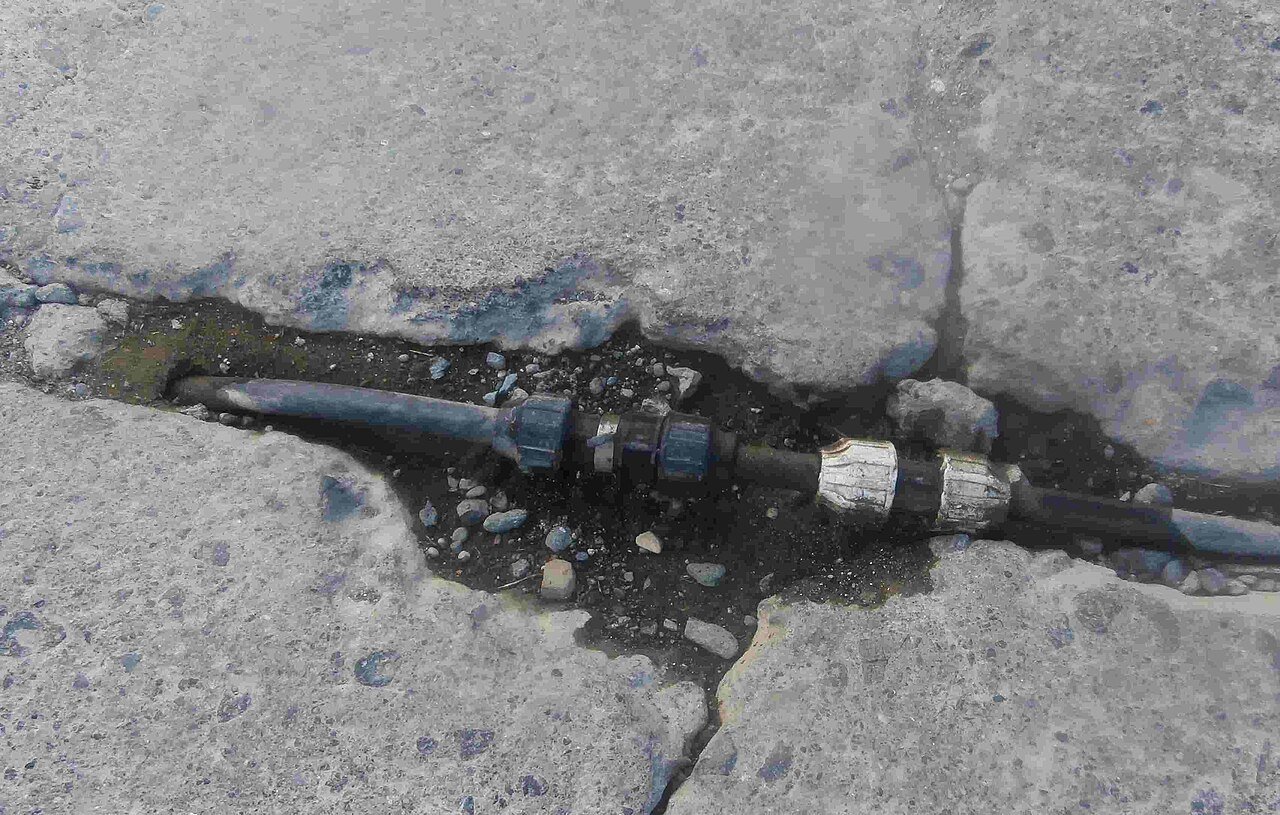
A pressurised line after live repair, containment hardware in place.
When a Clamp Is the Right Answer
- A discrete hole or crack-free defect on a round pipe, with sound metal around it and adequate straight length for the clamp to seat.
- A leaking flange where the flange faces are intact, the bolting is sound, and the clamp can encapsulate the joint.
- High pressure, where a rigid body and bolting give more confidence than an injected seal.
- Speed matters — a standard clamp can be installed in a shift, which matters for a leak that is degrading a production unit.
- The repair may need to come off for a permanent fix at the next shutdown; a clamp is fully reversible.
The limit is geometry and condition. However, a clamp cannot seal on a distorted, oval or heavily corroded pipe, and it cannot reach a leak at a weld toe where the profile prevents the seal from seating.
When an Enclosure Is the Right Answer
- Irregular components — valve bodies, bonnet joints, tee junctions, flanged connections with studs and obstructions in the way.
- Leaks at a geometry a clamp cannot fit, where fabrication is cheaper than machining a custom clamp.
- Lower pressure with a large leak area, where the enclosure is essentially a small pressure vessel around the component.
- Multiple leak points in one area, where a single enclosure covering a joint is more economical than several clamps.
The limit is the edge seal. In practice, an enclosure is only as good as its seal to the parent pipe, and that seal is the part most likely to fail. Enclosures also take time: fabrication, fit-up, injection in stages, and a cure before verification. Above all, the choice between clamp vs enclosure vs sealant injection turns on geometry, and this is where the enclosure wins most of its work.
When Pure Injection Is the Right Answer
Injection without an enclosure is legitimate only on components designed for it: stuffing boxes with injection ports, valves with a sealant injection fitting in the stem or seat, and specific fitting designs where the manufacturer intended the sealant to be introduced into a cavity. In those cases the injection is the manufacturer’s intended maintenance method, and the sealant grade is specified by the component manufacturer.
By contrast, it is not legitimate as a general-purpose method on a random pipe leak. Injecting sealant into an open leak path with no enclosure gives it nothing to be held against; the sealant flows out with the leak.
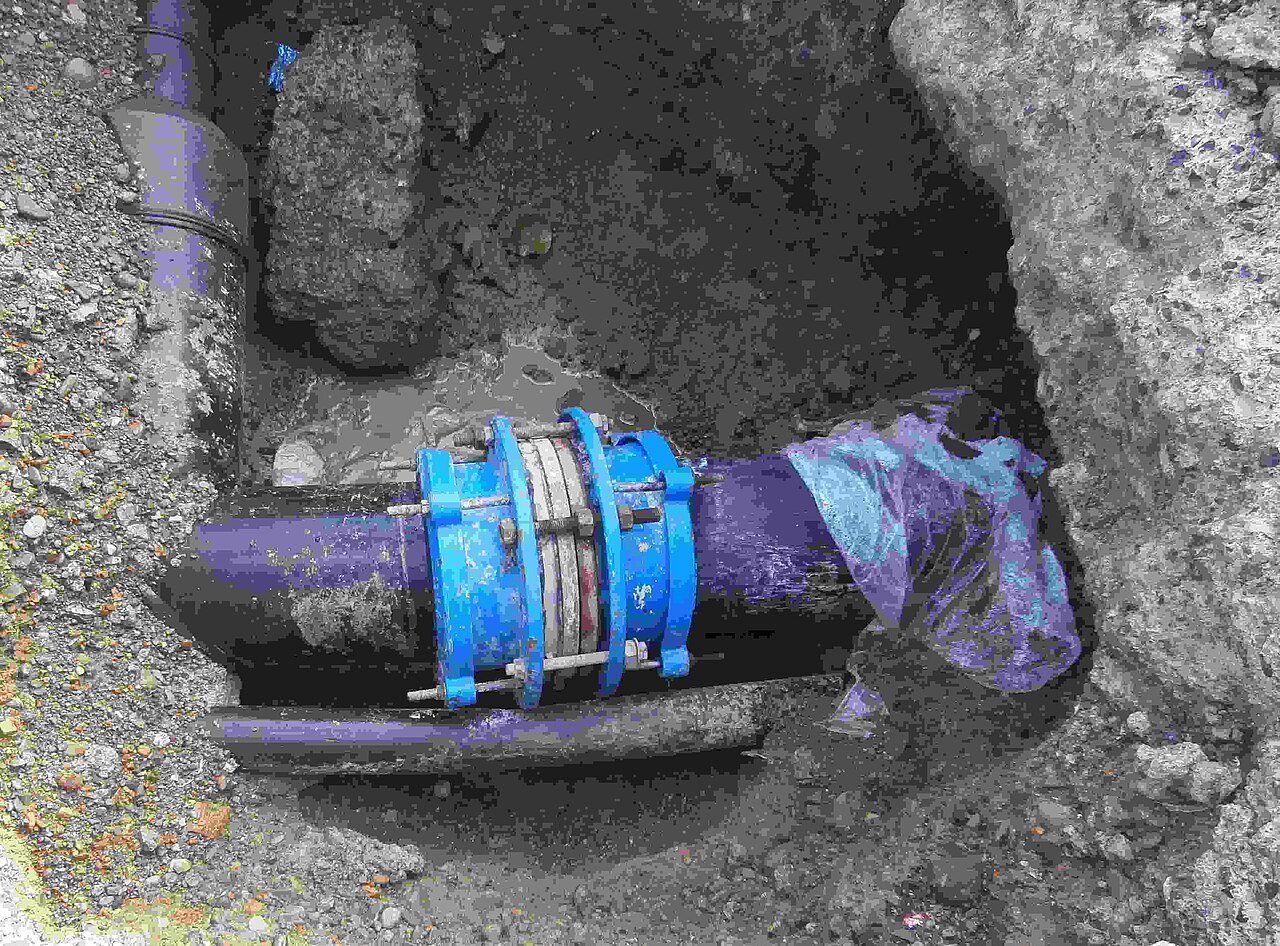
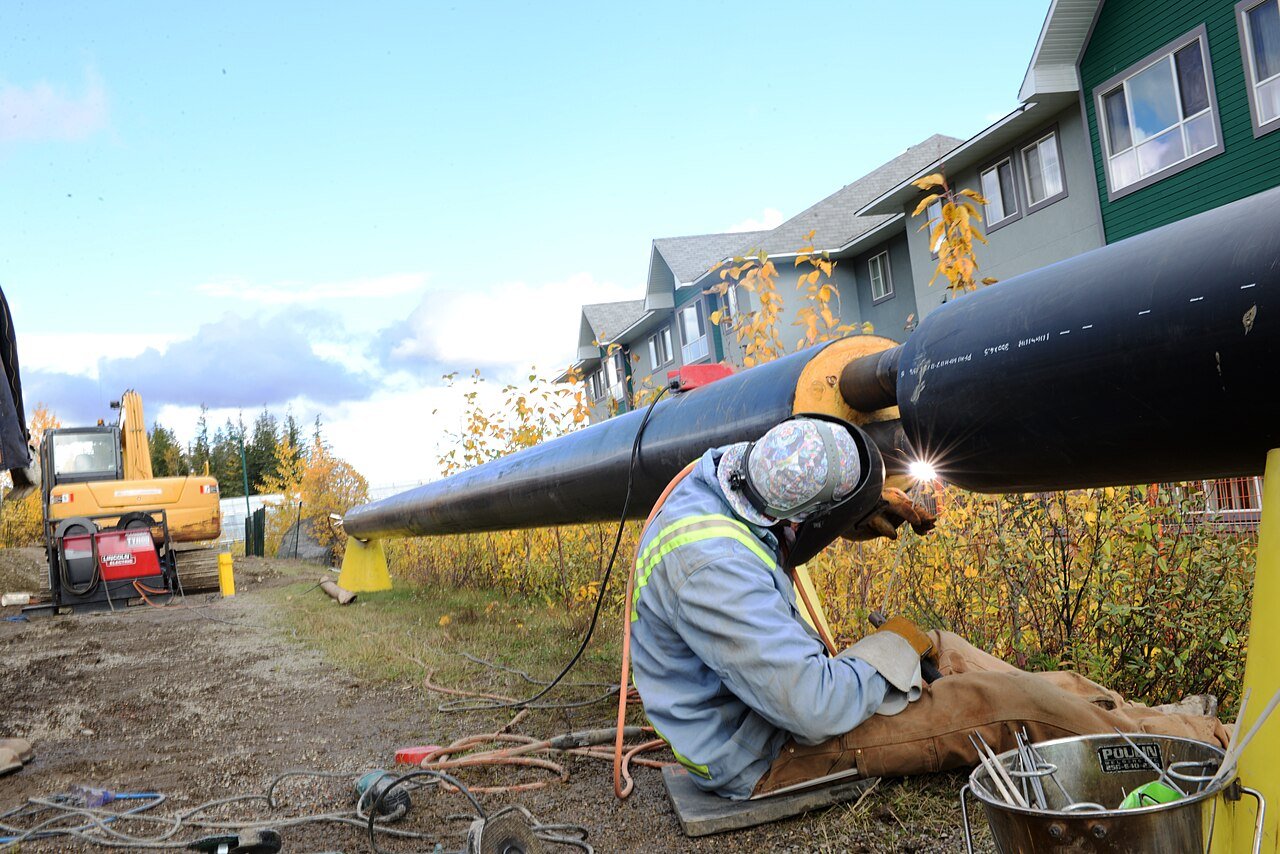
A live pipe repair completed and verified on a pressurised line.
Combining Clamp vs Enclosure vs Sealant Injection
Real jobs frequently need two of the three, and the sequence matters.
- Enclosure first, then injection. The default combination: the box provides the cavity, the sealant provides the seal.
- Injection to stabilise, then clamp. On a high-rate leak where fitting a clamp dry is impossible, a preliminary injection reduces the flow enough to fit the clamp. This is a two-stage repair and needs to be planned as such.
- Seal, then composite wrap. Where the objective is both containment and restored wall strength, the leak is sealed first and a qualified composite system applied afterwards. Never wrap over an active leak without a relief path — the trapped pressure can rupture the wrap.
- Clamp for now, enclosure at turnaround. A clamp as a temporary measure, replaced by a designed repair in the next window, is a legitimate strategy if it is recorded with a review date.
The Decision Table
| Situation | Method | Why |
|---|---|---|
| Pinhole on a straight, round, sound pipe at high pressure | Clamp | Best pressure capability, fastest, reversible |
| Leaking flange with intact faces and sound bolting | Clamp or flange enclosure | Encapsulates the joint; check bolt condition first |
| Valve body or bonnet leak at moderate pressure | Fabricated enclosure with injection | Geometry defeats a clamp; the box gives a cavity |
| Leak at a tee or weld with complex profile | Enclosure with injection | No sealing surface for a clamp |
| Oval, distorted or corroded pipe | Enclosure, or refuse and replace | A clamp cannot seat; check wall thickness first |
| Stuffing box or injection-fitted valve | Pure injection | The component was designed for it |
| General wall loss over a length | None — replace the section | No sound metal for either clamp or enclosure edge seal |
| Crack in a high-temperature or hydrogen-charged component | None — engineering assessment | Containment hides a propagating defect |
| Large leak area, low pressure, awkward access | Enclosure with staged injection | Box handles area; staged injection handles flow |
Cost Reality, Not Brochure Cost
The purchase price of the hardware is the smallest part of the comparison. On the other hand, the dominant costs are labour hours on site, the cost of the outage avoided (which is the same for all three), and the cost of a redo.
A clamp that costs more in hardware but installs in two hours is usually cheaper than an enclosure that costs less in material but takes two days of fabrication and injection. Conversely, an enclosure that covers a valve body properly will outlast three clamps that keep failing to seat on an irregular surface — and the redo cost dwarfs the original difference.
The rule that holds in practice: choose the method that matches the geometry and the pressure, then optimise cost within that. Choosing the cheap method on the wrong geometry is how a plant ends up paying twice.

Flare stack in service at a process plant.
Failure Modes to Expect
| Method | Typical failure | Prevention |
|---|---|---|
| Clamp | Seal extruded or cut by a rough surface; clamp loosened by thermal cycling; clamp fitted on thinned pipe that deforms | Wall thickness survey, surface preparation, correct seal material for temperature, retorque procedure |
| Enclosure | Edge seal fails; sealant does not fill the cavity; injection ports blocked; enclosure cracks at a weld under thermal movement | Port positioning, verified injection, thermal clearance calculation, fit-up before injection |
| Injection | Sealant does not reach the leak path; sealant cures in the fitting; incompatible sealant degrades | Manufacturer-specified sealant, correct injection pressure, verification of flow before and during |
Most of these failures are decided before the crew arrives, in the specification. That is why the same discipline that governs composite repair versus online sealing applies here: the method must be chosen against the defect, not against the crew’s preference. Where a containment repair cannot restore wall strength, the alternative is covered in composite repair versus online sealing, and the wider method set in online leak sealing methods.
FAQ: Clamp vs Enclosure vs Sealant Injection
Which method is strongest?
The clamp, for a geometry it fits. A rigid clamp with proper bolting is limited by its design pressure rather than by the sealant, whereas an enclosure depends on the edge seal and the injected sealant, and pure injection depends entirely on the component being designed for it. Strength follows geometry, not method prestige.
Can I use a clamp on a valve body?
Only if the valve body geometry is round and regular enough for the clamp to seat and the seal to land on a sound surface. Most valve bodies are not, which is why valve body leaks normally go to a fabricated enclosure with injection.
Is sealant injection alone ever enough?
Yes, on components designed for it: stuffing boxes with injection ports and valves with manufacturer-fitted sealant injection points. It is not a general-purpose method for a pipe leak, because injected sealant needs a cavity or a leak path with something to hold against.
Why do enclosures cost more than clamps?
Because they are fabricated to fit a specific component and require fit-up, staged injection and a cure before verification. Although the hardware may be cheaper than a machined clamp, the labour is far higher. Therefore, the comparison only makes sense against the total installed cost, including the risk of a redo.
What if the pipe is oval or corroded?
Moreover, a clamp will not seal reliably and an enclosure edge seal is compromised as well. Check wall thickness first; if the pipe is distorted or thinned, the correct method is replacement of the section rather than a containment repair. A clamp on a thinned pipe can deform it further.
Can the three methods be combined?
Yes, and often they should be. Enclosure plus injection is the standard combination. Injection to reduce flow followed by a clamp is a legitimate two-stage repair on a high-rate leak. Sealing followed by a qualified composite wrap is used where wall strength must be restored, provided the leak is fully sealed before wrapping.
The Practical Rule
Decide on geometry first, pressure second, temperature third, and speed fourth. If the geometry is round and sound, a clamp is usually right. If the geometry is irregular, an enclosure with injection is right. If the component was designed with injection points, use them. And if the metal is not sound, none of the three is right — the section needs replacing, and saying so is the most valuable thing a contractor can do on that job. Applied consistently, clamp vs enclosure vs sealant injection stops being a matter of crew habit and becomes a repeatable specification decision.