Acoustic and thermography leak survey is the practice of finding leaks before they become emergencies, using ultrasound to hear a leak and infrared to see the temperature signature it creates. It is the front end of any serious leak management programme: the survey produces the register, the register produces the schedule, and the schedule is what turns leak repair from reactive firefighting into planned maintenance.
This guide is for plant reliability engineers, maintenance planners and inspection teams who want to survey their facilities systematically. It covers what each method actually detects, what each method misses, how to run a survey that produces actionable results rather than a folder of images, and how survey findings connect to the repair decision.
Why Survey Instead of Waiting
Most leaks are found by people, not by instruments — someone hears steam, sees a stain, or notices ice on a line. That works for large, obvious failures and fails completely for the leaks that matter most: small compressed air leaks, small steam leaks inside insulation, vacuum leaks, and internal leaks between two sides of a heat exchanger.
The economics of early detection are unusually clear. A 3 mm hole in a 7 bar compressed air line costs several thousand dollars a year in wasted energy and is invisible to the eye. A steam trap passing live steam is silent to anyone not listening for it. A flange that weeps slightly at 200 °C may be the earliest sign of a gasket that will fail fully during a thermal cycle next month. Survey work converts these into a decision before the failure chooses the timing.
Acoustic and Ultrasonic Detection
Ultrasonic leak detection works on a simple physical fact: a gas escaping through a small orifice produces turbulent flow, and turbulent flow generates broadband noise that extends well into the ultrasonic range, typically 20 to 100 kHz. That band is above most plant noise, so an ultrasonic instrument can locate a leak in a noisy plant where a person cannot hear it.
What it detects well:
- Compressed air and gas leaks at any pressure above about 0.5 bar — the most common and highest-value survey target.
- Steam leaks including small leaks hidden inside insulation, where the escaping jet is audible ultrasonically even when the visible plume is absent.
- Vacuum leaks, because air entering a vacuum system generates the same turbulence as gas escaping.
- Steam trap failures — a trap passing live steam has a distinct acoustic signature.
- Bearing and mechanical faults in rotating equipment, which is a useful secondary benefit of the same instrument.
What it does not do well:
Every acoustic and thermography leak survey depends on that limitation as much as on the method, because each instrument only reports a physical signature and the skill lies in judging which signature actually exists.
- Quantify the leak. Ultrasonic instruments locate and rank by signal strength, but converting that to a leak rate requires either a calibrated measurement or an estimate based on orifice size and pressure. Treat any “litres per minute” figure as an estimate.
- Work through dense insulation or lagging. The signal is attenuated, so a heavily insulated line can conceal a leak that the instrument will not hear from outside.
- Distinguish sources in a congested area. A pipe rack with a dozen potential leak points can produce ambiguous directional readings, and the crew must physically follow the signal.

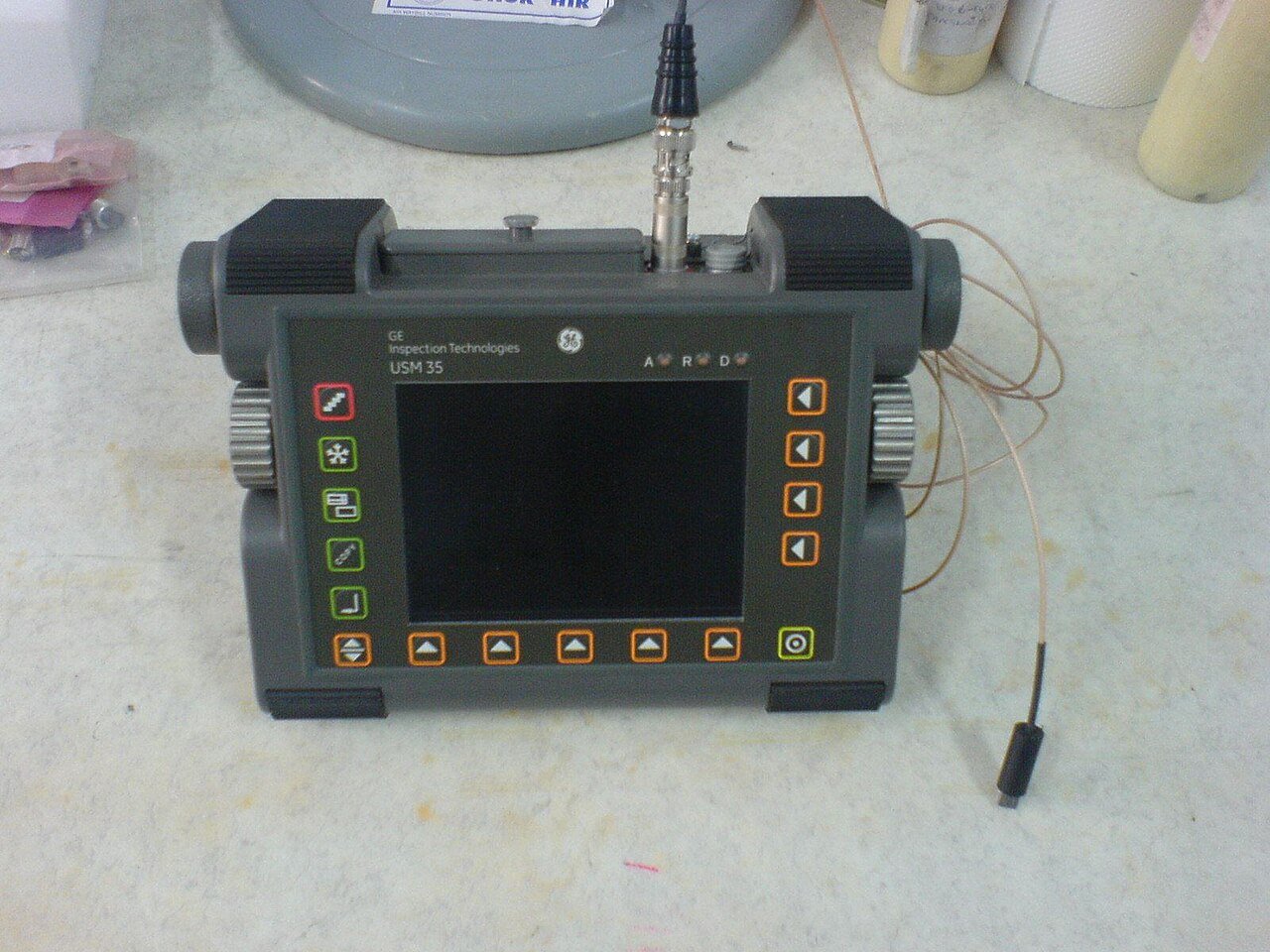
Portable ultrasonic instrument used to survey piping condition.
Infrared Thermography
Thermography detects leaks through the temperature difference they create, which makes it complementary rather than alternative to ultrasound.
What it does well:
- Steam and hot condensate leaks — the hot plume and the wet insulation show as a thermal anomaly.
- Insulation damage and missing lagging, which is often the root cause of corrosion under insulation.
- Tank and vessel level indication, where the thermal gradient between liquid and vapour space is visible.
- Refractory and furnace shell hot spots, an integrity signal rather than a leak signal.
- Electrical hot spots in switchgear and terminations, a major secondary application at any plant.
- Buried pipe tracing in some conditions, where a hot line’s thermal footprint reaches the surface.
What it does not do well:
Pairing the camera with ultrasound is what makes an acoustic and thermography leak survey cover both the hot leaks and the cold ones.
- Small gas leaks at ambient temperature. A compressed air leak at 30 °C has no thermal signature. Thermography will miss it completely; ultrasound will not.
- Work in direct sunlight or high-reflectance environments. Solar gain and reflected radiation destroy the measurement.
- Penetrate covers. Insulation cladding, aluminium sheeting and glass block infrared. What you see is the surface temperature, not the pipe.
- Give results without conditions. A thermal survey needs a temperature difference to exist. A survey of a steam system needs the system running; a survey of a tank needs a level change or a temperature contrast.
Complementary Methods
| Method | Best for | Blind spot | Typical use in a survey |
|---|---|---|---|
| Ultrasound / acoustic | Compressed air, gas, steam inside insulation, vacuum, steam traps | Cannot quantify reliably; attenuated by dense lagging | Primary sweep of utility systems and pipe racks |
| Infrared thermography | Hot leaks, insulation damage, tank levels, refractory, electrical | No signature for ambient gas leaks; blocked by cladding | Steam systems, tank farms, furnace and electrical inspection |
| Gas detection (portable) | Flammable and toxic gas releases | Only what the sensor targets; requires proximity | Confirmation at identified points; safety control during work |
| Soap solution and bubble test | Confirming a small gas leak at an accessible joint | Slow, manual, only at accessible points | Verification after repair |
| Dye and tracer gas | Specific components — heat exchangers, sealed systems | Requires introduction of a tracer; not plant-wide | Targeted investigation of a suspected internal leak |
| Flow and mass balance | System-level losses that no local method finds | Cannot locate the leak | Justifying a survey and measuring its result |
Running an Acoustic and Thermography Leak Survey That Produces Decisions
Most surveys fail not because the instruments are wrong but because the output is not usable. A folder of thermal images with no location data, no severity ranking and no recommended action cannot be scheduled. The survey that works has a defined structure.
- Define the scope and the baseline. Which systems, which areas, and what is the current measured loss — compressed air generation, boiler fuel, water make-up. Without a baseline, the survey cannot demonstrate its value.
- Survey under the right conditions. Steam systems must be running hot. Compressed air must be at normal pressure. Tanks need a level or temperature contrast. A survey done during a shutdown finds nothing.
- Tag every finding physically. A numbered tag on the component, matching the survey record, is what allows a repair crew to find the leak six weeks later. This single practice separates a useful survey from a useless one.
- Record the conditions with the finding. Pressure, temperature, fluid, access difficulty, and whether the point is isolatable. A leak that can be isolated is a different job from one that cannot.
- Rank by cost, not by size. A large visible steam leak may cost less than a hundred small compressed air leaks. Ranking by annualised cost is what makes the report actionable.
- Assign an action and a date. Repair now, schedule, monitor, or replace at turnaround. Every finding gets one of these, and a date.
- Verify after repair and re-survey. The verification closes the item; the re-survey measures the programme. A survey with no follow-up survey has no evidence of benefit.
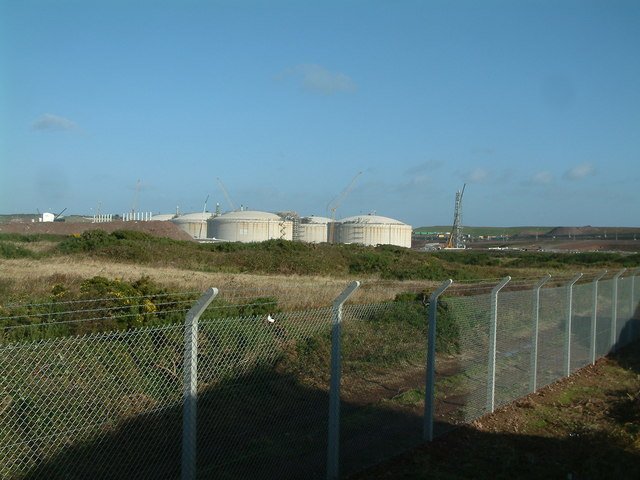
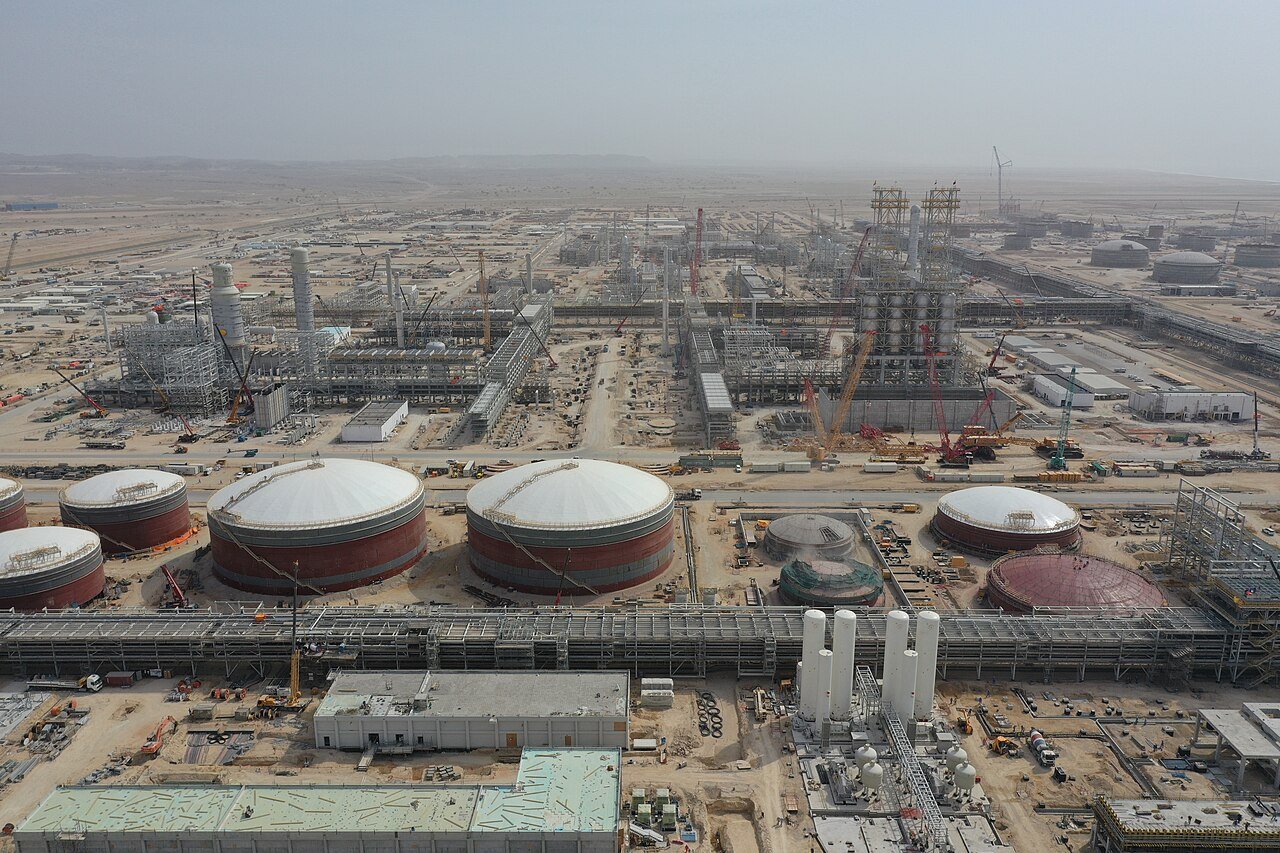
LNG storage tanks at a receiving terminal.
Connecting Survey to Repair Method
The survey output should be structured so that it feeds directly into the repair decision, because the repair method depends on things the surveyor can record.
| Survey finding | Repair route | Information the surveyor must capture |
|---|---|---|
| Discrete leak on a flange or valve, sound metal around it | Live sealing: enclosure, clamp or injection | Component type, size, pressure, temperature, fluid, access |
| Leak inside insulation on a hot line | Live sealing after insulation removal | Extent of insulation, surface temperature, whether the line can be worked on hot |
| Leak on a thinned or corroded section | Replacement, not sealing | Wall thickness readings if available, extent of the affected area |
| Steam trap passing | Trap replacement, not sealing | Trap type, model, whether it is passing live steam or condensate |
| Leak that can be isolated | Conventional maintenance | Nearest isolation valve and whether it holds |
| Internal leak between two sides of an exchanger | Process engineering assessment | Evidence of cross-contamination, not just a temperature anomaly |
This is the point where a survey becomes commercially useful: a plant that surveys and then passes the findings to a contractor who can execute live repair gets a single workflow from detection to containment. The leak management program framework describes how the register and the scheduling work together.
Instruments and Competence
The instruments are not the differentiator. A capable surveyor with a mid-range ultrasonic instrument and a basic thermal camera will outperform an untrained operator with premium equipment, because interpreting a reading requires understanding the process.
What to look for in a survey team: certified thermography competence to at least Level 1 for the camera work, ultrasonic training for the acoustic work, and — most importantly — familiarity with the plant’s processes so that a reading can be interpreted against what the system is supposed to be doing. A surveyor who does not know whether a line is supposed to be hot cannot judge whether a hot spot is a defect.
Calibration and condition of the instruments matter too. A thermal camera needs a known emissivity setting and a clear view; an ultrasonic instrument needs a functioning sensor and a directional probe appropriate to the environment. Both need to be checked before the survey starts, not after the report is questioned. For what happens after a finding is recorded, see clamp versus enclosure versus sealant injection and emergency leak online sealing.
Limits and Honest Caveats
- No survey finds everything. A single pass over a large plant will find the majority of significant leaks and will miss the ones in inaccessible areas, inside dense insulation, or with no detectable signature.
- Ultrasonic estimates of leak rate are estimates. Use them for ranking, not for accounting.
- Thermography is a surface measurement. Interpretation requires understanding of the system, and errors are common where reflected radiation is present.
- A survey’s value depends on action. A report that nobody schedules repairs from has negative value, because it consumed time and produced a list of known problems that the plant then tolerates.
FAQ: Acoustic and Thermography Leak Survey
Which method is better, ultrasound or thermography?
Neither. They detect different physics. Ultrasound hears turbulence and finds compressed air, gas, vacuum and steam leaks including inside insulation; thermography sees temperature differences and finds hot leaks, insulation damage, tank levels and refractory hot spots. A serious survey uses both, because each covers the other’s blind spot.
Can thermography find a compressed air leak?
Generally no. Air expanding from a compressed line cools locally, but at typical plant conditions the thermal contrast is too small and too easily confused with ambient effects. Ultrasound is the correct method for compressed air; thermography is the correct method for hot leaks and insulation defects.
How often should a leak survey be done?
For compressed air and steam in a continuous plant, an annual full survey with quarterly spot checks on the worst areas is a practical baseline. High-value systems — large steam headers, ammonia, hydrogen — benefit from more frequent targeted surveys. The interval should be driven by the cost of the losses, not by a calendar habit.
Why tag the leaks physically?
Because a survey report is used weeks later by a different crew. A numbered physical tag matching the survey record is what allows the repair team to find the exact point in a congested plant. Untagged surveys routinely produce findings that cannot be located, and those findings never get repaired.
Can a survey measure how much a leak costs?
It can estimate. Leak rate estimates from ultrasound or from orifice sizing can be converted into annual cost using the fluid price and operating hours. Those estimates are good enough for ranking and for justifying a programme, but they should not be presented as accounting-grade figures.
What is the most common mistake in leak surveys?
Surveying without the plant running, or surveying and then filing the report without assigning actions and dates. Both produce a document rather than a result. The survey is only the first step of a cycle that must end in repair and re-measurement.
Where This Fits
Detection is the cheapest part of leak management and the one most often skipped, because it produces a list of work rather than a visible fix. But a plant that surveys regularly ends up with a shorter emergency list, because the leaks that would have become emergencies are found and scheduled while they are still small.
For Indonesian plants where the emergency leak online sealing crew is expensive to mobilise, a survey programme is what makes the mobilisations count: one campaign, many leaks, planned in advance, instead of one emergency at a time. An acoustic and thermography leak survey is the cheapest way to shorten the emergency list, because detection costs a fraction of mobilisation.