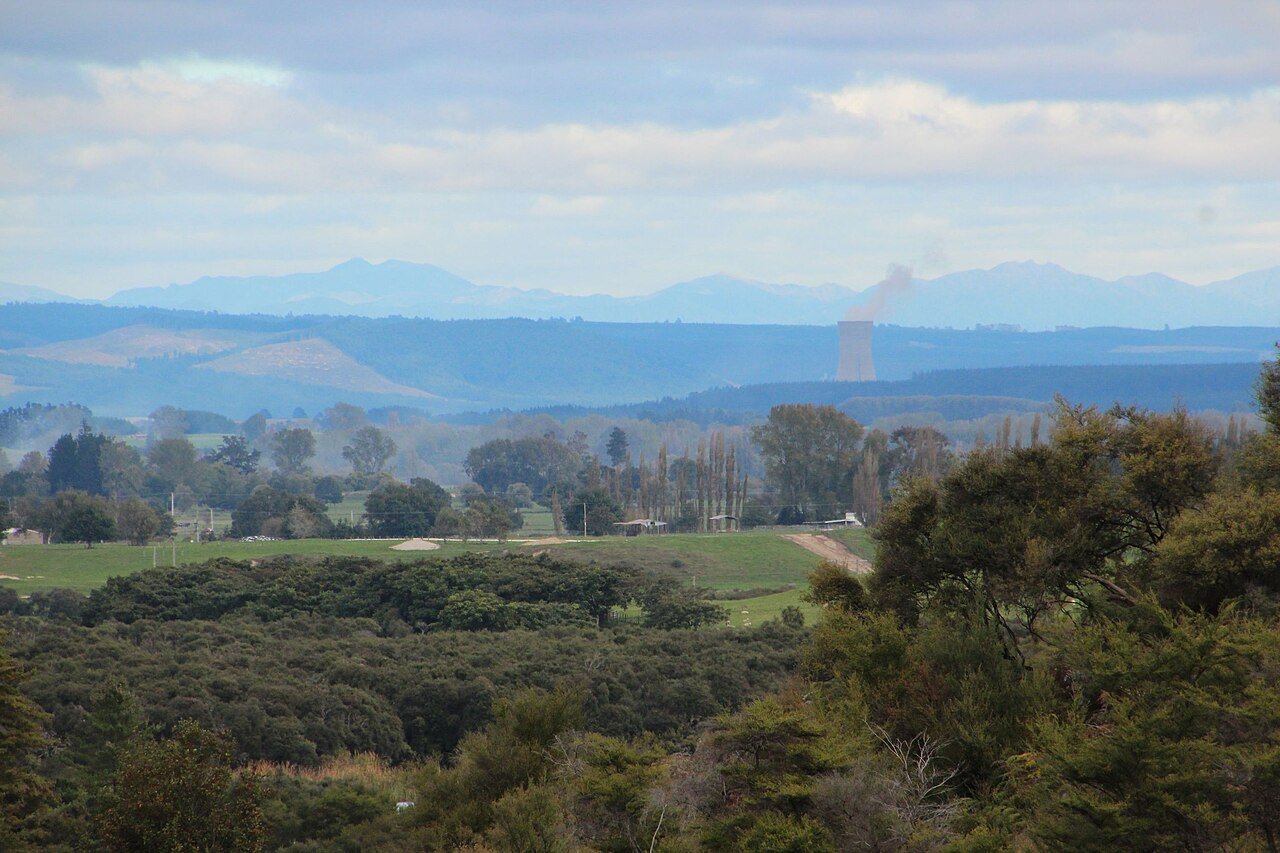
Emergency leak online sealing Balikpapan covers live leak repair for the industrial corridor of East Kalimantan — the Balikpapan refinery complex, the Bontang LNG and fertilizer plants, the pulp and paper mills along the Mahakam, and the smelting and port operations that have grown around them. Above all, mobilisation in this corridor is slow and expensive relative to Java, so the value of a live repair is higher and the cost of waiting for a shutdown is larger.
This guide is for plant managers, maintenance planners and procurement teams in East Kalimantan who need to understand what a live leak repair response actually looks like in this geography: how crews mobilise, what stock has to be pre-positioned, which sites can be reached quickly and which cannot, and how to judge a contractor’s claim that they can respond in 24 hours.
The East Kalimantan Industrial Corridor
East Kalimantan is not a single industrial cluster. Instead, it is a set of facilities separated by distance, connected by a limited road network and dependent on air and sea logistics for anything urgent.
| Area | Industrial character | Typical leak profile | Mobilisation reality |
|---|---|---|---|
| Balikpapan | Refinery complex, port, terminals, supporting industry | Process piping, storage tanks, utility steam, marine loading | Best served: airport access, port, established contractor presence |
| Bontang | LNG liquefaction, fertilizer (ammonia-urea), power | Cryogenic and low-temperature flanges, ammonia service, steam systems | Road or short flight from Balikpapan; a few hours by land |
| Samarinda and Mahakam corridor | Pulp and paper, wood processing, power | Steam and condensate, caustic and chemical lines, cooling water | Road access from Balikpapan; river logistics for remote mills |
| Kutai Timur (Sangatta area) | Coal mining, crushing plants, port stockyards | Slurry and water lines, dust suppression, hydraulics | Long road transfer; heavy equipment transport needed |
| Penajam and the new capital area | Construction-driven demand, new utilities | Commissioning leaks, temporary services, water lines | Growing access; road network improving but still limited |
| Remote sites (interior, offshore terminals) | Single-asset operations | Depends on asset type | Air or vessel charter; weather-dependent; plan days not hours |
Why Distance Changes the Economics
In Java, a leak sealing crew can be at a plant gate within a few hours because the road network is dense and contractors are concentrated around the industrial estates. In East Kalimantan the same crew has to fly personnel and ship equipment, and the equipment is heavy — injection pumps, enclosures, gas detection, PPE, compressors for testing.
As a result, three practical differences appear in how a live repair job gets scoped. Distance is the single biggest factor in the cost of emergency leak online sealing Balikpapan wide, because travel is a fixed cost that cannot be shared between repairs.
- The survey cost is a larger share of the total. Sending a surveyor to site is a flight and a day. A competent contractor will therefore combine the survey with a stock audit and a permit pre-qualification, so that one trip delivers several things.
- Consumables must be pre-positioned. Sealant has a shelf life and cannot be improvised. Sites that keep a modest stock of the sealant grades they actually use — rather than relying on next-day delivery from Surabaya or Jakarta — recover days on every event.
- Manpower planning is different. For that reason, a crew that flies in has to complete the job in the window it has. Consequently, accurate scoping before mobilisation matters more than speed of dispatch, because a crew that arrives to find a mis-scoped job has burned two days of travel for nothing.
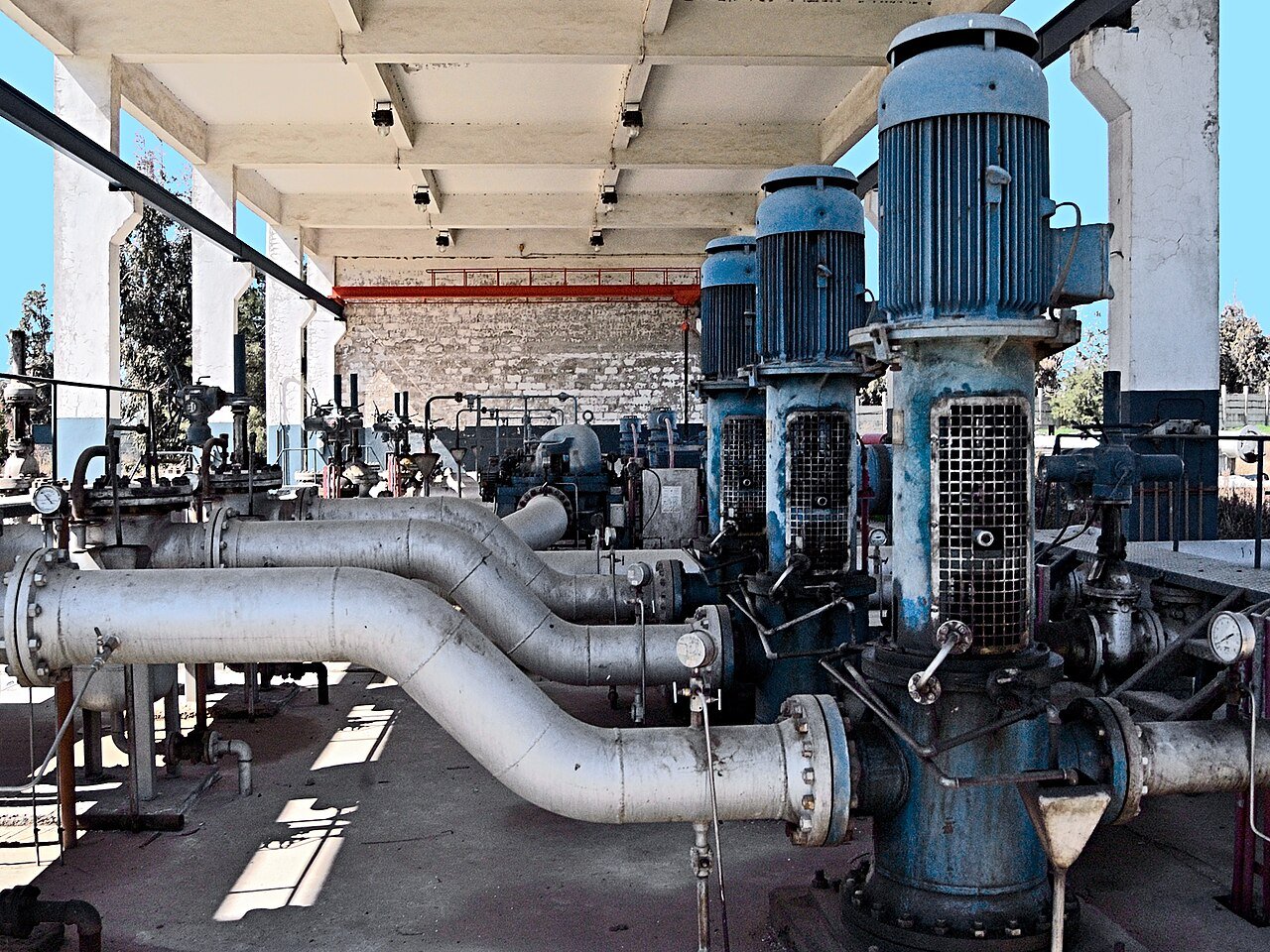
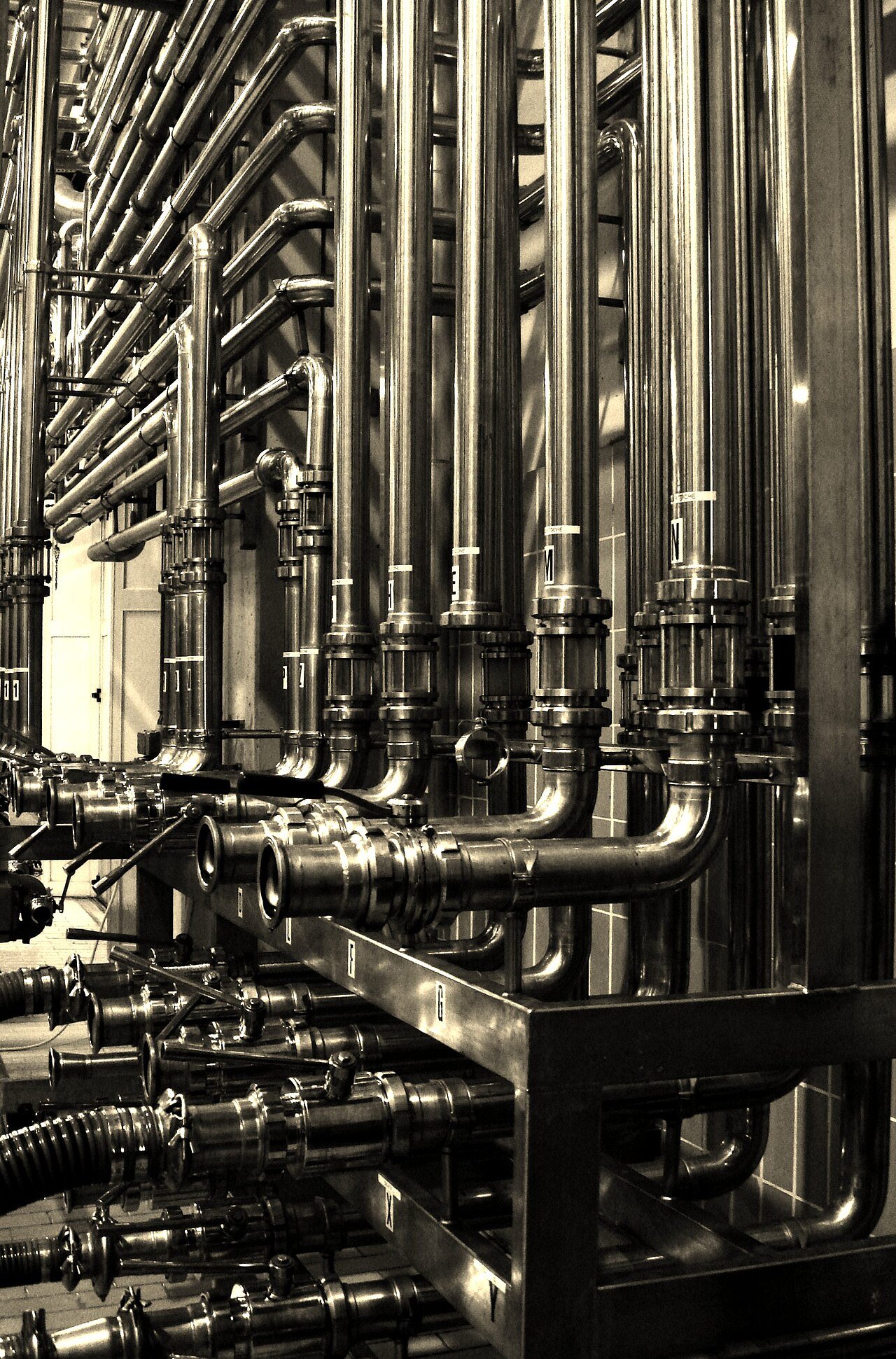
Oil terminal pumps and interconnecting pipework.
What Realistic Emergency Leak Online Sealing Balikpapan Response Looks Like
Marketing claims of “24-hour response” are common. In East Kalimantan a credible timeline looks more like this.
| Stage | Balikpapan | Bontang / Samarinda | Remote or interior |
|---|---|---|---|
| Call received and triaged | Immediate | Immediate | Immediate |
| Remote assessment (photos, data, isolation status) | 1–2 hours | 1–2 hours | 2–4 hours (comms dependent) |
| Surveyor on site | 4–12 hours | 8–24 hours | 24–72 hours |
| Crew and equipment on site | 12–24 hours | 24–48 hours | 48–96 hours or more |
| Work execution | Hours to a few days depending on scope | Same, plus mobilisation | Depends on site conditions and weather |
By contrast, a contractor who promises faster than this for a remote interior site is either misunderstanding the geography or planning to improvise with equipment that will not pass the site’s permit requirements.
The Sites That Need Leak Sealing Most
Not every facility is an equally good candidate. Based on the asset base in the corridor, the highest-value live repair work tends to be: That list is where emergency leak online sealing Balikpapan demand actually concentrates, and it explains why the capability sits in the refinery city rather than in the capital.
- Refinery utility systems in Balikpapan — steam, condensate, cooling water and process flanges. High density of leaks, high value per repair because a refinery shutdown is expensive.
- Bontang ammonia-urea and LNG utilities — steam and cooling systems, plus the low-pressure ammonia flanges where materials and detection are qualified. However, the cryogenic sections require terminal approval and mostly remain excluded.
- Pulp and paper mills along the Mahakam — steam and condensate dominate. These mills run continuously and a steam leak has a direct fuel cost.
- Coal handling and port operations — slurry, water and hydraulic lines where abrasive wear drives frequent leaks.
- Power generation — both captive and grid-connected plants, where steam leaks translate directly into lost generation and higher heat rate.
How to Judge a Contractor for This Region
Because the logistics dominate, the questions that separate a capable contractor from a brochure are specifically about supply chain and local presence. A contractor who cannot answer these questions has not done emergency leak online sealing Balikpapan work, whatever the brochure says.
- Where is your nearest stock? A contractor with sealant and enclosures in Balikpapan can start in a day; one shipping from Java cannot. Ask for the physical location and a stock list.
- Who does the survey? If the person who scopes the job is not the person who executes it, the scope will drift on site.
- What is your permit experience in this plant? Each facility has its own permit system, contractor induction and safety regime. Familiarity saves a day at the gate.
- Can you show a repair record from a comparable site? Not a client list — an actual repair record with the method, materials and outcome.
- What will you refuse to do? A contractor with no refusals has no engineering judgement, and in this industry that is a liability rather than an asset.
- How do you handle equipment import or transport for unusual scopes? Fabricated enclosures may need to be built locally or shipped, and the lead time matters.
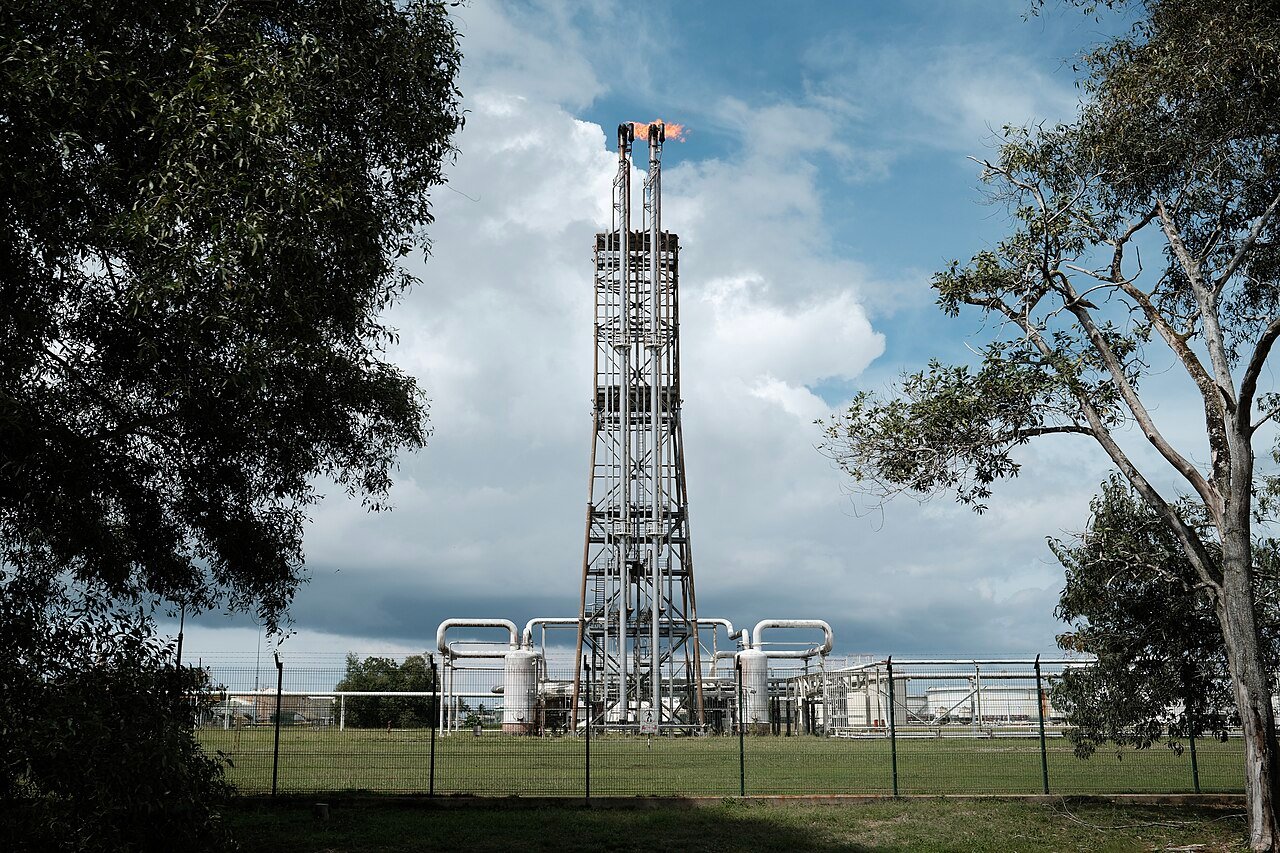
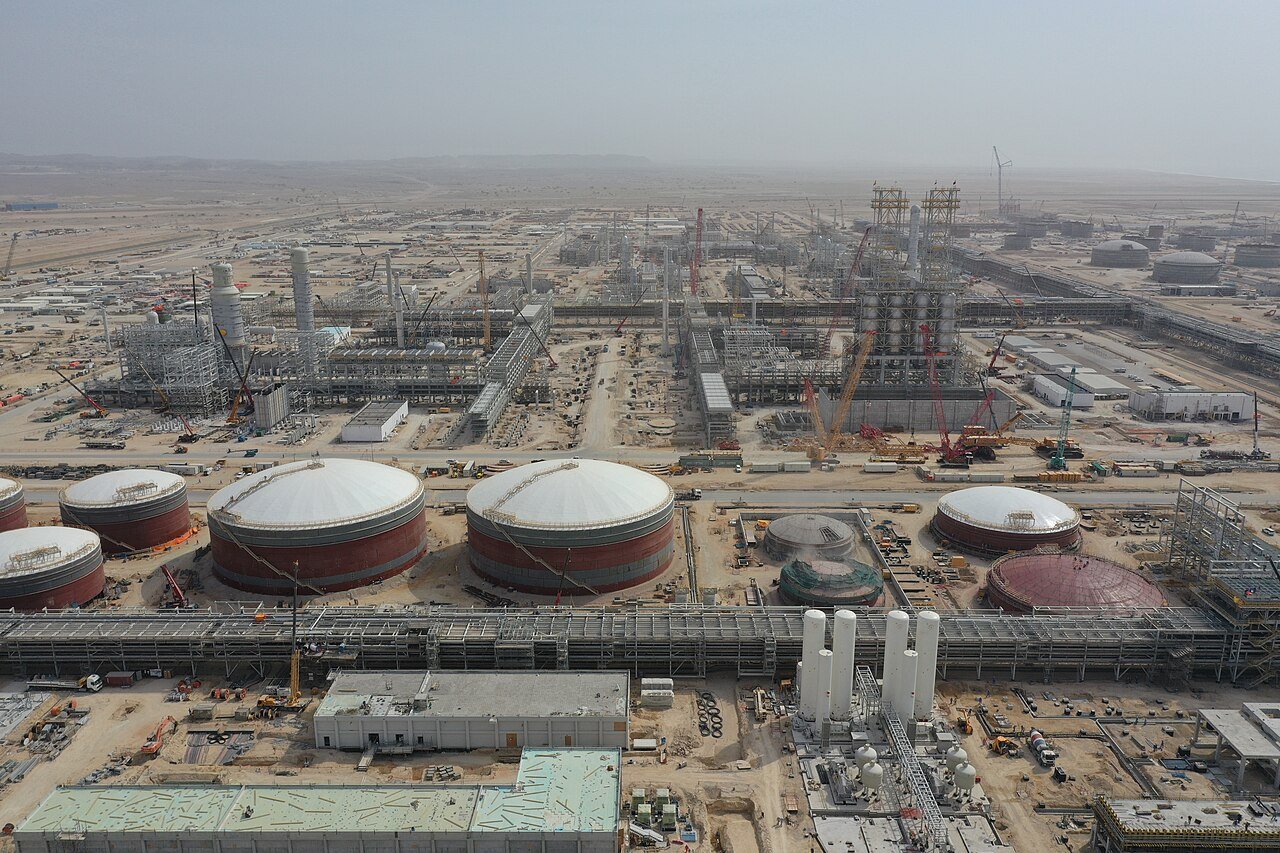
Flare stack at a refinery — the relief route that must stay available.
Pre-Positioning: The Single Highest-Value Habit
The most effective intervention for an East Kalimantan site is not a faster crew — it is a small, disciplined stock of the materials that the site actually needs. A cabinet holding the two or three sealant grades used most often, a set of standard clamps for the flange sizes on site, injection fittings and the consumables that always run out, converts a multi-day mobilisation into a same-day job.
In practice, the stock needs managing, because sealant expires and enclosure sizes are asset-specific. The workable approach is a joint stock agreement: the site holds a defined quantity, the contractor reviews it quarterly against the leak register and replaces what has expired or been used. Overall, that arrangement costs far less than one delayed emergency response, and it means the site is not dependent on air freight during a public holiday or a weather event.
Working Within the Plant’s Permit System
East Kalimantan’s larger facilities operate mature permit systems, and a leak repair crew is a contractor like any other. The practical consequences are the same as anywhere in Indonesia: induction, a job safety analysis that the plant’s HSE team accepts, gas testing by the plant or by a certified third party, isolation confirmation by operations, and a management of change process for any repair that becomes permanent.
However, the specific trap in this region is the assumption that a contractor who has worked at one facility can walk into another. Indeed, a refinery, an LNG terminal and a pulp mill have different permit cultures and different emergency response structures. Induction and site-specific preparation are not bureaucracy; they are what allows the crew to work at night in a live unit without creating a second incident. The permit detail is in permit to work for live leak repair, and the scheduling model in the leak management program.
Emergency Versus Planned: What the Corridor Actually Needs
Emergency call-outs are the visible part of the work, but the economics favour planned campaigns. A refinery or mill with a leak register can group repairs into a campaign, mobilise once, and address twenty leaks in the time it takes to handle two emergencies — including the travel.
That is the argument to make to a site in this region: the distance that makes emergencies expensive makes planned work efficient. One mobilisation, a defined scope, a fixed window. The leak management program approach is worth more here than in Java precisely because the logistics penalty on reactive work is so high. Planned campaigns are the mature form of emergency leak online sealing Balikpapan clients should be buying, because they convert a fixed travel cost into a shared one.
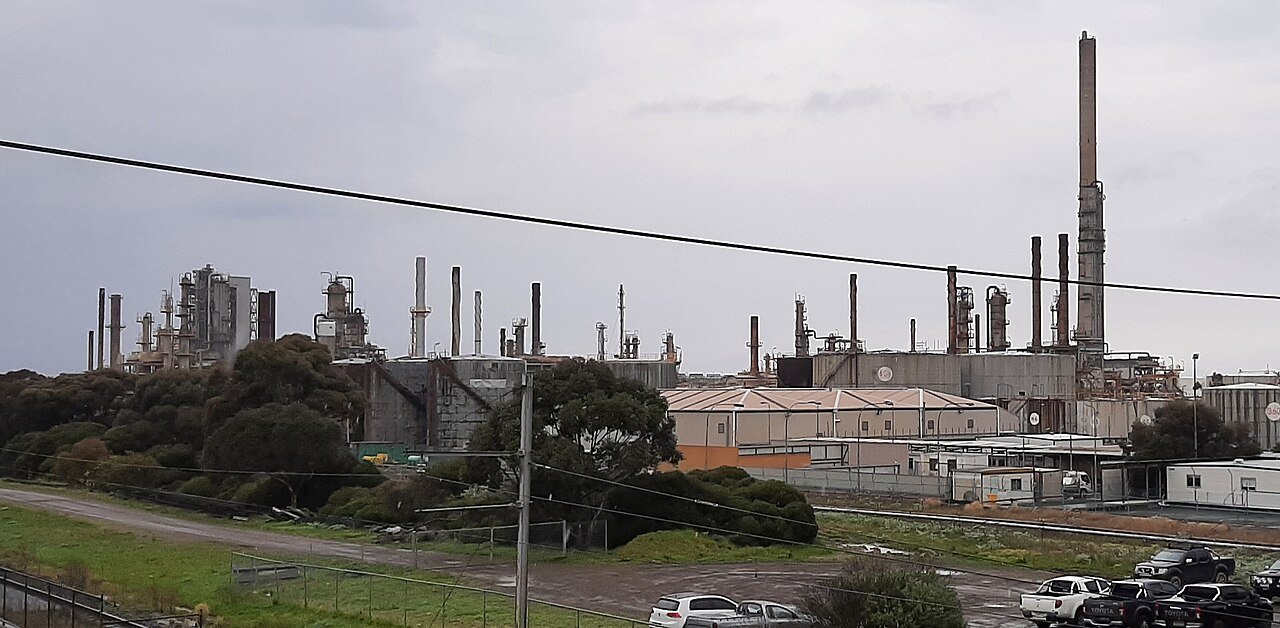
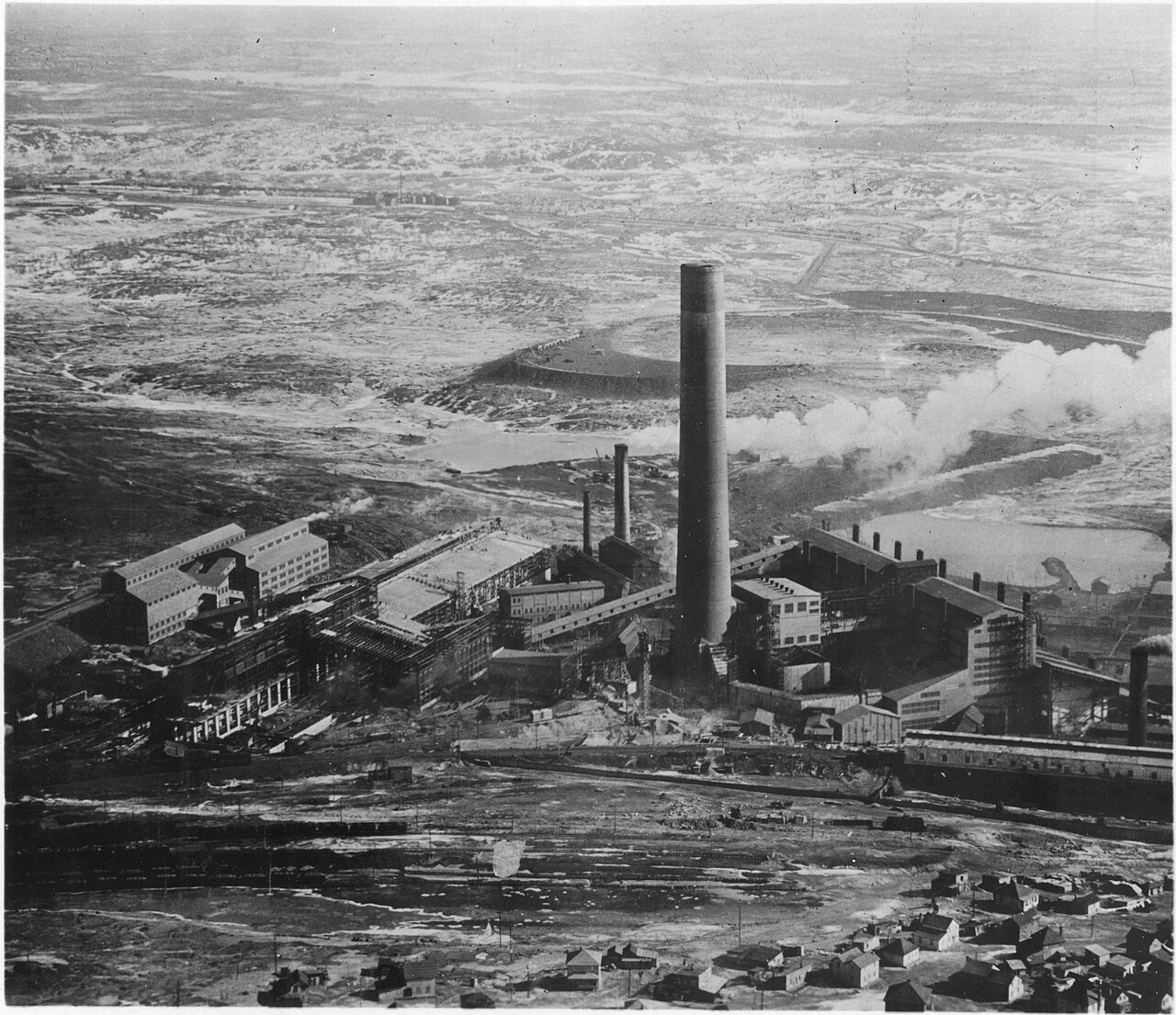
Refinery units at night, when emergency crews mobilise.
FAQ: Emergency Leak Online Sealing Balikpapan
How fast can a crew reach a plant in Balikpapan?
For a site in Balikpapan itself, a surveyor can typically be on site within half a day and a crew with equipment within 12 to 24 hours, assuming the equipment is locally available and the permit process runs in parallel. For Bontang or Samarinda, add a day. For remote interior or offshore locations, plan on 48 to 96 hours at best.
Is leak sealing available for the Bontang LNG plant?
Only within a narrow envelope and with the terminal’s own engineering approval: insulation and vapour barrier repair, small-bore fittings that can be isolated, and non-hydrocarbon cryogenic services. Primary LNG containment, pump seals and vaporiser transitions are not live-repair candidates at any price.
Do contractors keep stock in East Kalimantan?
The capable ones do, or they operate a joint stock agreement with the site. Sealant and standard clamps shipped from Java add days to every response, and air freight during holidays or bad weather can add more. Asking where the physical stock sits is the fastest way to test a contractor’s claim.
What does an emergency call-out cost compared with a planned campaign?
Per repair, an emergency call-out in this region is substantially more expensive because travel is a large fixed cost that cannot be shared. A planned campaign amortises one mobilisation across many repairs, which is why grouping leaks into a scheduled window is usually cheaper than dealing with them one at a time.
Can a repair be done at night?
Yes, if the plant’s permit system allows night work and the site provides adequate lighting and safety coverage. Night work is common for emergency response because the plant wants the leak stopped before the next production day. Usually, the constraint is the plant’s own supervision and HSE coverage rather than the contractor’s willingness.
Which facilities in the corridor are hardest to serve?
Interior sites reached by river, and offshore or remote terminals. Both depend on weather and on chartered transport, and neither can be served on an emergency basis with any reliability. For those locations the right strategy is pre-positioned stock and planned campaigns, not a 24-hour promise.
The Regional Position
East Kalimantan rewards preparation over speed. In short, the sites with the fewest production interruptions are not the ones with the fastest emergency contractor — they are the ones that keep a modest stock on site, maintain a leak register, and schedule campaigns so that mobilisation happens once. That model fits the geography, and it fits the emergency leak online sealing capability into a system rather than a scramble.
For Balikpapan specifically, the combination of a refinery complex, a working port and an airport makes it the natural base for the region. Therefore, a contractor established there, with stock and permit experience across the corridor’s facilities, can serve Bontang, Samarinda and the surrounding mills credibly — which is a very different claim from a Jakarta-based firm advertising a national 24-hour line. Emergency leak online sealing Balikpapan is therefore a logistics problem dressed as a technical one, and the plants that solve the logistics get the technical result.