Nickel smelter leak online repair is the containment of leaks on slurry, acid and high-temperature process lines in nickel processing plants while the plant continues to operate. Indonesia now dominates global nickel supply, and a generation of RKEF and HPAL plants has been built in a very short period — which means the maintenance culture, the leak registers and the repair experience are still catching up with the equipment.
This guide is for maintenance and reliability teams at nickel smelters, HPAL plants and their supporting utilities in Sulawesi, Halmahera and Kalimantan. It covers where these plants leak, why abrasion and acid chemistry make the repair envelope narrow, what can realistically be sealed live, and the specific hazards — red hot metal, acid mist, slurry under pressure — that define what a crew can and cannot do.
Two Very Different Plants Under One Name
“Nickel smelter” covers two process routes with almost nothing in common from a leak repair perspective, and confusing them is the most common mistake in planning work on these sites.
- Pyrometallurgical (RKEF) plants smelt laterite ore in electric arc furnaces to produce ferronickel. As a result, the fluids are high-temperature: slag, molten metal, hot off-gas, cooling water and steam. Leaks are dominated by refractory wear, water-cooling failures and high-temperature steam.
- Hydrometallurgical (HPAL) plants leach laterite with sulphuric acid at elevated temperature and pressure, then recover nickel and cobalt from solution. The fluids are acidic slurries and pregnant leach solution. Leaks are dominated by acid attack, abrasion and scale.
Because of that, a contractor arriving on site without knowing which route is running will bring the wrong materials, the wrong PPE and the wrong expectations. Consequently, the two sections require separate assessments even on a single integrated site.
Where Nickel Plants Leak
| Section | Typical leak point | Live repair position | Constraint |
|---|---|---|---|
| HPAL autoclave and flash vessel flanges | High-pressure acid service, gasket degradation, titanium or alloy liner damage | Very rarely | Acid at temperature and pressure; a leak is often a liner failure signal |
| Acid storage and dosing lines | Sulphuric acid attack on wetted parts, flange and valve body corrosion | Yes, with acid-rated materials and isolation available | Material compatibility is absolute; most sealants are unsuitable |
| Slurry transfer and tailings lines | Abrasion at bends and reducers, flange gasket wear, pipe wall thinning | Discrete defects can be clamped; thinned runs cannot | Abrasion means wall loss is general, so survey is mandatory |
| Cooling water circuits and pump discharge | Corrosion, vibration, seal wear | Routinely feasible | The safest and highest-volume live work on site |
| Steam and condensate from waste heat boilers | Thermal cycling, tube failures, flange relaxation | Feasible on low and medium pressure | Standard steam limits apply |
| Off-gas ducting and scrubber piping | Acid dew point corrosion, abrasion from dust load | Case by case | Ducting is often thin and distorted; clamps do not seat |
| Furnace cooling water panels and staves | Burn-through, erosion from high water velocity | No — this is a furnace integrity issue | A leaking cooling panel means the furnace must come down |
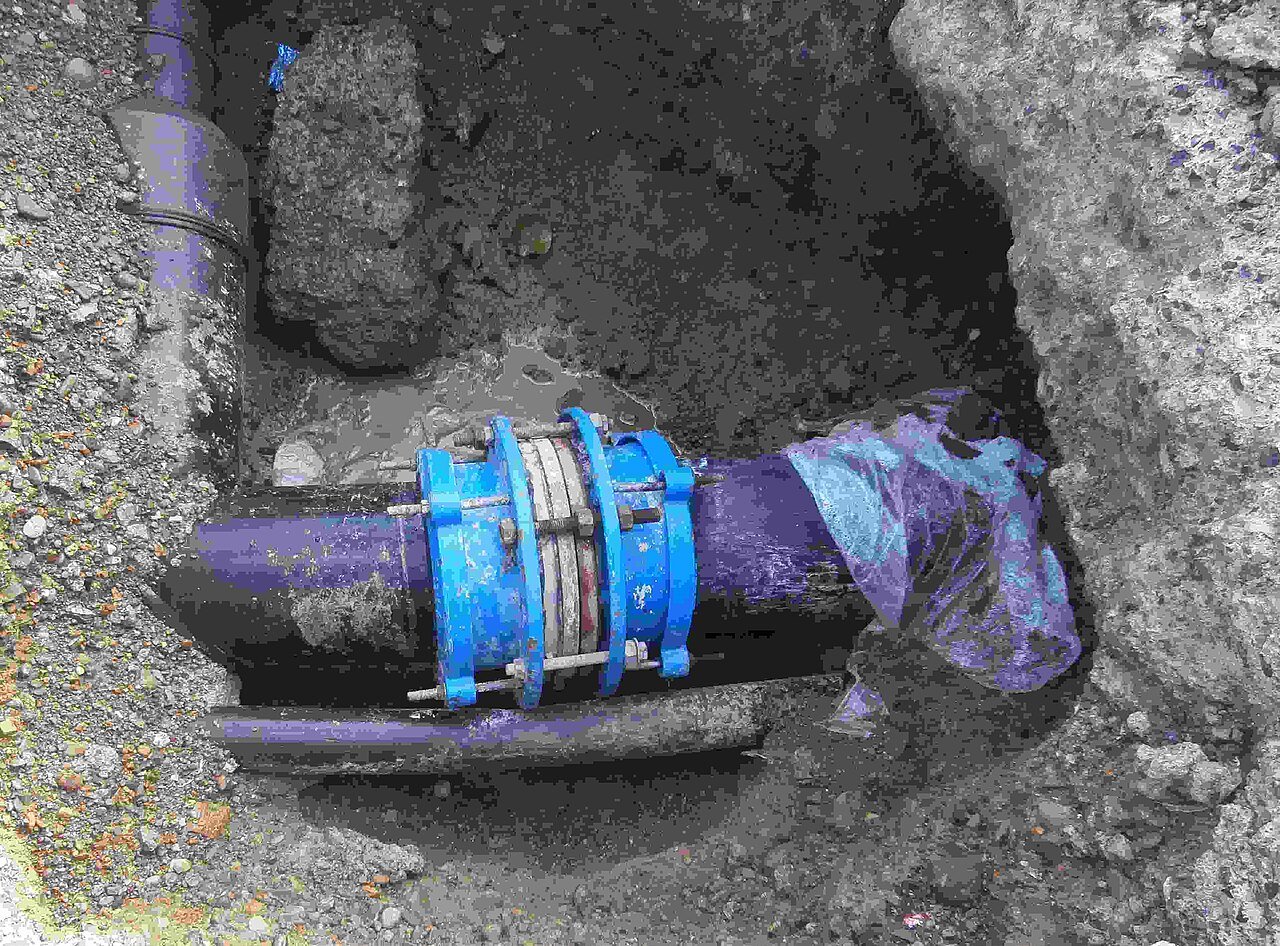
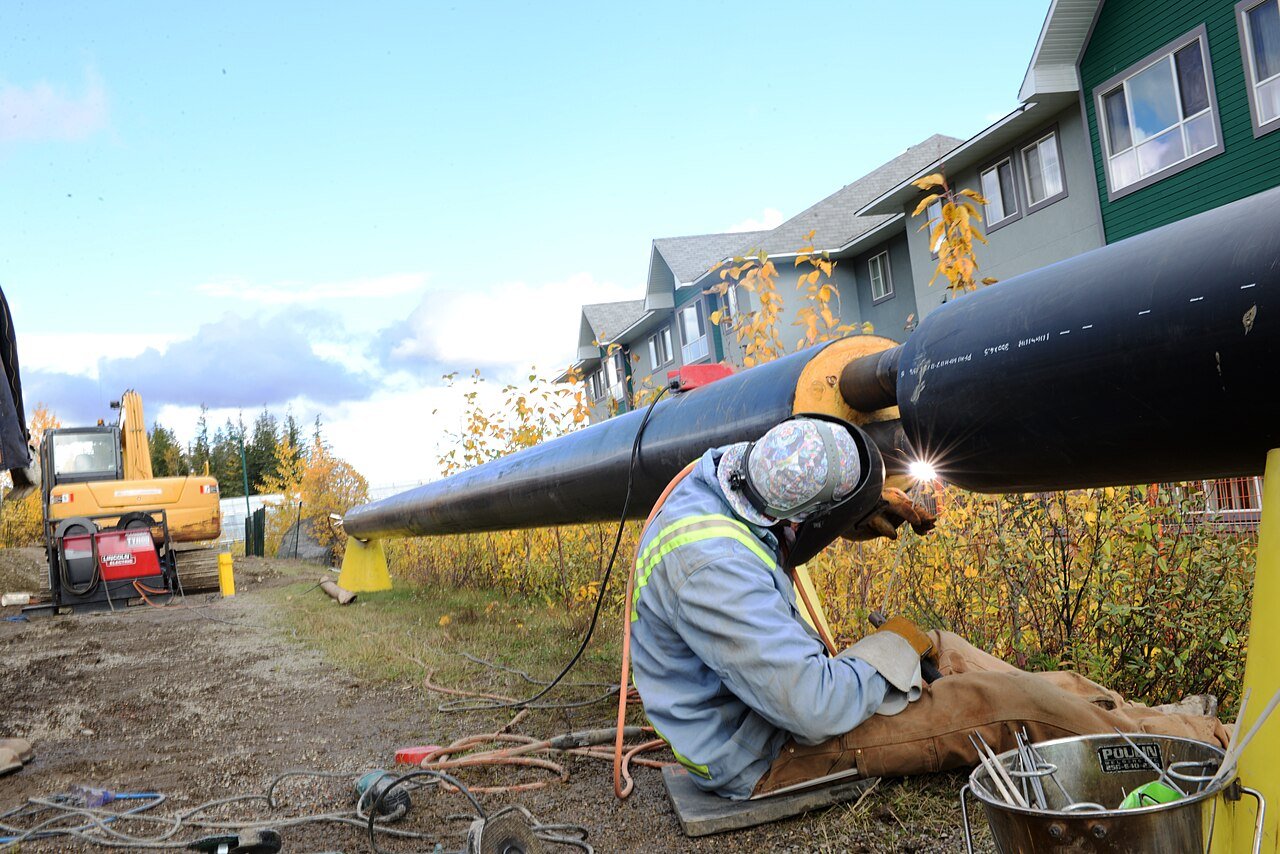
A live pipe repair completed and verified on a pressurised line.
Abrasion: Why Slurry Is Different From Water
Slurry piping fails by a mechanism that water piping does not: mechanical abrasion. Particles suspended in the flow remove wall material at a rate that scales with velocity to a power of two to three, and the damage concentrates at bends, reducers, tee junctions and any change of direction.
For leak repair, three practical consequences follow. First, wall thickness survey cannot be limited to the leak point — the adjacent bend is probably thinner than the leaking flange, and clamping the flange while ignoring the bend solves the wrong problem. Second, a clamp on a slurry line must be designed for the abrasive environment it sits in, and the seal has to survive continuous particle loading rather than a clean fluid. Third, a repair on a slurry line is a reliability action, not a permanent solution: the line is consuming itself, and the repair buys operating time until the section is replaced. Abrasion is why nickel smelter leak online repair cannot be specified from a generic procedure: the wear mechanism decides whether a containment repair will hold or fail in weeks.
Acid Service: The Compatibility Question Comes First
Sulphuric acid at concentration and temperature in an HPAL circuit is one of the more demanding chemical environments in heavy industry. Most industrial sealants are simply not suitable, and the failure mode is not dramatic — the sealant softens, swells or dissolves slowly, and the leak returns in a way that looks like a workmanship problem but is a material problem.
The rules a competent contractor follows are below, and acid service is the reason nickel smelter leak online repair starts with material certification rather than with the crew schedule.
- Get the concentration and temperature. Acid behaviour changes dramatically with concentration and temperature. For example, a material suitable for dilute acid at ambient is not suitable for concentrated acid at 90 °C.
- Use manufacturer qualification, not inference. Chemical resistance charts are a starting point, not a qualification. In addition, the manufacturer must qualify the sealant for the specific acid and conditions.
- Match the wetted metallurgy. Enclosures in acid service should match or exceed the corrosion resistance of the equipment they contact. In practice, a carbon steel clamp on an acid line becomes the shortest-lived component on the line.
- Never seal a liner failure. In autoclaves and lined vessels, an external seal over a leak caused by liner breach conceals the loss of the barrier between acid and the pressure-retaining shell. Indeed, that is the one failure mode that can turn a leak into a catastrophic release.
High Temperature: Molten Metal and Off-Gas
On the pyrometallurgical side, the hazards are thermal. Molten ferronickel and slag are at 1,400–1,600 °C, and water contact with molten metal causes a steam explosion. That single fact governs the whole safety approach: every repair decision near the furnace must consider what happens if water or sealant reaches molten material.
Off-gas systems carry dust, sulphur dioxide and acid gases at high temperature. When the gas cools below the acid dew point, sulphuric acid condenses on the duct walls and corrodes them from the inside. As a result, the ducting is thin, distorted and sometimes papery, so a clamp has nothing round and sound to seat against.
Waste heat boiler and steam systems on the pyrometallurgical side are, by contrast, the most conventional and most repairable part of the plant. Steam and condensate leaks at moderate pressure are routine live work, and they are often the largest volume of leakage on site by cost of lost energy.
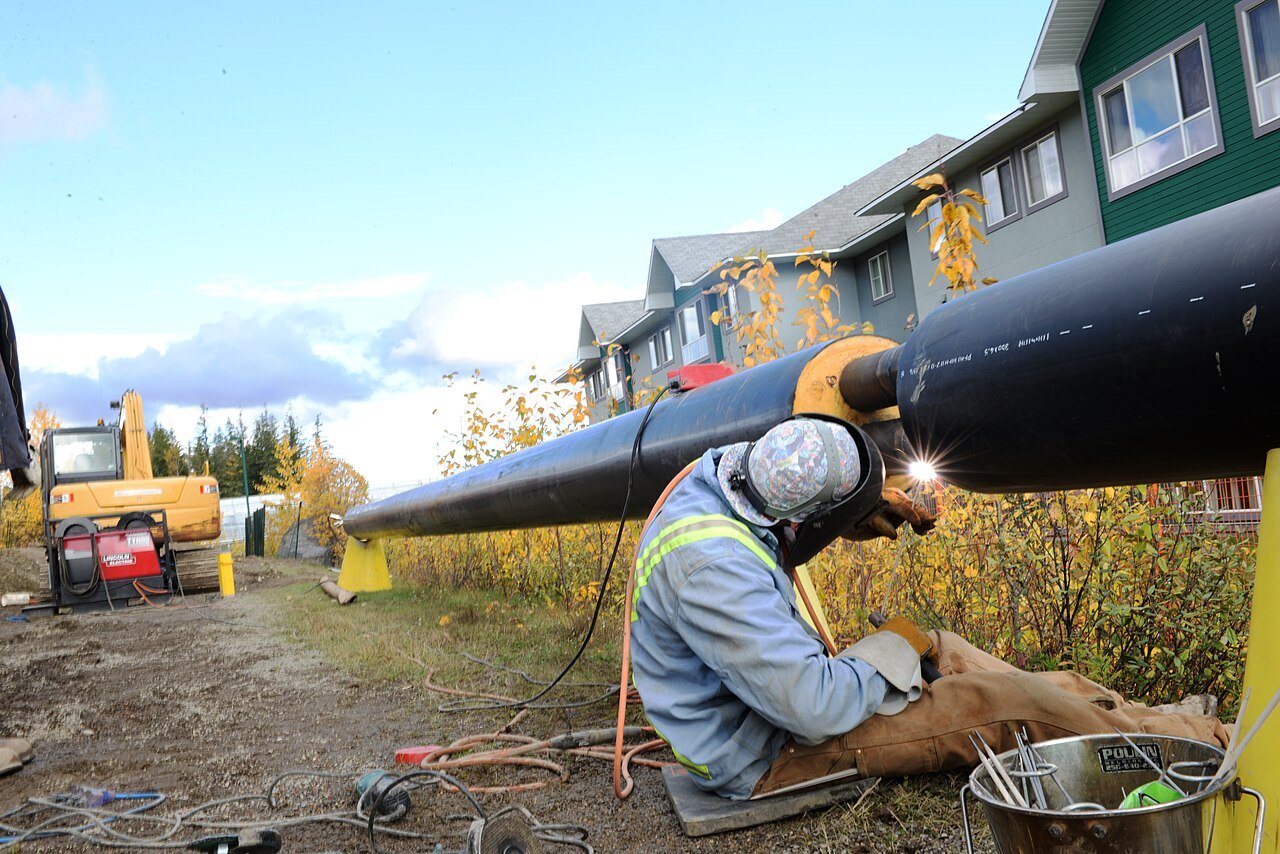
A permanent repair being welded: the option a seal is meant to defer.
What Nickel Smelter Leak Online Repair Can Cover
- Cooling water circuits, pump flanges and discharge piping. The highest-volume, lowest-risk work, and the easiest place to start a programme.
- Low and medium pressure steam and condensate from waste heat recovery, where standard high-temperature practice applies.
- Acid dosing and storage flanges where the material is qualified for the exact acid and temperature, and where isolation is available.
- Slurry line flanges and discrete wall defects where thickness survey confirms sound metal around the defect.
- Instrument and utility connections that can be isolated.
- Lime slurry and neutralisation lines, which are abrasive and scaling but chemically benign compared with the acid circuit.
What Must Be Refused
- Autoclave and flash vessel pressure boundaries. Acid at pressure and temperature; leaks there usually indicate liner or alloy degradation, which needs engineering assessment.
- Furnace cooling panels and staves. Nevertheless, a leaking panel is a furnace integrity issue with a molten metal hazard behind it.
- General wall loss on slurry or acid lines. No sound metal to clamp to.
- Thin, distorted off-gas ducting. Mechanical clamps need a round, structurally sound pipe.
- Any location where water or sealant could contact molten metal.
Safety Framework on a Nickel Site
| Hazard | Control | Why it is site-specific |
|---|---|---|
| Acid mist and splash | Face shield, acid-resistant clothing, eye wash within seconds, neutralising agent at the work point | Acid burns escalate quickly and the mist is invisible |
| Slurry under pressure | Exclusion zone in the jet direction, isolation confirmed before work | Slurry jets cause both chemical and mechanical injury |
| Molten metal | No water, no sealant, no work near the furnace without furnace control approval | Steam explosion risk from water contacting molten metal |
| SO₂ and acid gases | Personal monitors, escape sets, wind-based exclusion zone | Off-gas systems leak at flanges and duct joints |
| Heat stress | Rotation, hydration, cooling | Furnace areas are among the hottest workplaces in industry |
| Confined space | Entry permit, gas test, rescue plan | Vessels, ducting and sumps are common work locations |
The permit and gas testing requirements are set out in permit to work for live leak repair; for acid and slurry lines that fail assessment, see composite repair versus online sealing.
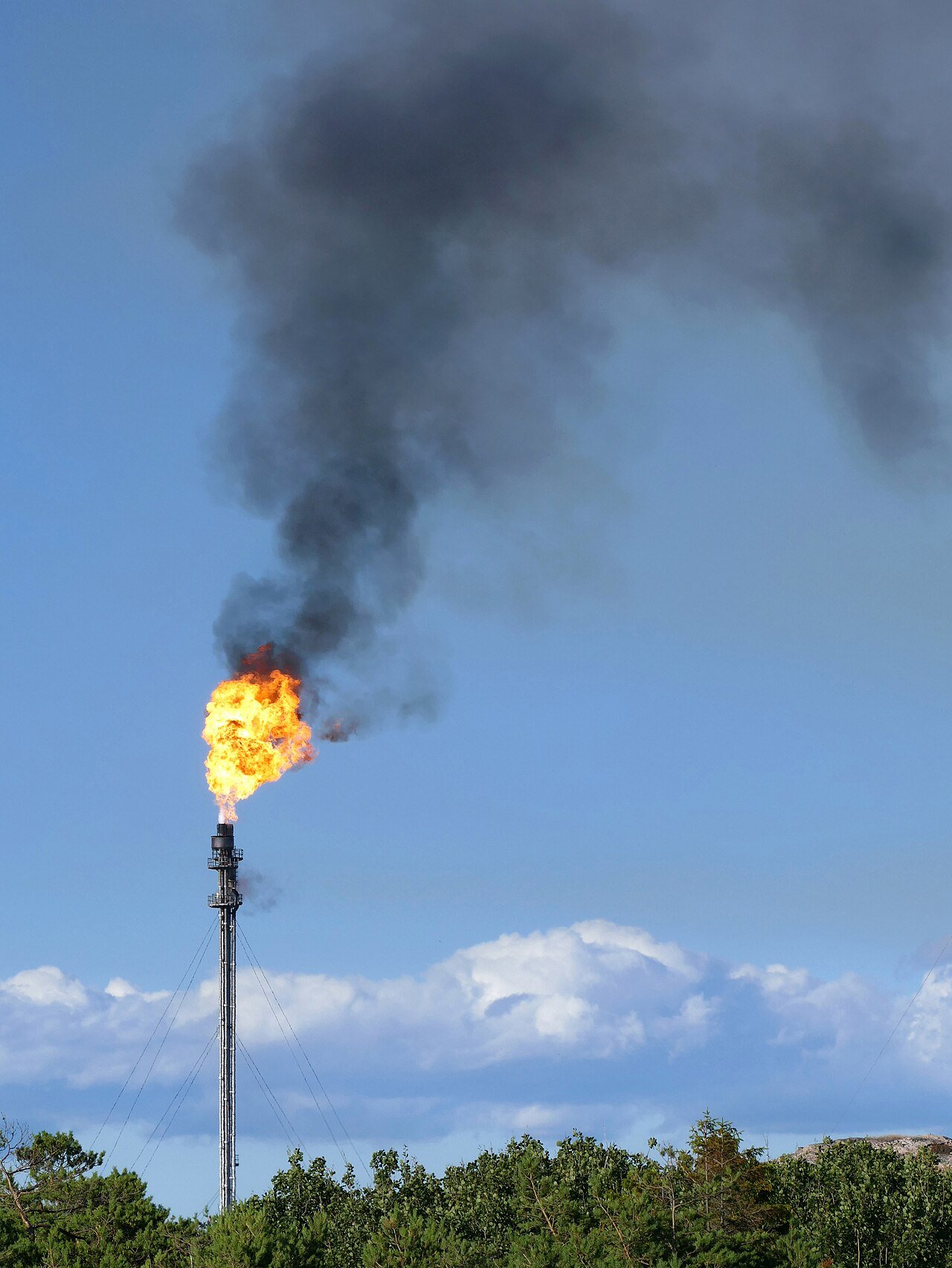
Flare stack in service at a process plant.
Why This Market Values Documentation
Nickel processing in Indonesia has expanded faster than the maintenance experience base. Many plants are operated by teams who are highly competent in commissioning and production but still building their reliability data — which means a contractor who arrives with documented methods, material certificates and a repair register is delivering something the site genuinely lacks.
In commercial terms, a leak repair programme on a nickel site is often as much about establishing the register as about sealing individual leaks. Once the site knows which lines lose wall thickness fastest, which flanges leak repeatedly and which sections are approaching replacement, the sealing work becomes targeted rather than reactive. That is the same discipline described in the leak management program framework, applied to an industry that is still accumulating its history. Documentation is also the practical defence when a nickel smelter leak online repair is later questioned by an auditor, an insurer or an offtaker.
FAQ: Nickel Smelter Leak Online Repair
Can slurry line leaks be repaired without stopping the plant?
On discrete defects with confirmed sound metal around them, yes, using a clamp or enclosure rated for the abrasive environment. On lines where wall thickness has been reduced over a length of pipe, no — there is nothing to clamp, and the section must be replaced in a planned window.
Why is sulphuric acid so difficult for sealants?
Because compatibility depends on concentration and temperature, and most industrial sealants are not qualified for acid service at all. A sealant that softens or swells slowly looks like a workmanship failure when the leak returns, but the real cause is material selection. Acid service requires manufacturer qualification for the exact conditions, and matching wetted metallurgy.
Can an HPAL autoclave leak be sealed live?
Almost never, and it should be resisted. Because the autoclave operates with acid at pressure and temperature, a leak there is frequently a sign that a liner or alloy component has degraded. More importantly, an external seal over a liner breach hides the loss of the barrier protecting the pressure-retaining shell.
Why is furnace cooling water treated differently?
Because a leaking cooling panel or stave means the furnace containment is compromised, with molten metal at 1,400–1,600 °C on the other side. Water contacting molten metal causes a steam explosion. That is a furnace integrity decision, not a leak repair decision.
What is the largest source of leakage on a nickel site?
In practice, the utility systems: cooling water, low and medium pressure steam, condensate and pump flanges. They are numerous, frequently deferred, and individually low-risk, which makes them the best starting point for a live repair programme and often the largest aggregate energy and water loss.
Do you need different crews for the pyro and hydro sides?
Although the mechanical skills overlap, the material qualification, PPE and hazard controls do not. Acid and slurry work requires acid-rated materials and chemical hazard controls; furnace-side work requires thermal hazard controls and furnace approval. Therefore, a crew qualified for one should not be assumed qualified for the other.
The Nickel Position
Nickel processing offers a large and growing field for live leak repair, concentrated in the utility and low-pressure systems where the risk is manageable and the losses are real. The acid and furnace sections demand refusals that are technically specific rather than cautious, and the value of a contractor there is in explaining exactly why — liner breach, steam explosion, general wall loss — rather than in offering a generic seal.
For Indonesian operators in Sulawesi and Halmahera, where plants are young, output targets are aggressive and maintenance history is thin, the durable gain comes from pairing live repair with a leak register. The repair stops today’s loss; the register prevents the same loss recurring next quarter. Nickel smelter leak online repair is worth doing on the right lines and dangerous on the wrong ones, and the difference is measurable in wall thickness and material certificates.