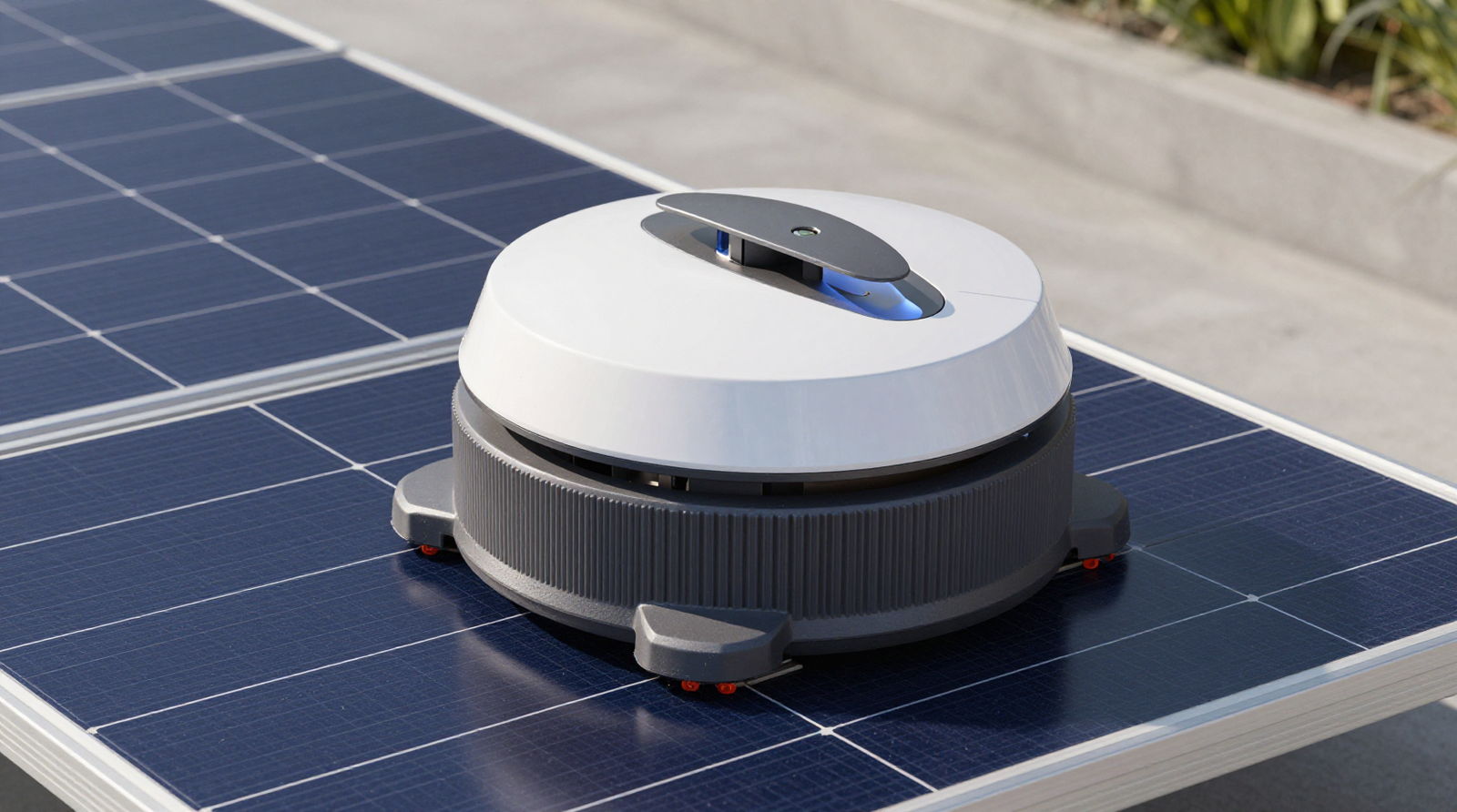
Indonesia is experiencing a solar energy revolution. With one of the highest solar irradiance levels in the world and ambitious renewable energy targets set by the government — aiming for 23% renewable energy in the primary energy mix by 2025 — solar installations are proliferating across the archipelago at unprecedented speed. From massive utility-scale solar farms in Lombok and Sulawesi to industrial rooftop arrays in Bekasi and Cikarang, solar panels are becoming a critical part of Indonesia’s energy infrastructure. And in this high-irradiance, high-dust, high-humidity tropical environment, keeping those panels clean is the key to maximizing their output. This is where the solar panel cleaning robot Indonesia delivers transformative value.
This guide provides a comprehensive overview of solar panel cleaning robot technology: why cleaning matters in Indonesia’s climate, how robotic cleaning systems work, the types of installations that benefit most, and how to select the right solution for your solar project in Indonesia.
Why Solar Panel Cleaning Is Critical in Indonesia
Indonesia’s tropical climate presents a unique combination of factors that make solar panel soiling a major issue for energy producers:
High Dust and Pollution Loading
Industrial corridors along the north coast of Java — from Tangerang through Bekasi, Karawang, and Cilegon — generate significant airborne particulate matter that settles on horizontal and low-tilt solar panels. Dust from construction sites, traffic, and industrial emissions can reduce panel output by 15-25% within weeks of cleaning. Near cement plants, coal-fired power stations, and mining operations, the soiling rate is even more aggressive.
Tropical Rain Patterns and Dirt Streaking
Contrary to common belief, tropical rainfall does not keep solar panels clean. Brief, heavy tropical downpours leave dirt streaks and deposit mineral residues as water evaporates rapidly from hot panel surfaces. The combination of intermittent heavy rain and long dry periods creates persistent streak patterns that block specific cell areas and reduce output unevenly — a phenomenon called partial shading that is disproportionately damaging to panel output due to the series-connection design of most PV modules.
Bird Droppings and Organic Deposits
Indonesia’s rich bird diversity means that bird droppings are a consistent soiling source on solar installations. Bird droppings create localized hotspots on individual cells, degrading output significantly and potentially causing long-term cell damage through thermal stress if not removed promptly.
High Humidity and Dust Adhesion
Indonesia’s high ambient humidity makes dust particles adhere more strongly to panel surfaces than in arid climates. A simple brushing that would remove dry desert dust may be insufficient for the sticky, particulate-plus-humidity soiling typical of Indonesian coastal and industrial environments. Solar panel cleaning robots designed for tropical Asian markets use brush materials and cleaning pressure settings optimized for this adherent soiling type.
How Solar Panel Cleaning Robots Work
Solar panel cleaning robots use a variety of mechanisms to traverse panel arrays and remove soiling effectively:
Brush-Based Cleaning Systems
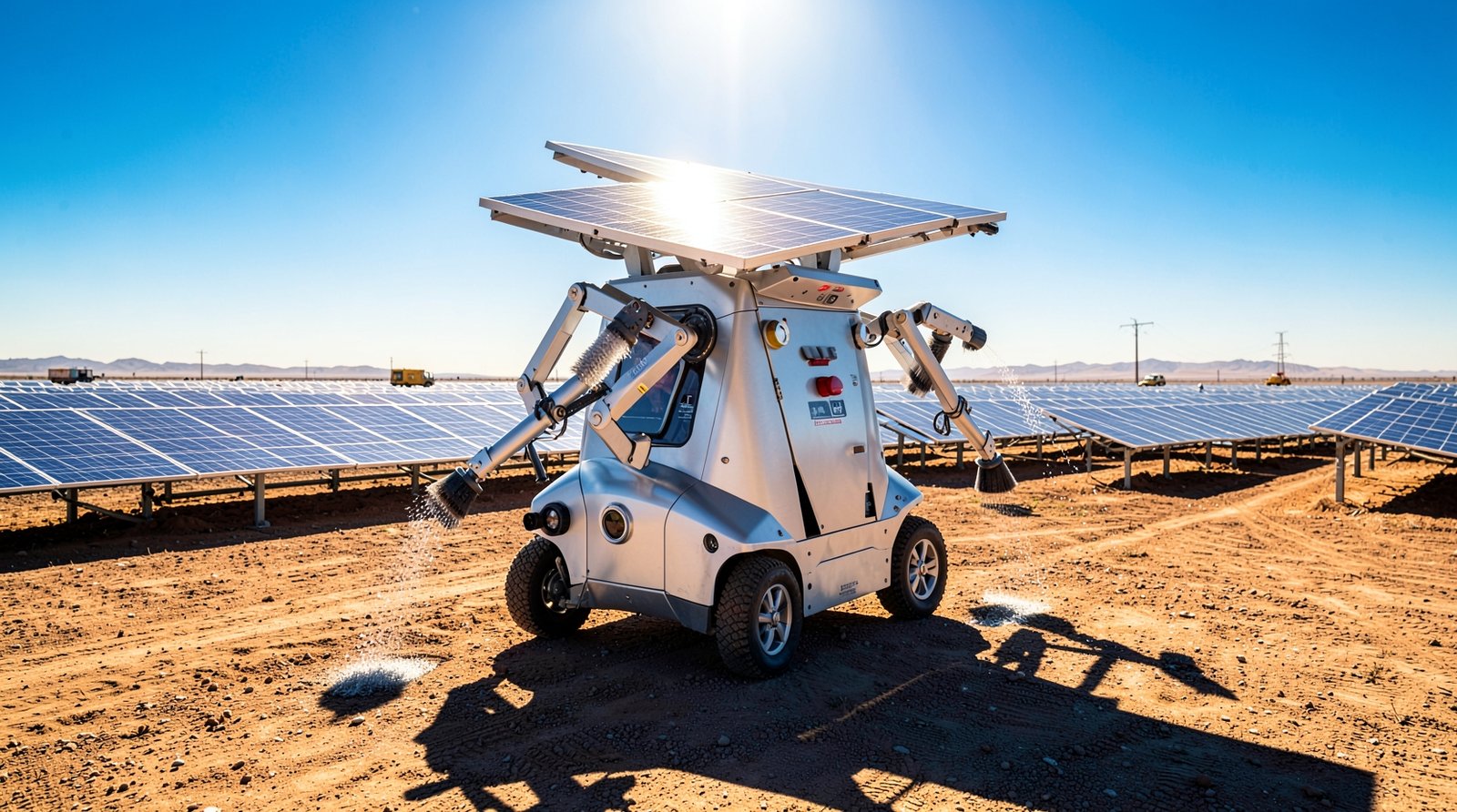
The most common robotic cleaning approach uses rotating or oscillating soft brushes that sweep across the panel surface. The brushes loosen and remove dry dust and light soil without scratching the anti-reflective coating on the panel glass. Some systems combine brush cleaning with a squeegee that wipes the brushed surface dry, leaving a streak-free finish.
Air-Blowing Systems
Air-blowing robots use compressed air or high-velocity fans to blow dust off panel surfaces without physical contact. These systems are effective for dry dust in arid environments but less effective in humid Indonesian conditions where dust adheres to the glass. They are typically used for daily maintenance cleaning to prevent heavy buildup, complementing periodic brush cleaning for stubborn deposits.
Water-Assisted Cleaning
Water-assisted robotic cleaning combines soft brushes with a minimal water spray to loosen sticky deposits. Modern water-assisted systems use as little as 0.2-0.5 liters of water per square meter cleaned — far less than manual water-and-squeegee cleaning — making them viable even in water-stressed areas. For Indonesia’s outer islands where water supply is limited, waterless brush systems remain the preferred option.
Navigation and Automation
Modern solar panel cleaning robots use programmed path following, end-of-row sensors, and obstacle detection to navigate autonomously across panel arrays. Fleet management software allows operators to schedule cleaning runs, monitor battery status, and track cleaning coverage from a central control interface. Some advanced systems integrate panel-level output monitoring data to prioritize cleaning of the most degraded panels.
Types of Solar Installations That Benefit from Robotic Cleaning in Indonesia
The business case for solar panel cleaning robots in Indonesia is strongest in the following installation types:
Utility-Scale Solar Farms
PLN’s utility-scale solar procurement program and independent power producer (IPP) solar projects in Indonesia are creating large panel arrays covering hundreds of thousands to millions of square meters. Manual cleaning of these installations is impractical at scale — the labor requirement is enormous, and human workers on tilted panels create safety risks. Robotic cleaning systems are designed specifically for utility-scale deployment, with multiple units running concurrently to clean large arrays efficiently.
Industrial Rooftop Solar
Indonesia’s manufacturing sector — concentrated in Java’s industrial corridors and in Batam, Bintan, and Kalimantan — is rapidly adopting rooftop solar as a way to reduce electricity costs and meet sustainability targets. Industrial rooftops in high-pollution environments near factories and highways accumulate soiling particularly rapidly. Robotic cleaning systems installed on these rooftops can be scheduled to clean overnight, minimizing disruption to factory operations and ensuring panels produce at maximum output during working hours.
Remote and Off-Grid Installations
Indonesia’s outer islands — where PLN grid connectivity is limited or unreliable — rely increasingly on solar-battery microgrid systems. These remote installations often cannot be served by manual cleaning teams due to access challenges. Autonomous solar panel cleaning robots that can operate without on-site operator attendance are particularly valuable in these settings. For related robotic technology discussions, see our guide on the future of solar panel maintenance and robotic cleaning innovations in Indonesia.
Leading Solar Panel Cleaning Robot Systems Available in Indonesia
Several international and regional manufacturers offer solar panel cleaning robot systems with distribution capability in the Indonesian market:
Ecoppia
Ecoppia is an Israeli company with a large global installed base of waterless robotic cleaning systems for utility-scale solar. Their E4 system operates autonomously at night, using soft microfiber to brush panels clean without water. They have deployed systems across Asia-Pacific including in tropical climates with soiling profiles similar to Indonesia.
SolarCleano
SolarCleano offers autonomous cleaning robots designed specifically for large-scale commercial and utility solar installations. Their modular approach allows multiple robots to operate simultaneously on large arrays, and their system is designed for both tilted rooftop and ground-mounted installations.
Greenleap Robotics
Greenleap offers fully autonomous and waterless robotic solar cleaning solutions designed for tropical environments, with systems suited to the high-humidity conditions prevalent in Southeast Asia including Indonesia.
Local and Regional Providers
Several Indonesian and regional Asian companies are now distributing and supporting solar panel cleaning robots, with service centers in Jakarta, Surabaya, and Batam. These providers offer the advantage of local language support, faster spare parts availability, and familiarity with Indonesian regulatory and installation environments.
ROI Analysis: Solar Panel Cleaning Robots for Indonesian Projects
The financial case for investing in a solar panel cleaning robot in Indonesia can be straightforward on large installations:
- Soiling loss savings: For a 10 MWp solar plant generating IDR 1,500/kWh under a PPA, a 15% soiling loss reduction translates to approximately IDR 2-3 billion per year in recovered revenue (assuming 4-5 peak sun hours/day at Indonesia’s average irradiance).
- Labor cost savings: Manual cleaning of a 10 MWp array requires multiple workers several days per cleaning cycle. A robotic system eliminates most of this ongoing labor cost.
- Panel life extension: Proper cleaning prevents the thermal stress and cell degradation caused by persistent bird dropping hotspots, extending panel life and protecting the capital investment.
- Robot system cost: Entry-level commercial solar cleaning robots suitable for Indonesian rooftop arrays are available from USD 15,000-50,000. Utility-scale systems with fleet management cost more but deliver proportionally larger ROI.
For guidance on Indonesia’s solar energy regulations and grid connection standards, refer to Indonesia’s Ministry of Energy and Mineral Resources (ESDM) and IRENA’s Indonesia country profile.
Get Expert Consultation
Our team provides solar panel cleaning robot solutions and industrial maintenance services across Indonesia.
Frequently Asked Questions About Solar Panel Cleaning Robot Indonesia
Why does solar panel cleaning matter in Indonesia?
Dust, pollution, bird droppings, and tropical rain streaking can reduce panel output by 15-35%. Indonesia’s high irradiance makes cleaning losses particularly costly to energy production and project ROI.
What is a solar panel cleaning robot?
An autonomous or semi-autonomous machine that traverses panel arrays using brushes, squeegees, or air systems to remove soiling without manual labor, operating on programmed schedules day or night.
What are the benefits of robotic vs. manual cleaning in Indonesia?
Lower labor cost, more consistent cleaning quality, viable for remote installations, waterless options for water-stressed areas, and safe overnight operation without worker safety risks on tilted panels.
What types of solar installations use cleaning robots in Indonesia?
Utility-scale solar farms, industrial rooftop arrays, commercial buildings, agrivoltaic systems, and remote off-grid microgrids across the archipelago.
How often should solar panels be cleaned in Indonesia?
Monthly to quarterly depending on location. Near industrial areas or coastal zones with sea salt, monthly cleaning is recommended. Robotic output monitoring can optimize schedules based on actual soiling degradation rates.