As Indonesia’s offshore industry pushes into deeper waters and faces the growing challenge of decommissioning aging infrastructure, the need for precision subsea intervention capability has never been more critical. Diver-assisted operations are limited to relatively shallow depths and carry inherent safety risks, while many of the most demanding subsea tasks — conductor severance, pile cutting, structural modification at depth — require tools that can reach and operate on structures tens to hundreds of meters below the surface. This is where ROV subsea drill equipment Indonesia becomes essential.
This guide provides a comprehensive overview of ROV subsea drill equipment: how these systems work, what operations they can perform in Indonesian offshore environments, depth capabilities, and how to source ROV subsea drill equipment for your next project.
What Is ROV Subsea Drill Equipment?
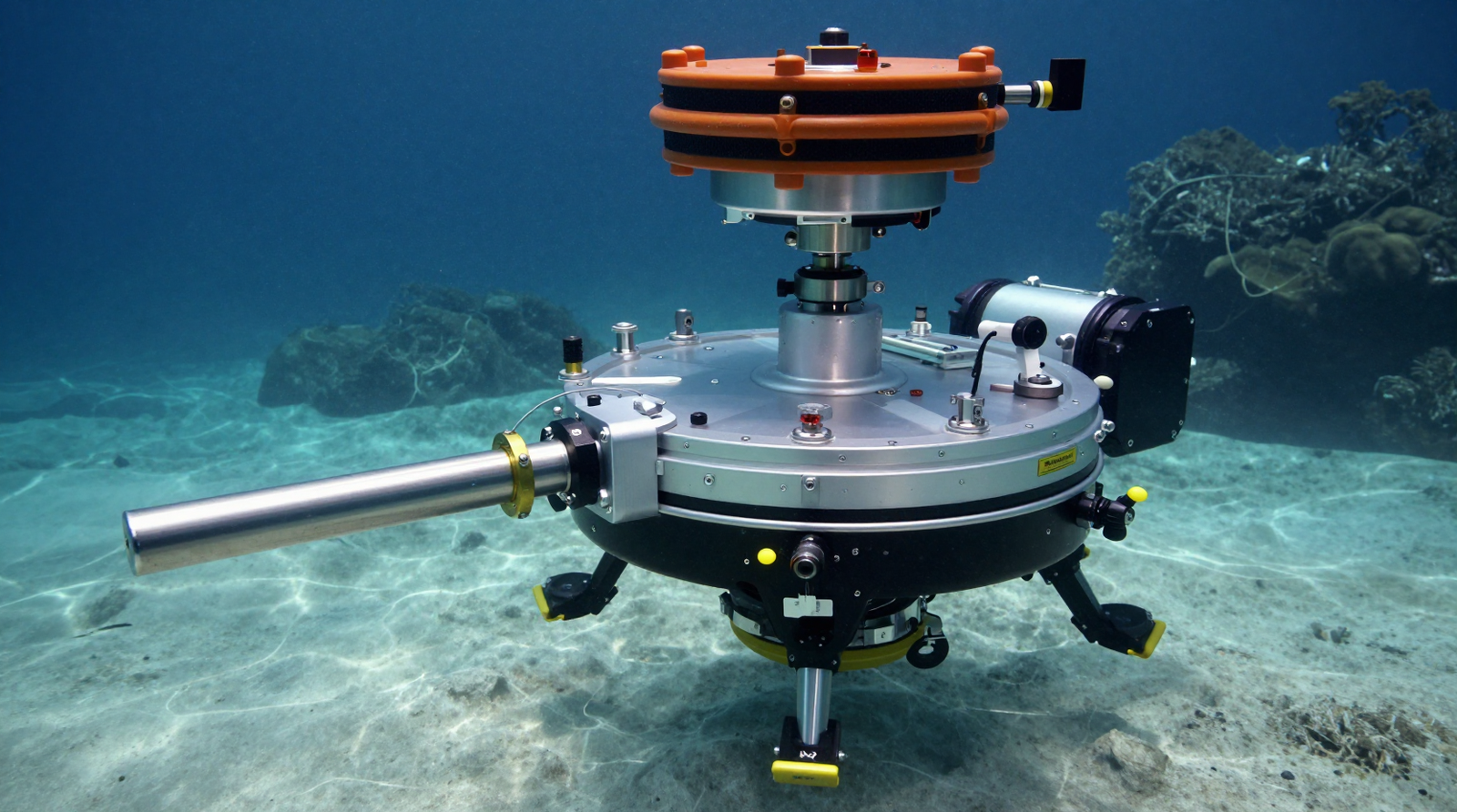
ROV subsea drill equipment refers to drilling, cutting, and milling tools that are mounted on, tethered to, or deployed by a Remotely Operated Vehicle (ROV) to perform precision operations on underwater structures. The ROV provides the platform for positioning, the hydraulic power for tool operation, and the video feedback for operator guidance — all from the safety of a control room on the surface support vessel.
The ROV Platform
Work-class ROVs used for subsea drilling operations are large, powerful vehicles — typically 100-250 HP hydraulic power output — equipped with heavy-duty manipulator arms, tool skid interfaces, and thruster systems capable of maintaining position in currents and swell typical of Indonesian offshore fields.
The ROV is connected to the surface vessel by an umbilical that carries hydraulic power, electrical control signals, and video data. The umbilical’s length determines the maximum operating depth. Most work-class ROVs deployed in Indonesian waters are rated to 3000m, well beyond the depth of any current Indonesian production fields.
Subsea Drill Tool Types
Several types of drill tools are deployed on or with ROVs for subsea operations in Indonesia:
- Dual pin drill systems: Specialized conductor severance tools that use two opposed hydraulic pins to simultaneously drill through a conductor pipe wall from both sides, producing a clean circumferential cut at mudline depth.
- Rotary cutter systems: ROV-deployed rotary cutting tools for pile severance and structural member cutting. The ROV positions the cutter around the target member, and a hydraulic motor drives the rotating cutting element.
- Diamond wire saw (ROV-deployed): Wire saw systems that can be deployed and guided by ROV for precision structural cutting at depth. For more background on diamond wire saw technology, see our guide on diamond wire saw technology for offshore decommissioning in Indonesia.
- Abrasive water jet (ROV-deployed): High-pressure water-abrasive cutting systems carried on an ROV tool skid for precision cuts in confined or complex-geometry locations.
- Inspection and maintenance drills: Smaller drill systems for creating inspection ports, installing monitoring sensors, or preparing structural surfaces for repair coating application.

ROV Subsea Drill Equipment Applications in Indonesia
The applications of ROV subsea drill equipment in Indonesia are growing as the country’s decommissioning workload increases and deepwater development proceeds:
Conductor Severance and Removal
Conductor pipes (casing strings guiding wells through the seabed) must be severed at or below mudline during platform decommissioning. Dual pin drill systems deployed by ROV provide a controlled, efficient method for this work without disturbing the surrounding seabed. The dual pin approach is favored in Indonesian decommissioning because it avoids the seabed disturbance and debris generation associated with explosive methods.
Foundation Pile Cutting
Jacket foundation piles must be cut at required elevations during platform removal. ROV-deployed rotary cutters and diamond wire saws provide the precision needed to achieve clean cuts at the specified depth, facilitating reliable lifting operations. The ROV’s video and positioning systems allow the operator to verify cut progress in real-time.
Subsea Pipeline Intervention
Subsea flowlines and export pipelines require occasional emergency intervention — cutting away damaged sections, removing stuck pigs (pipeline inspection gauges), or severing lines prior to pipeline decommissioning. ROV-deployed cutting tools handle these operations without the risk of deploying saturation divers in the vicinity of energized or partially pressurized lines.
Deepwater Structure Modification
Indonesia’s deepwater exploration in the Makassar Strait and offshore Eastern Indonesia has produced subsea infrastructure at depths where conventional diver access is impossible. ROV-mounted drill and cutting tools allow structural modifications, cathodic protection anode installation, and repair work at these depths. For related on-site machining services at accessible depths, see our guide on on-site machining solutions for O&G facilities in Indonesia.
Depth Capabilities of ROV Subsea Drill Equipment in Indonesia
Understanding the depth envelope of ROV subsea drill equipment is essential for project planning in Indonesian waters:
- Shallow water (0-80m): Java Sea platform decommissioning. Both diver-assisted and ROV options available. ROV preferred for safety risk reduction even at these depths.
- Medium depth (80-300m): Makassar Strait and offshore Kalimantan fields. ROV is the primary intervention method. Standard work-class ROV umbilicals easily cover this range.
- Deep water (300-3000m): Frontier deepwater exploration areas offshore Eastern Indonesia. Work-class ROV is the only viable option. Specialized deep-rated umbilicals and pressure housings required.
ROV vs. Diver-Assisted Subsea Drilling: Which Is Right for Your Indonesian Project?
The choice between ROV-deployed and diver-assisted subsea drill equipment depends on several factors:
When ROV Is Preferred
- Water depth exceeds safe commercial diving limit (typically 50-80m for air diving, up to 300m for saturation diving)
- ALARP risk assessment indicates unacceptable diver risk even at shallower depths
- Long-duration operations where extended diver exposure time would be excessive
- Proximity to energized systems (pipelines with residual pressure, electrical subsea equipment)
- Regulatory requirements: SKK Migas may mandate ROV over diver for certain operations
When Diver-Assisted Is Preferred
- Shallow water (under 50m) where diver access is straightforward
- Complex tool rigging that requires manual dexterity beyond ROV manipulator capability
- Short-duration, low-risk tasks where diver deployment is faster and more cost-effective than ROV mobilization
- Emergency interventions where ROV vessel mobilization time is unacceptable
Safety Standards for ROV Subsea Drill Equipment Operations in Indonesia
Operations using ROV subsea drill equipment in Indonesia must comply with international and Indonesian standards:
- IMCA guidelines: The International Marine Contractors Association (IMCA) publishes comprehensive ROV operations standards (IMCA R 004) and subsea guidelines widely adopted in Indonesian offshore operations.
- DNV standards: DNV DNVGL standards govern ROV system design, umbilical specifications, and operational safety requirements.
- SKK Migas PTK requirements: Indonesian upstream operations require compliance with relevant PTK guidelines for subsea operations and ROV activities on PSC assets.
- Vessel safety requirements: The ROV support vessel must comply with Indonesian flagging and ISPS requirements, with documented dynamic positioning (DP) certification for station-keeping during drill operations.
Get Expert Consultation
Our team provides ROV subsea drill equipment and offshore intervention services across Indonesia.
Frequently Asked Questions About ROV Subsea Drill Equipment Indonesia
What is ROV subsea drill equipment?
Drilling, cutting, and milling tools mounted on or deployed by an ROV to perform precision operations on underwater structures without diver risk — essential for deep or hazardous subsea work in Indonesian offshore fields.
What depths can ROV subsea drill equipment operate at in Indonesia?
Work-class ROVs operate from surface to 3000m+. Java Sea platforms (20-80m) can use either ROV or diver. Deeper Makassar Strait and Eastern Indonesia fields (100-500m+) require ROV-deployed systems.
What types of subsea drilling operations can ROVs perform?
Conductor severance (dual pin drill), pile cutting (rotary cutter/diamond wire), abrasive water jet cutting, inspection port drilling, and structural modification operations.
What ROV classes are needed for subsea drilling in Indonesia?
Work-class ROVs (100-250 HP hydraulic) with heavy manipulator arms. Observation-class ROVs are camera-only and not suitable for drilling or cutting operations.
How is ROV subsea drill equipment mobilized for Indonesian offshore projects?
By offshore support vessel with ROV LARS. From major ports (Batam, Balikpapan, Tanjung Priok), Java Sea mobilization takes 3-7 days; remote Eastern Indonesia fields take 10-14 days.