In Indonesia’s oil and gas sector, plant availability directly drives revenue. Unplanned shutdowns cost operators tens of thousands of dollars per hour in deferred production, while planned maintenance windows are tightly constrained. The ability to perform precision metalworking repairs and modifications at the point of need — without dismantling and shipping critical components — is why on-site machining services for oil and gas Indonesia have become an indispensable capability for facility operators, maintenance contractors, and engineering firms across the country.
This guide covers the full scope of on-site machining services oil and gas Indonesia: what services are available, how they are applied at Indonesian facilities, the equipment involved, applicable standards, and how to select the right provider.
What Are On-Site Machining Services for Oil and Gas?
On-site machining (OSM) — also known as field machining or portable machining — refers to precision metalworking operations carried out using portable, self-contained machine tools that are brought to the equipment rather than the equipment being transported to a workshop. This approach is particularly valuable in oil and gas facilities where major equipment items such as flange spools, pump casings, compressor bearing housings, and pressure vessels are too large, too heavy, or too expensive to remove from service.
Why On-Site Machining Matters for Oil and Gas in Indonesia
The economics of on-site machining services oil and gas Indonesia are compelling. Consider a leaking flange on a critical process line at Pertamina RU IV Cilacap. The traditional approach — isolating the line, cutting out the spool, shipping it to a workshop, machining the flange face, and reinstalling — might take 5-7 days. An on-site flange facing operation, by contrast, can restore the sealing surface to ASME B16.5 Ra 3.2 µm finish specifications in 8-16 hours without removing the spool. The productivity benefit is immediate and significant.
For a broader overview of on-site solutions in the Indonesian O&G sector, see our guide on on-site machining solutions for O&G facilities.
Key On-Site Machining Services for Oil and Gas Indonesia
The portfolio of on-site machining services available to oil and gas operations in Indonesia is broad. Here are the principal service types:
1. Flange Facing
Flange facing is one of the most frequently requested on-site machining services in Indonesian O&G facilities. Over time, flange sealing faces suffer from corrosion, mechanical damage, and gasket indentation that compromises the ability to achieve a leak-free joint. Portable flange facing machines mount directly on the pipe bore or OD and re-machine the face to the specified surface finish and flatness without spool removal.
Flange facing is critical for safe operation of high-pressure, high-temperature process systems at refineries, LNG plants, and offshore facilities. Standards such as ASME PCC-1 provide guidance on acceptable surface finish specifications for different gasket types.
2. Line Boring
Line boring is the in-place machining of bores to restore roundness, alignment, and dimensional accuracy in bearing housings, structural connections, and large machinery frames. Common applications in Indonesian O&G include re-boring of pump and compressor bearing housings, rudder pintles on FPSOs, and structural connector repairs on offshore platforms.
3. Clamshell Lathe Operations
Clamshell (split-frame) lathes clamp onto a pipe’s outer diameter and provide a portable, self-powered turning platform. They can perform pipe cutting (cold cutting), end beveling for weld preparation, face machining, and thread cutting in-situ. They are widely used in Indonesian pipeline construction, refinery turnarounds, and offshore decommissioning projects.
4. ID and OD Turning
ID (internal diameter) and OD (external diameter) turning tools handle precision turning of pipe ends, valve seats, nozzle bores, and similar features directly on installed equipment. This is especially useful for restoring damaged weld prep geometries on large-diameter pipework where the spool cannot be removed.
5. Key Seat Milling
Key seat millers (also called key cutting machines) cut keyways in shafts and bores for mechanical drive systems. Portable key seat millers are used for in-place shaft repair at pump and compressor installations in Indonesian refinery and petrochemical plants.

Applications of On-Site Machining in Indonesian Oil and Gas
On-site machining services oil and gas Indonesia are deployed across the full spectrum of upstream, midstream, and downstream O&G infrastructure:
Refineries
Indonesia’s refinery network — including Pertamina’s RU II (Dumai), RU IV (Cilacap), RU V (Balikpapan), and RU VI (Balongan) — relies on on-site machining during planned turnarounds and emergency maintenance. Flange facing, line boring, and clamshell lathe services are routinely deployed during shutdown windows to minimize the time critical units are offline.
LNG Plants
Bontang LNG — one of the world’s largest LNG facilities — operates under extremely tight turnaround schedules. On-site machining services enable precision repairs to heat exchanger flanges, compressor bearing housings, and piping connections without disrupting the broader plant schedule.
FPSO Vessels
Floating Production, Storage and Offloading (FPSO) vessels operating in Indonesian waters face unique maintenance challenges due to their remote location and continuous operation. On-site machining teams can be mobilized to FPSOs by helicopter or supply vessel to perform flange facing, bearing bore restoration, and pipe cutting without decommissioning the vessel for a drydock visit.
Offshore Platforms
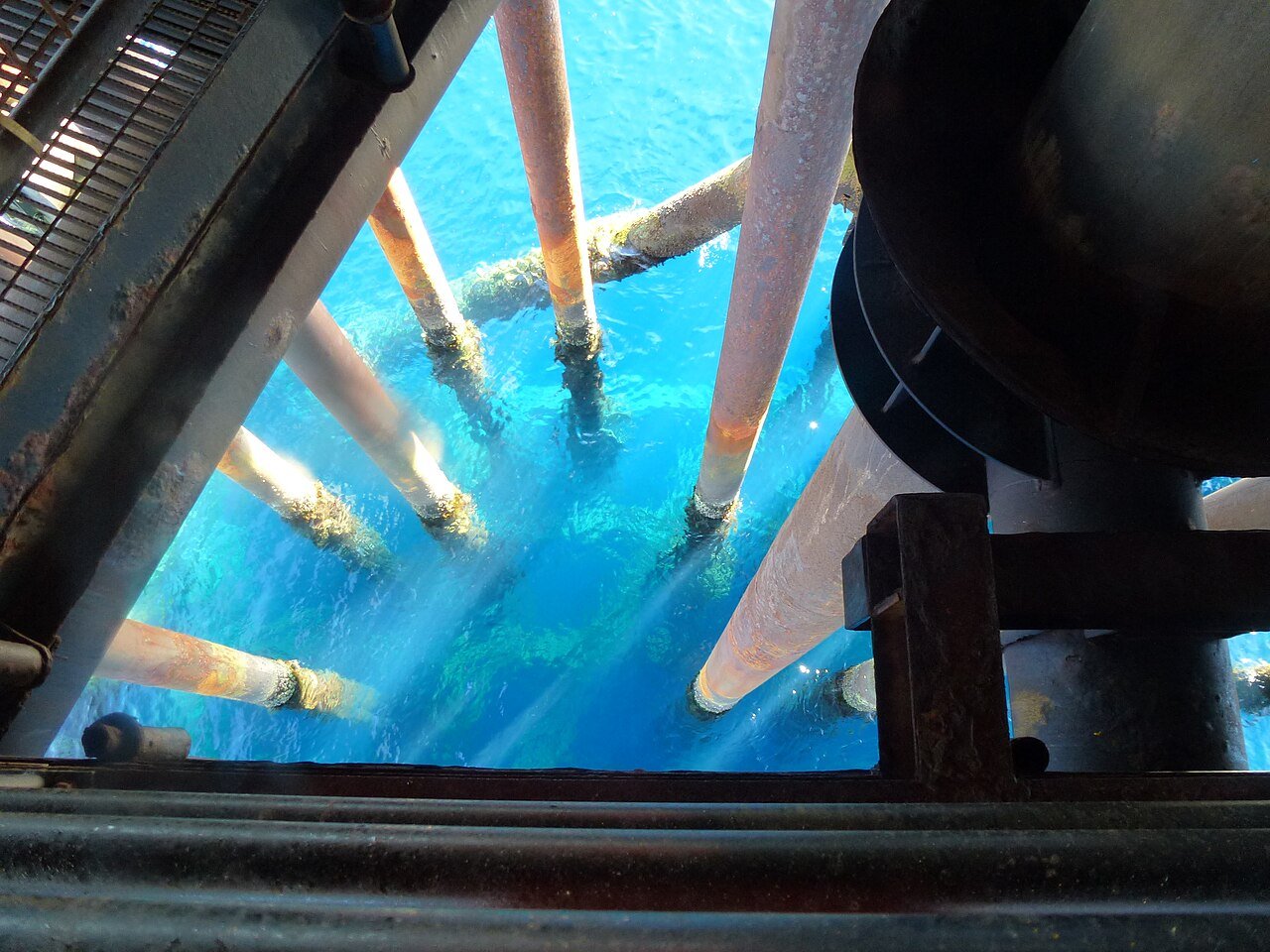
On offshore platforms, deck space and crane capacity are limited, making equipment removal impractical for many repair jobs. On-site machining is used for flange restoration on process piping, structural bore repairs, and clamshell lathe operations on wellhead conductors during decommissioning preparation. For specialized cutting operations on offshore structures, see our guide on diamond wire saw technology for offshore decommissioning.
Standards and Certifications for On-Site Machining Oil and Gas Indonesia
On-site machining work on oil and gas facilities in Indonesia must comply with a range of international and national standards:
- ASME B31.3: Process Piping — governs design, materials, fabrication (including field machining) of process piping.
- ASME PCC-1: Guidelines for Pressure Boundary Bolted Flange Joint Assembly — specifies flange face surface finish requirements.
- ASME B16.5: Pipe Flanges and Flanged Fittings — defines flange dimensional and surface finish standards.
- API 570: Piping Inspection Code — covers inspection and maintenance of in-service piping, including acceptance criteria for machined surfaces.
- SNI (Standar Nasional Indonesia): Indonesian National Standards apply to certain equipment categories used in upstream and downstream facilities.
Authoritative guidance on process piping and pressure equipment standards is available from the American Petroleum Institute (API) and ASME.
Selecting an On-Site Machining Services Provider for Oil and Gas in Indonesia
When choosing a provider for on-site machining services oil and gas Indonesia, evaluate these factors:
Equipment Range and Condition
Confirm that the provider’s machine tools cover your required pipe/bore sizes. Portable flange facing machines typically range from 50mm to 3000mm bore diameter. Clamshell lathes are available for pipe ODs from 25mm to over 1000mm. Ensure equipment has current calibration and inspection certificates.
Machinist Competency
On-site machining requires skilled machinists who understand both the machine tools and the applicable engineering standards. Ask for evidence of machinist qualifications, relevant experience in O&G environments, and references from comparable Indonesian projects.
Mobilization Speed
Emergency maintenance situations require rapid response. A provider with equipment pre-positioned in key Indonesian industrial centers (Jakarta, Cilegon, Balikpapan, Batam) can mobilize significantly faster than one requiring long logistics chains.
Safety Record
On-site machining is performed in live plant environments that may contain hazardous materials. Verify the provider’s HSE management system, LOTO (Lock-Out/Tag-Out) procedures, and incident history before engaging them for work in Indonesian refineries or offshore facilities.

Cost Advantages of On-Site Machining vs. Workshop Repair
The economic case for on-site machining services oil and gas Indonesia is straightforward. Consider a typical flange repair scenario on a refinery process line:
- Workshop approach: Isolate line, cut out spool (2-4 hours), transport to workshop (1-2 days), machine and inspect (1-2 days), transport back (1-2 days), reinstall and test (4-8 hours). Total: 4-6 days offline.
- On-site machining approach: Mobilize portable flange facer to the flange location (2-4 hours), set up and machine (4-8 hours), inspect and accept (1-2 hours). Total: 8-16 hours offline.
In a refinery unit generating USD 200,000/day in production value, saving 3-4 days of downtime translates directly to USD 600,000-800,000 in preserved revenue. The cost of the on-site machining service is typically a small fraction of this figure.
Get Expert Consultation
Contact us for on-site machining services for oil and gas facilities across Indonesia.
Frequently Asked Questions: On-Site Machining Services Oil and Gas Indonesia
What is on-site machining for oil and gas?
On-site machining is precision metalworking performed directly on installed equipment using portable machine tools, eliminating the need to remove and transport heavy components to a workshop.
What are the main on-site machining services for oil and gas in Indonesia?
Flange facing, line boring, clamshell lathe (pipe cutting/beveling/facing), ID/OD turning, and key seat milling are the principal services used across Indonesian O&G facilities.
How does on-site machining reduce downtime?
By eliminating spool removal and transport, on-site machining reduces a typical flange repair from 5-7 days to 8-16 hours, keeping critical process lines in service longer.
What standards apply to on-site machining in Indonesia’s oil and gas sector?
ASME B31.3, ASME PCC-1, ASME B16.5, and API 570 are the principal standards. SKK Migas and MIGAS requirements also apply to upstream facilities.
Which Indonesian oil and gas facilities use on-site machining services?
Pertamina refineries (RU II-VI), Bontang LNG, FPSOs in Makassar Strait and offshore Natuna, and numerous upstream platforms and wellhead installations all use on-site machining services.