Heat exchangers are among the most critical assets in Indonesian industrial facilities — from refineries in Balongan and Cilacap to LNG plants in Bontang and Tangguh, from petrochemical complexes in Cilegon to power plants across the archipelago. When a heat exchanger fouls, leaks, or requires scheduled inspection, the entire process can be impacted. Having the right heat exchanger maintenance equipment Indonesia on-site and ready is what separates a planned 48-hour turnaround from a week-long unplanned outage.
This guide covers the essential equipment for maintaining both plate heat exchangers (PHE) and shell-and-tube heat exchangers (STHE) in Indonesian industrial environments, from cleaning and testing to tube repair and reassembly.
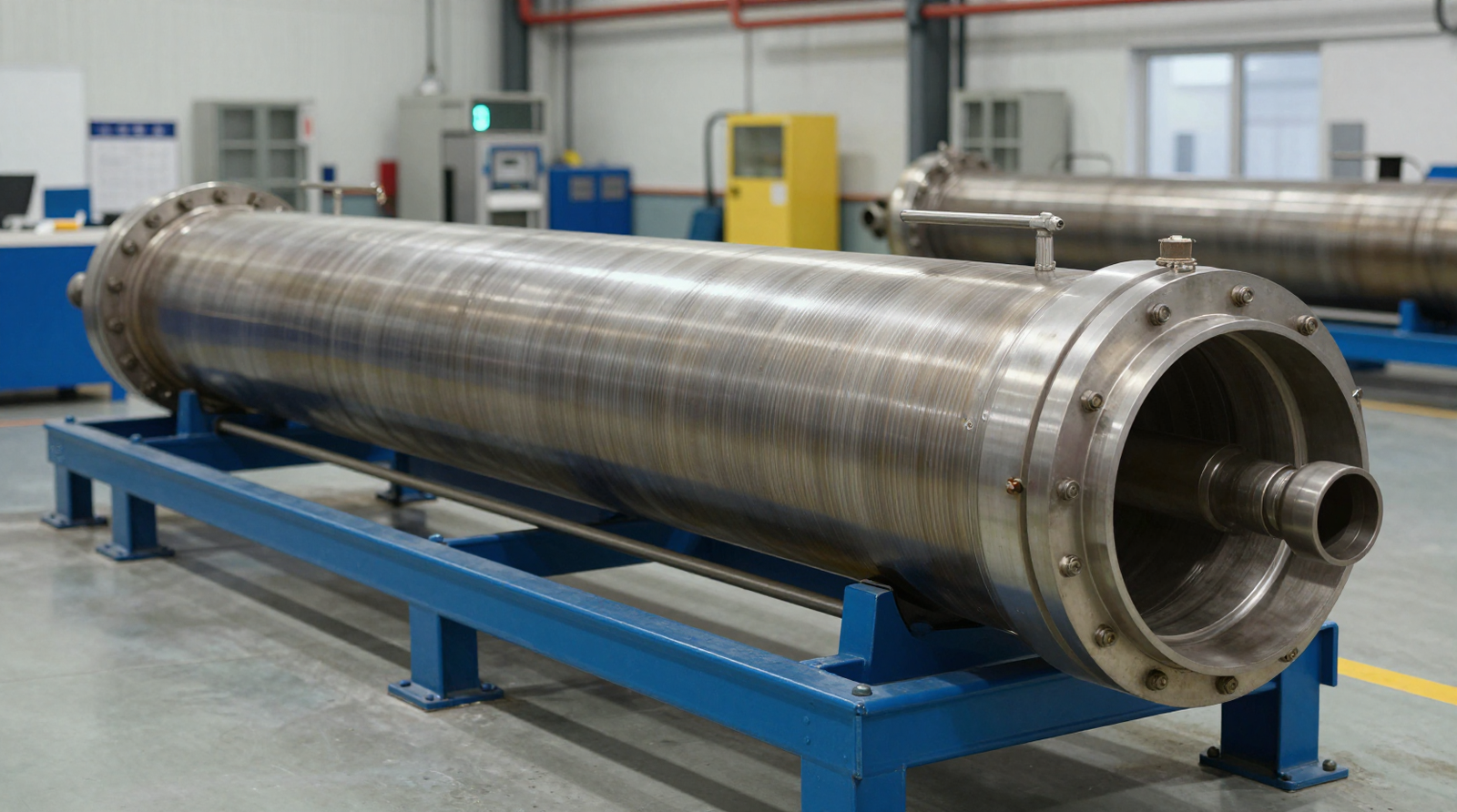
Plate Heat Exchanger Maintenance Equipment
Plate heat exchangers are widely used in Indonesian food and beverage, pharmaceutical, and HVAC applications for their compact size and high heat transfer efficiency. Maintenance primarily involves opening the plate pack, cleaning individual plates, replacing gaskets, and recompressing.
Plate Opening and Closing Tools
Opening a plate heat exchanger requires loosening the tie bolts that compress the plate pack. For smaller units, manual wrenches may suffice. For larger industrial PHEs with dozens of plates, hydraulic tightening tools are essential:
- Hydraulic torque wrenches: Precisely applied bolt torque to manufacturer specifications, preventing over-tightening that can damage plates or under-tightening that causes leaks.
- Bolt tensioners: Hydraulic tensioners that stretch the tie bolt to the exact elongation specified, then the nut is wound down — the most accurate method for critical applications.
- Plate separation tools: Specialized pry tools and separators that safely remove individual plates from the pack without damaging the gasket surfaces or plate corrugations.
Plate Cleaning Equipment
Once the plate pack is opened, each plate must be cleaned of scale, biological growth, and gasket residue:
- High-pressure water jetting: 500-1500 bar pressure washers that remove scale and fouling without damaging the stainless steel or titanium plate surfaces.
- Ultrasonic cleaning baths: For severely fouled plates, immersion in an ultrasonic bath with appropriate chemical cleaning solution can restore heat transfer surfaces to near-original condition.
- Gasket removal tools: Scrapers and picks designed to remove old gasket adhesive without scratching the gasket groove.
- Chemical cleaning circulation: CIP (Clean-in-Place) systems that circulate cleaning chemicals through the exchanger without opening the plate pack, suitable for light to moderate fouling.
Gasket Replacement and Recompression
After cleaning, new gaskets are installed — either clip-on (glueless) or glued, depending on the plate design. The plate pack is then recompressed to the specified dimension (measured between the head and follower plates) using the hydraulic tightening tools. Over-compression can damage plates; under-compression causes leaks. Always follow the manufacturer’s compression dimension specification.
Shell and Tube Heat Exchanger Maintenance Equipment
Shell-and-tube heat exchangers are the workhorses of the oil and gas, petrochemical, and power generation industries in Indonesia. They are robust, handle high pressures and temperatures, and can be designed for virtually any service. Their maintenance is more complex than PHEs and requires specialized equipment.
Tube Cleaning Equipment
The most common maintenance task for STHEs is tube cleaning — removing scale, fouling, and deposits from the inside (and sometimes outside) of the tubes:
- High-pressure water jetting lances: Flexible or rigid lances that are inserted into each tube to deliver 500-2000 bar water pressure. Flexible lances can navigate U-tube bends; rigid lances are used for straight tubes.
- Rotary mechanical cleaning: Drills and brushes driven by flexible shafts that mechanically remove hard scale. Suitable for tubes with severe mineral scaling that water jetting alone cannot remove.
- Pigging systems: For large-diameter tubes, foam or bristle pigs pushed through the tube by water pressure can effectively clean long tube lengths.
- Chemical cleaning circulation: Acid or alkaline cleaning solutions circulated through the tube side (and sometimes shell side) to dissolve deposits. Requires careful neutralization and disposal of spent chemicals in accordance with Indonesian environmental regulations.
Tube Plugging and Repair Tools
When tubes are found to be leaking or excessively thinned during inspection, they are typically plugged rather than replaced (tube replacement is a major undertaking). Equipment for tube plugging includes:
- Tapered metal plugs: Driven into the tube ends with a hammer or hydraulic driver. Available in various materials (carbon steel, stainless, brass, titanium) to match tube material.
- Explosive plugs: For high-pressure exchangers where mechanical plugs may not hold, explosive plugs are detonated inside the tube end to create a metallurgical bond with the tubesheet.
- Tube extraction tools: When a tube must be completely removed (for metallurgical analysis or replacement), hydraulic pullers and tube splitters are used to extract the tube from the tubesheet without damaging adjacent tubes.
Hydrotesting Equipment
After cleaning and plugging, the exchanger must be hydrotested to verify tube-to-tubesheet joint integrity and confirm that plugged tubes are sealed:
- Hydrotest pumps: High-pressure pumps (up to 500 bar or more for high-pressure exchangers) capable of maintaining steady test pressure. Both electric and diesel-driven pumps are available for rental.
- Pressure recorders: Chart recorders or digital data loggers that document the test pressure over time, providing a permanent record for regulatory compliance and client verification.
- Blanking flanges and test blinds: Custom-machined blanks that seal the channel and shell nozzles during hydrotesting. Spectacle blinds and figure-8 blinds allow quick switching between test and operational positions.
Flange Facing and Surface Preparation
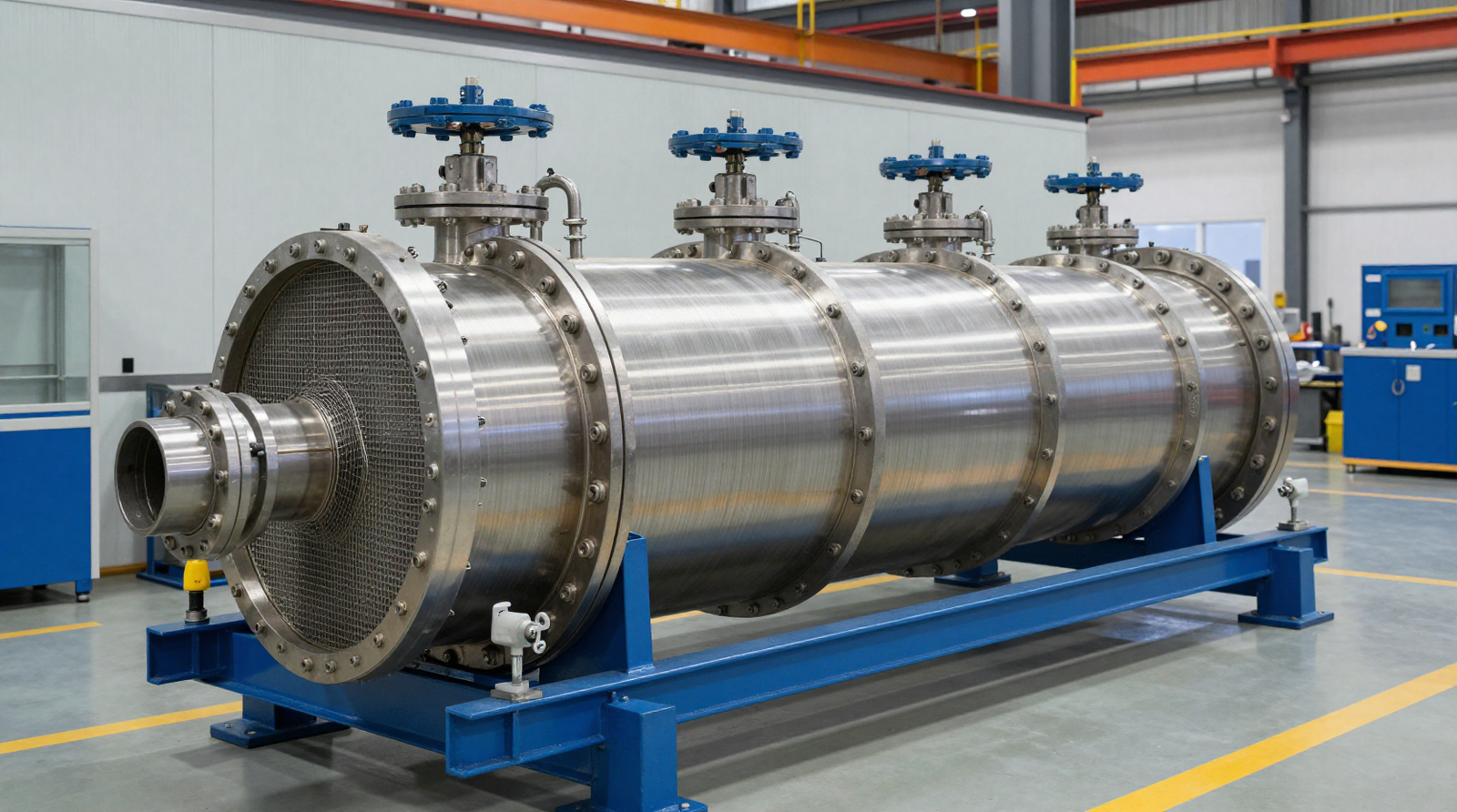
Heat exchanger maintenance often involves machining flange faces on the channel, shell, or bonnet to ensure leak-free reassembly. Portable flange facing machines can be mounted directly on the exchanger flange to resurface the gasket seating area without removing the exchanger from its location.
For raised face (RF) and flat face (FF) flanges, portable orbital flange facing machines can achieve the required surface finish (typically 125-250 µin Ra) with proper spiral serration pattern. RTJ (Ring Type Joint) flanges require specialized grooving attachments.
Non-Destructive Testing Equipment
NDT is a critical part of heat exchanger maintenance, used to identify tube degradation, weld integrity, and plate thickness:
- Eddy current testing (ECT): Probes pulled through tubes to detect cracks, pitting, and wall loss. Ideal for non-ferromagnetic tubing (stainless steel, copper alloys, titanium).
- Internal rotary inspection system (IRIS): Ultrasonic technique for ferromagnetic tubing (carbon steel) that provides precise wall thickness measurements around the full tube circumference.
- Pulsed eddy current (PEC): For detecting erosion and corrosion on the shell side without removing insulation — useful for in-service screening of heat exchanger shells.
- Dye penetrant testing (DPT) and magnetic particle testing (MPT): For surface inspection of welds, tubesheets, and flange faces during turnarounds.
Sourcing Heat Exchanger Maintenance Equipment in Indonesia
For facilities across Indonesia — from Sumatra to Papua — sourcing the right heat exchanger maintenance equipment involves several considerations:
Rental vs. Purchase
Most heat exchanger maintenance equipment is project-specific and used infrequently, making rental the preferred option for many Indonesian facilities. Key rental equipment includes hydrotest pumps, high-pressure water jetting units, flange facing machines, and NDT instruments. Purchasing makes sense for frequently used items like basic NDT kits, tube plugs, and gasket removal tools.
Technical Support and Training
Operating specialized equipment like IRIS scanners, hydraulic bolt tensioners, and explosive plugs requires trained technicians. When renting, confirm that the rental company provides operator training or can supply qualified operators. Many international equipment manufacturers have authorized service partners in Indonesia who can provide both equipment and trained personnel.
Compliance and Certification
Equipment used in pressure boundary work must be properly calibrated and certified. Ensure that hydrotest pumps have valid calibration certificates, NDT instruments are calibrated to recognized standards, and pressure recorders are traceable. For exchangers under jurisdiction of Direktorat Jenderal Minyak dan Gas Bumi (Migas) or other regulatory bodies, documented evidence of equipment calibration is mandatory.
Frequently Asked Questions About Heat Exchanger Maintenance Equipment Indonesia
How often should heat exchangers be maintained?
Typically, heat exchangers in oil and gas service are opened and inspected every 2-5 years, depending on service severity, fouling tendency, and regulatory requirements. Cooling water exchangers may need annual cleaning. Always follow the manufacturer’s recommendations and your facility’s mechanical integrity program.
Can plate heat exchanger gaskets be reused?
No. Gaskets should always be replaced when the plate pack is opened. Reusing gaskets risks leaks and can damage plate surfaces. Always order replacement gaskets in the correct material (NBR, EPDM, Viton) before opening the exchanger.
What pressure is used for heat exchanger hydrotesting?
Hydrotest pressure is typically 1.3-1.5 times the design pressure, as specified by the applicable code (ASME VIII, API 660, or TEMA). The test pressure, hold time, and acceptance criteria should be specified in the exchanger’s data sheet and maintenance procedure.
Can tubes be repaired instead of plugged?
In some cases, tubes can be weld-repaired at the tube-to-tubesheet joint using orbital TIG welding. However, this is typically only feasible for larger-diameter tubes and requires specialized equipment and qualified welders. Plugging remains the most common and reliable method for isolating failed tubes.
For professional heat exchanger maintenance equipment rental and services in Indonesia, contact our team to discuss your turnaround requirements. We provide a full range of maintenance equipment, NDT instruments, and technical support for plate and shell tube exchangers across the archipelago. Learn more about our industrial equipment capabilities and offshore services.