An emergency leak online repair solution Indonesia is a live leak repair service that stops an active leak on a pressurised system — pipeline, flange, valve, vessel or heat exchanger — without shutting the plant down, and that can be mobilised to sites anywhere across the archipelago. The defining technical feature is containment under operating pressure; the defining commercial feature is the logistics of reaching remote assets fast.
This guide is written for operations managers, maintenance superintendents, procurement leads and HSE teams operating in Java, Sumatra, Kalimantan, Sulawesi and Papua. It covers how the method works, how national mobilisation is actually planned, the regulatory split between upstream and downstream, what drives response time, and how to structure a contract that performs when a remote line starts leaking at midnight.
What Makes an Online Repair Solution Different?
A conventional repair assumes the system can be taken out of service. An online repair solution assumes it cannot, or that doing so is commercially indefensible. The crew therefore builds containment around the failure point: a clamp, enclosure or injection fitting is installed over the defect and a sealing compound is injected until the leak is arrested while fluid continues to flow at full pressure and temperature.
On a national scale, a genuine “solution” has three parts, and vendors who only deliver the first are incomplete:
- The engineered intervention — enclosure design, sealant selection, injection pressure control and verification on site.
- The mobilisation system — pre-positioned equipment and consumables, crew rotation, transport arrangements and access authorisations covering multiple islands.
- The governance layer — permit-to-work integration, job safety analysis, management of change, post-job documentation and a plan for permanent repair.
An operator who buys only the intervention will eventually meet a leak the contractor cannot reach in time. That is the difference between a service and a solution.
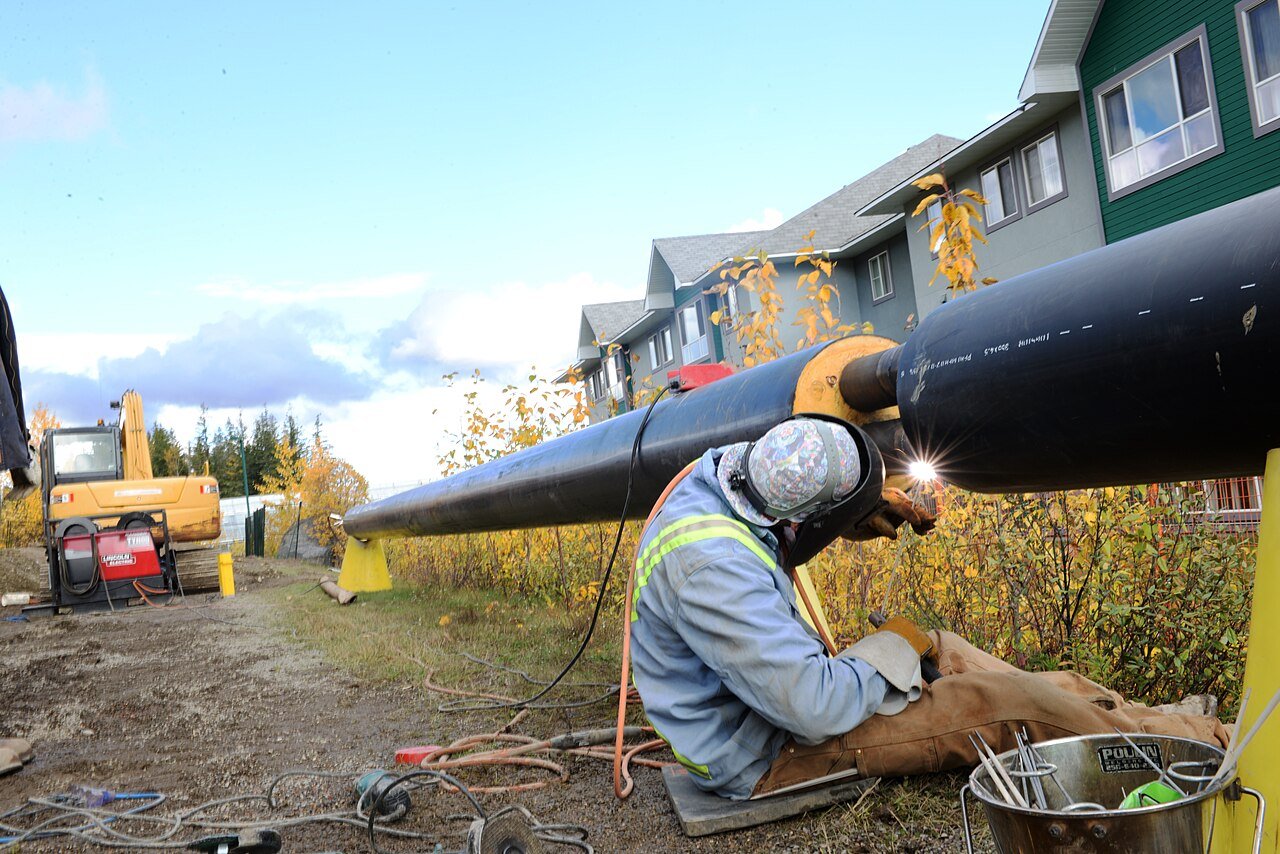
Field fabrication and welding capability on site is often the difference between sealing a leak and waiting two days for a fabricated part to arrive.
How Live Leak Sealing Works — The Technical Basis
Four mechanisms cover the large majority of work in Indonesia:
| Method | Applied to | Governing reference |
|---|---|---|
| Injection into flange annulus | Leaking bolted joints, heat exchanger flanges, valve bonnets | ASME PCC-2, ASME B31.3 |
| Mechanical clamp with injected sealant | Pinholes, pits, short cracks, localised wall loss | ASME PCC-2 |
| Fabricated box enclosure | Tees, elbows, branch connections, valve bodies, irregular geometry | ASME PCC-2, ASME B31.3 |
| Composite wrap | Extended wall thinning and external corrosion | ISO 24817, ASME PCC-2 |
Each method has an operating envelope. Pressure, temperature, fluid chemistry and the structural condition of the parent metal all constrain what is achievable. A credible contractor states those limits explicitly rather than promising to seal anything.
Two constraints are worth emphasising because they recur in Indonesian operations. Sour service, common in several Sumatran and East Kalimantan fields, requires material selection compatible with wet H2S — the material and corrosion engineering context belongs to AMPP and NACE practice. And high-temperature service, frequently encountered on steam headers in power and process plants, restricts the sealant families that will cure and hold. Both cases call for a written technical assessment before mobilisation, not during it.
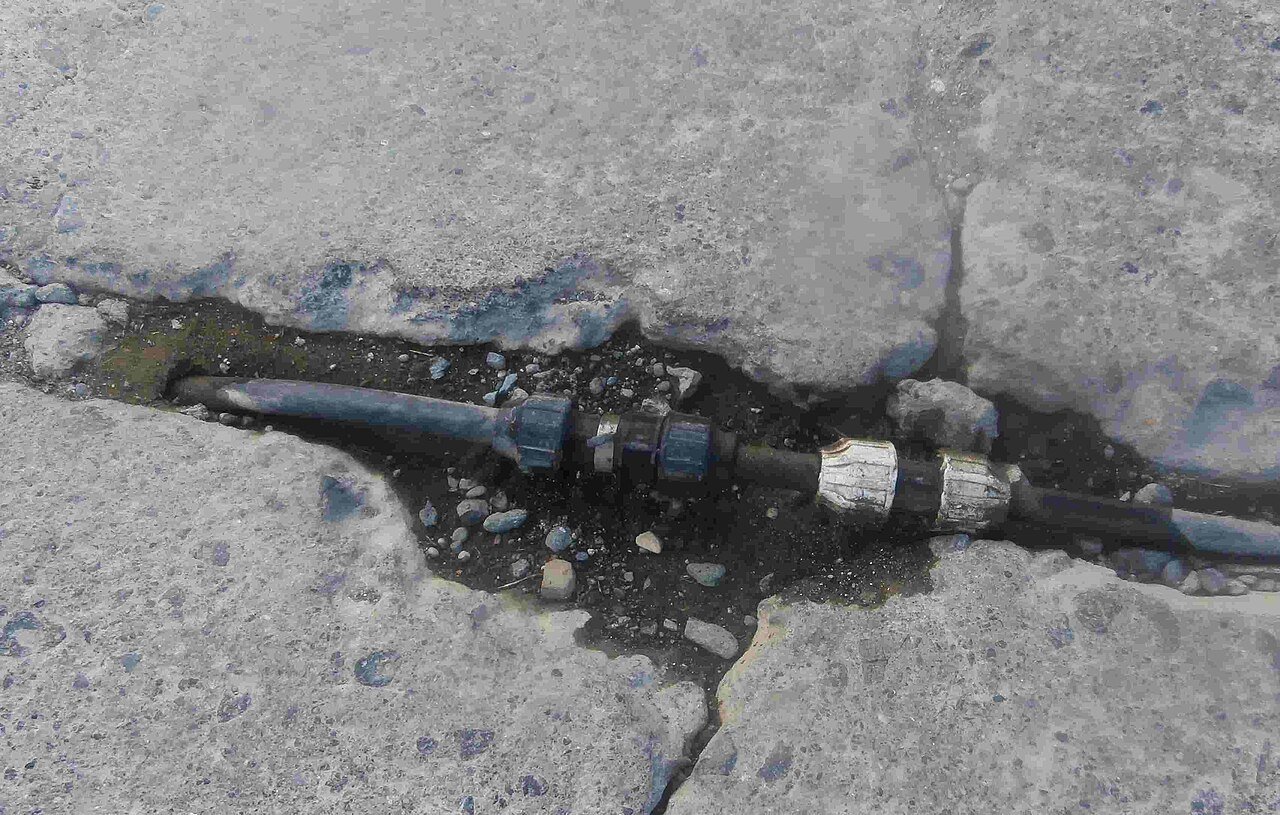
A contained repair section under operating pressure. The objective of a live seal is to restore the pressure boundary and buy time for a properly planned permanent repair.
National Mobilisation: What Actually Drives Response Time
Indonesia’s geography is the single largest determinant of emergency leak repair performance. A crew that can reach a Cikarang plant in ninety minutes may need more than a day to reach a site in Papua. Realistic planning must account for that.
| Region | Realistic mobilisation window | Principal constraint |
|---|---|---|
| Greater Jakarta and West Java | 2–6 hours | Traffic density; road freight scheduling |
| East Java and Madura | 8–18 hours | Road transit from Java stock points |
| South Sumatra and Riau | 12–30 hours | Commercial flight availability, then road transfer |
| East Kalimantan | 12–36 hours | Flight windows, permit-controlled site access |
| Sulawesi | 16–40 hours | Fewer direct connections, limited equipment handling |
| Papua and remote islands | 36–96+ hours | Flight and vessel windows, weather, weight limits, camps |
Those figures assume permits and inductions are already in place. Add a further day if the crew must obtain site authorisation, medical clearance or an aviation slot on arrival. The practical conclusion for operators of remote assets is uncomfortable but unavoidable: response time is set long before the emergency, by the logistics planning you did when nothing was leaking.
Pre-positioning is the only real solution for remote assets
Sites more than a day from a regional hub should hold a minimum sealing inventory on site: sealant in date-coded stock, a selection of universal clamps and injection fittings, high-pressure injection hose and fittings, torque tooling, and gas monitoring instruments. Sealing compounds have shelf lives, so the stock must be rotated, not warehoused and forgotten.
Equally important is the human side. A local maintenance team that has been trained to install and inject an enclosure, supported remotely by a specialist who can review photographs and parameters, will contain a leak far sooner than a team waiting for a flight. Remote technical support is inexpensive compared with a week of deferred production. See the online leak sealing services Indonesia overview for how this support model is structured in practice.
Regulatory Context: Upstream and Downstream
Indonesia splits oil and gas oversight between two authorities, and the applicable regime affects how repairs are documented.
- Upstream — activities under cooperation contracts are supervised by SKK Migas as the special task force for upstream oil and gas, working with KESDM as the ministry.
- Downstream — processing, transport, storage and distribution are supervised by Ditjen Migas, including technical inspection regimes for installations.
- Environmental compliance — any release with environmental consequence falls under the Ministry of Environment, KLHK, and requires reporting.
- National standards — technical materials, test methods and inspection practice frequently reference ASTM standards alongside international codes.
In practice, this means a live leak repair on a regulated asset needs a defensible documentation trail: job safety analysis, method statement, agreement on maximum injection pressure, record of parameters before and after sealing, and photographic evidence. Operators who maintain this discipline find audits straightforward; those who do not spend months reconstructing what happened.
When Online Repair Is the Wrong Choice
Professional contractors turn work away. Situations where a live repair should not be attempted include:
- Active crack propagation. An enclosure cannot contain a defect that is growing while you work on it.
- Large through-wall openings. Beyond a certain defect size the geometry cannot be bridged safely.
- Loss of structural capability. If the surrounding wall cannot carry the load, containing the leak does not restore integrity.
- Parameters outside the envelope. Pressure or temperature beyond validated limits for the enclosure and sealant.
- Unmanageable ignition risk. A release that cannot be made defensible cannot be worked on live.
- No defined pressure boundary. Without knowing what is upstream, the crew cannot define a safe injection limit.
In these cases the correct decision is a controlled shutdown, executed with planning rather than forced by failure. Being told “no” by a competent contractor is a signal of competence, not a gap in capability.
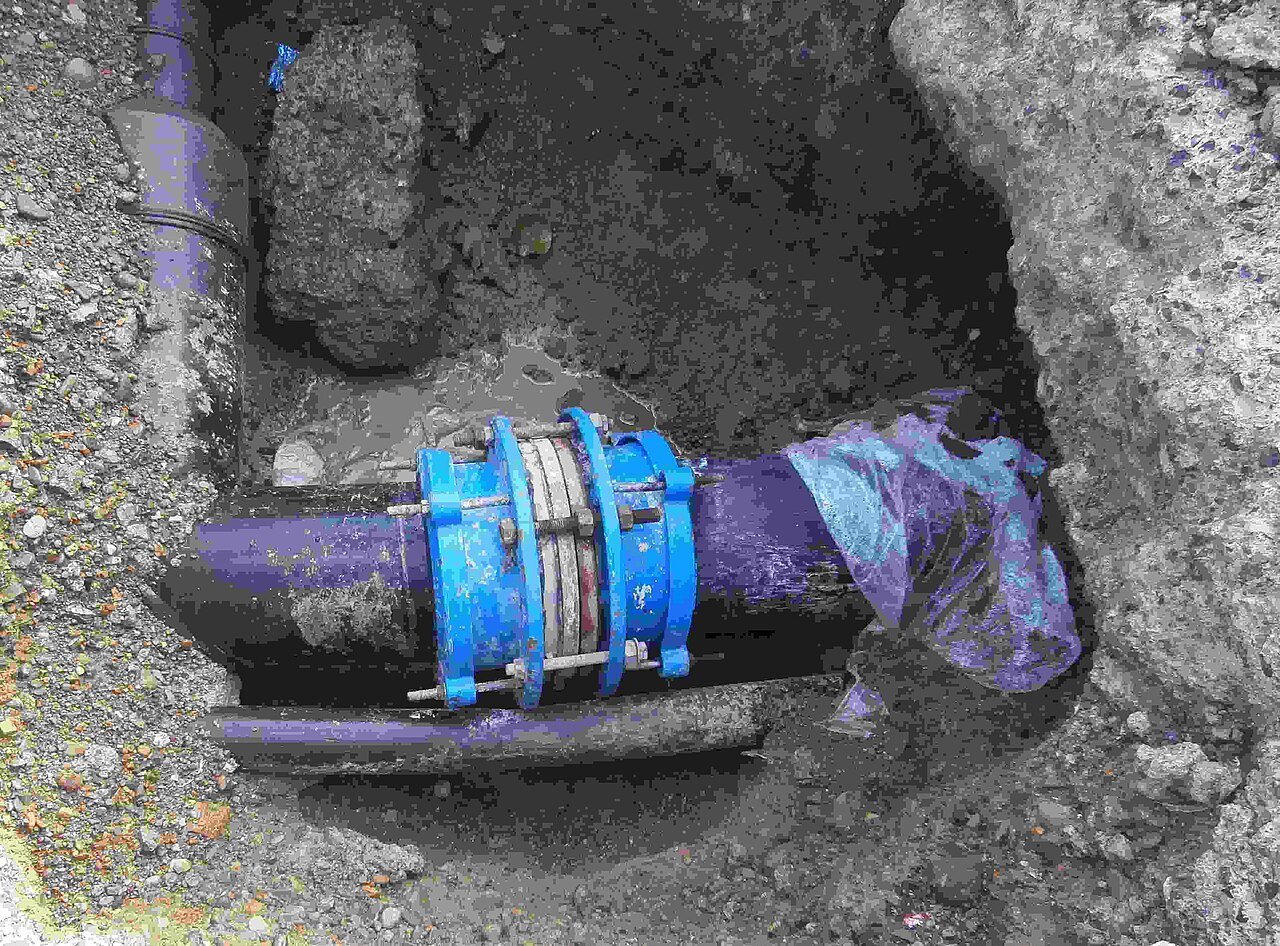
Where repair under pressure is not technically defensible, isolation and draining is the correct route — a competent contractor will say so.
Structuring a Contract That Performs Nationally
Emergency services fail at the contract stage more often than at the technical stage. Provisions that matter for a national coverage arrangement:
- Defined response tiers. Separate mobilisation commitments for hub-adjacent, regional and remote sites, expressed in hours, with a stated basis for when the clock starts.
- Stock obligations. Name the equipment and consumable stock the contractor must hold regionally and the locations of those stock points.
- Pre-qualification of personnel. Crew competency evidence, medical fitness verification and induction readiness submitted in advance, not on arrival.
- Remote support clause. Contractor obligation to provide technical support by voice and image where physical mobilisation is measured in days.
- Documentation deliverables. Job safety analysis, method statement, injection pressure agreement, post-job report and photographic record listed as contractual outputs.
- Assessment of feasibility. A named technical authority responsible for a documented go or no-go decision.
Procurement teams writing tenders for this scope can work through the contact our response desk framework, which sets out evaluation criteria and sample clauses.
Key Takeaways
- An online repair solution combines three elements: engineered containment, a mobilisation system and a governance layer.
- Method selection depends on defect type — flange injection, clamp, box enclosure or composite wrap.
- Regional mobilisation ranges from hours in Java to several days in Papua; permits and inductions add time on top.
- For assets more than a day from a regional hub, pre-positioned stock plus remotely supported local crews is the only workable model.
- Upstream oversight sits with SKK Migas, downstream with Ditjen Migas; environmental reporting with KLHK.
- A contractor who declines work outside the method envelope is giving you a genuine technical assessment.
- Response performance is determined by the contract, not by the emergency.
Cost and Downtime Arithmetic
For remote assets the arithmetic is often starker than for urban plants. A shutdown at a site supplied by air or vessel incurs the direct production loss plus the cost of mobilising restart support, the risk of equipment damage during restart, and the schedule consequences for every other activity queued behind it.
Against that, a live repair involves the service cost, the mobilisation cost and the cost of the permanent repair you still owe. Even with expensive logistics, the comparison frequently favours containment. The detailed trade-off framework is set out in the emergency leak repair cost and downtime reduction analysis, and the capital-outlay question in the emergency leak online sealing cost guide.
Working With Sipinus Nationally
Sipinus provides live leak sealing and related industrial services for operators across Indonesia, combining on-site execution with technical support for remote locations. Where a leak is active, the fastest useful step is a structured triage: report the fluid and its hazard class, operating pressure, operating temperature, pipe or valve size, joint type, leak description and site access constraints.
Part of a leak at a remote site, share the photographs and the parameters before someone attempts a temporary measure that makes the situation worse. Reach the duty team on WhatsApp 082199001706 or at info@sipinus.co.id. For a summary of related capability, see our services page and the contact details for your region.
FAQ: Emergency Leak Online Repair Solution Indonesia
Can you mobilise to remote sites outside Java?
Yes, with honest timing. Sulawesi, Sumatra, Kalimantan and Papua are all serviceable, but mobilisation is measured in days rather than hours for the most remote locations, driven by commercial flight schedules, vessel windows, weather and site access authorisation. We will state the realistic window up front so you can decide between waiting and planning a controlled shutdown.
What is needed before a crew can start work?
A job safety analysis, an agreed method statement, a defined pressure boundary, a maximum allowable injection pressure signed off by the responsible process engineer, and a valid permit to work. Gas monitoring and fire watch arrangements must be in place for hydrocarbon and H2S service. Without these, a competent crew will not begin.
How is the maximum injection pressure decided?
It is the lower of the enclosure’s validated limit and a value derived from the parent pipe wall condition and the fluid pressure, agreed with the operator’s process authority. It is documented before injection starts. Exceeding it risks deforming the pipe or causing sealant extrusion past the enclosure.
Do you supply the sealant and clamps, or do we?
For most engagements the contractor supplies enclosures, injection equipment and sealants, with the selection justified against fluid chemistry and temperature. Remote sites benefit from holding their own minimum stock of universal clamps and in-date sealant, supported by remotely guided installation. Both models can be combined in a single service agreement.
What documentation do we receive after the repair?
Standard deliverables are the job safety analysis, method statement, injection pressure agreement, a post-job report recording parameters before and after sealing, and photographic evidence of the installed repair. These records support management-of-change reviews, regulator audits and the eventual permanent repair scope.
Leak still running and the plant is on limited time? Our response desk is staffed around the clock. Message the emergency team on WhatsApp or send a site brief with the line ID, medium, operating pressure and temperature, and we will confirm scope before mobilisation.
Conclusion
Indonesia’s geography makes live leak repair a logistics problem as much as an engineering one. The technical methods are mature and codified, but their value in Sumatra, Kalimantan, Sulawesi or Papua depends entirely on whether equipment, crews and authority can be brought to bear before a leak escalates into a shutdown.
The operators who handle leaks well share three habits: they know which assets cannot be isolated, they have pre-positioned some capability near those assets, and they hold a service agreement that specifies mobilisation in hours rather than intentions. Build those three things before the next leak, and the emergency becomes an inconvenience rather than a crisis.