Permit to work for live leak repair is the system that decides whether a crew is allowed to open a pressurised line at all. It is not paperwork that surrounds the technical work — on a live leak repair, the permit, the job safety analysis and the gas test are what convert an unsafe improvisation into a controlled intervention. Most serious leak sealing incidents trace back to a permit that was generic, a JSA that did not describe the actual job, or a gas test taken in the wrong place.
This guide is for plant HSE teams, operations supervisors and contractor managers who have to issue, accept or work under a permit for live leak repair. It covers how the permit regime applies to this specific job, what a JSA for a live leak repair should actually contain, how gas testing is done and where it goes wrong, when management of change is triggered, and the division of authority between the plant and the contractor.
Why Live Leak Repair Sits Outside Normal Permit Practice
Most permit systems were written for two categories of work: cold work on de-energised equipment, and hot work on equipment that has been prepared for it. Live leak repair is neither. The equipment is in service, at pressure and temperature, containing the process fluid, and the work requires people to be close to it.
That produces a specific gap. A generic cold work permit does not cover a pressurised containment intervention. A hot work permit assumes the area has been made safe for ignition sources, which is not the same question. The correct approach is a permit issued for the specific job, with a JSA that describes the actual leak, the actual method and the actual failure scenarios.
The practical test: if the permit could be issued for a different job without changing a word, it is not specific enough for live leak repair.
Which Permit Type Applies
| Situation | Permit type | Additional requirements |
|---|---|---|
| Cold work on a leak-free, isolated line | Standard cold work permit | Isolation confirmation and gas test |
| Live repair on a non-flammable, non-toxic service (water, air, steam) | Cold work permit with a live-line supplement, or the site’s own “work on live equipment” permit | JSA specific to the live intervention, pressure and temperature limits, stop criteria |
| Live repair on a flammable or toxic service | Site-specific permit, often requiring process and HSE sign-off | Gas testing, ignition source control, emergency response on standby, exclusion zone |
| Any welding, grinding or spark-producing activity | Hot work permit | Gas test at the work point, fire watch, and confirmation that the live repair method does not require spark generation |
| Confined space entry (tank, vessel, duct, sump) | Confined space entry permit | Continuous gas monitoring, rescue plan, attendant outside |
| Work that changes the pressure boundary permanently | Permit plus management of change | Engineering approval of the permanent repair, update to drawings and the asset register |
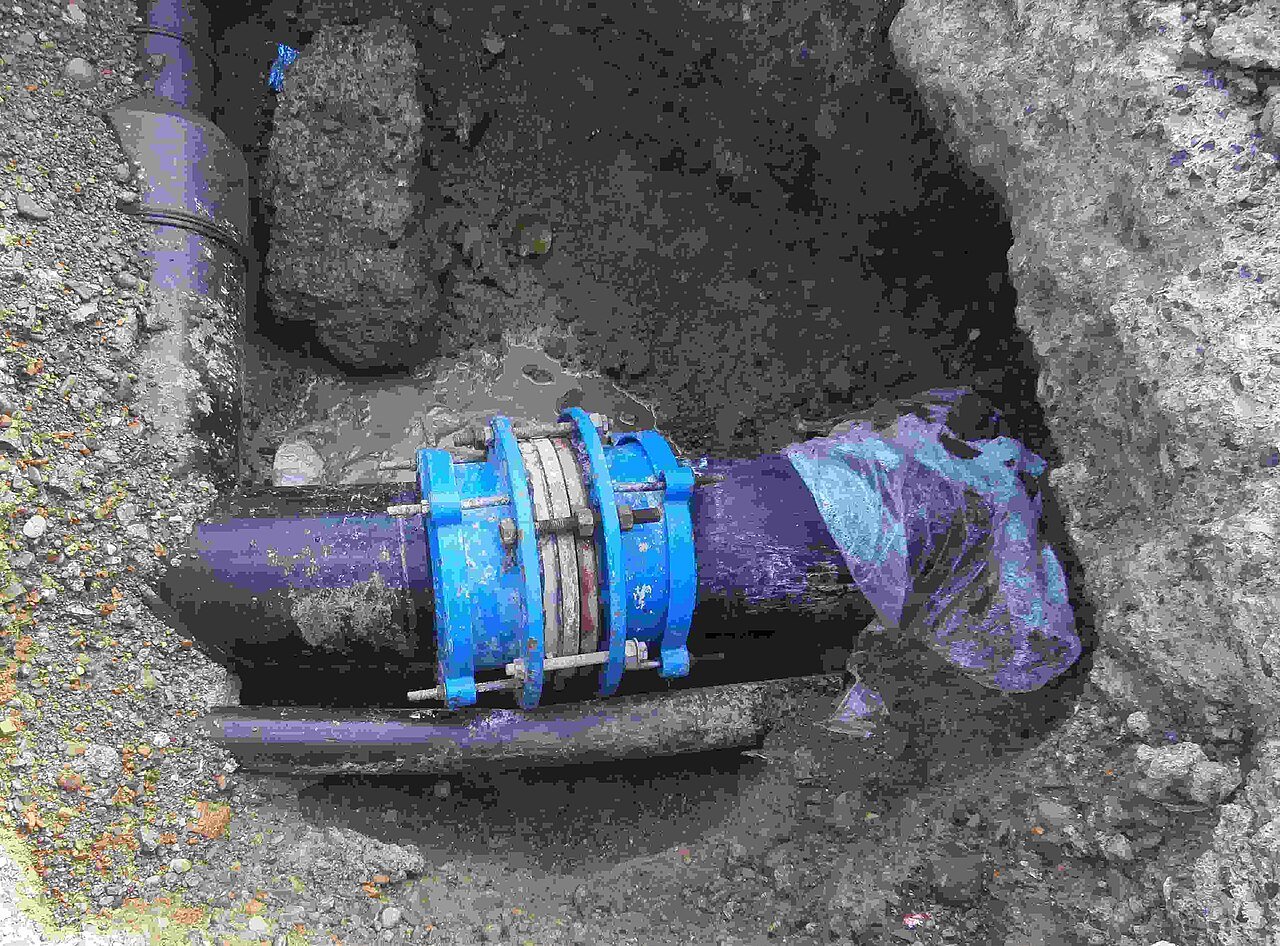
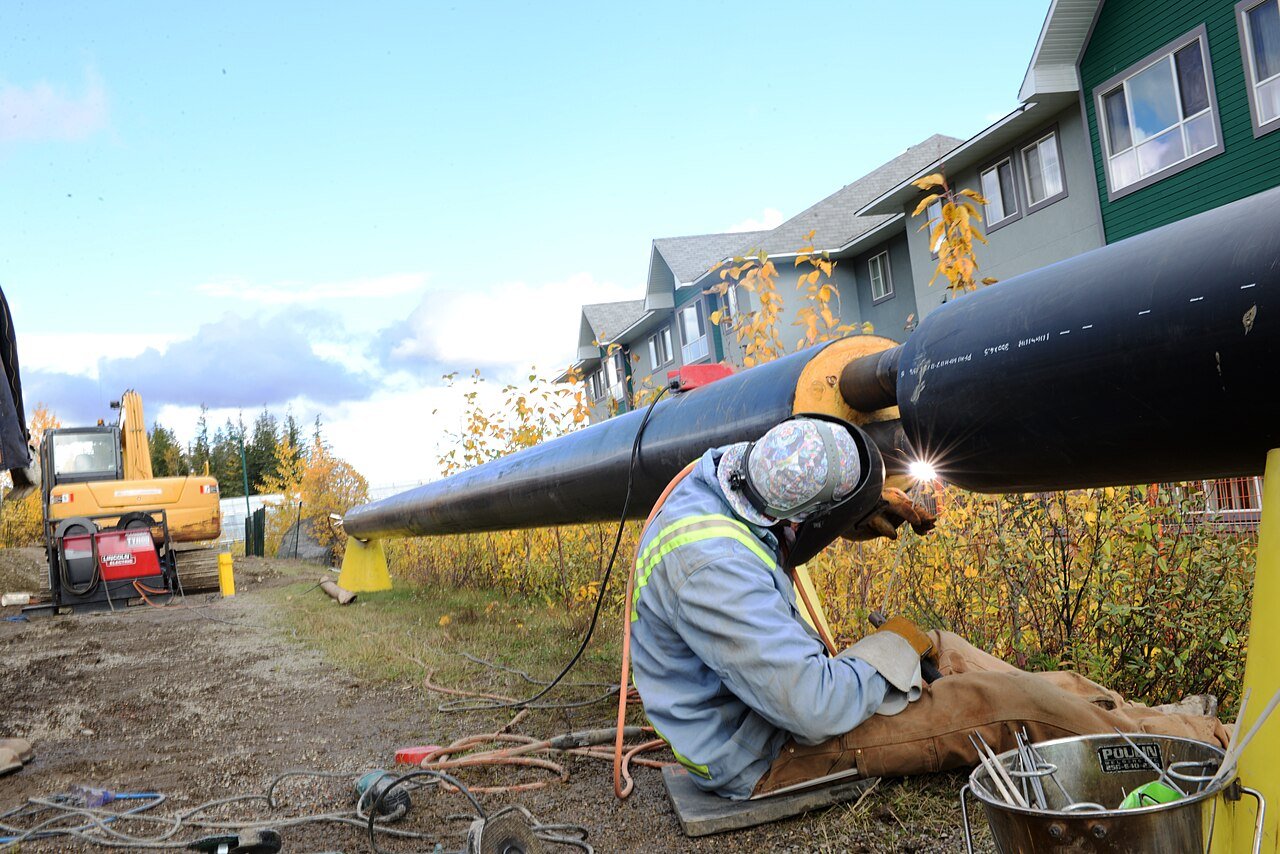
A live pipe repair completed and verified on a pressurised line.
What a JSA for Live Leak Repair Must Contain
A job safety analysis for this work fails when it lists generic hazards. “Pressurised system” and “hot surface” are not a JSA. The analysis has to describe this leak, on this line, with this method.
- Identification of the line and the fluid. Line number, service, pressure, temperature, fluid composition including trace components — hydrogen sulphide, ammonia, chloride, hydrogen.
- Characterisation of the leak. Location, orientation, estimated rate, whether it is steady or cycling, and what it does when the line condition changes. A leak that increases when a neighbouring valve moves is a different job.
- The method, step by step. Enclosure type, injection sequence, pressures, number of crew at the point, and the position of each person relative to the jet direction.
- Failure scenarios and responses. What happens if the leak grows during fit-up, if a bolt fails, if the sealant does not set, if the wind changes direction. Each needs a defined response and an escape route.
- Stop criteria. Explicit conditions under which work stops — a gas reading, a leak rate, a pressure change, a weather condition, a change in the isolation status. Stop criteria agreed before work starts are what prevent escalation by momentum.
- Isolation as a fallback. The isolation that will be used if the repair cannot be completed, confirmed as available and functional before work starts.
- Emergency response interface. Who calls the plant emergency team, at what trigger, and what the crew does while waiting.
- Monitoring plan after the work. How long the repair is monitored and by whom, and what reading triggers a re-attendance.
Gas Testing: Where It Goes Wrong
Gas testing is the control most often performed correctly in form and incorrectly in substance. The common failures are consistent.
- Testing the wrong place. A reading taken at head height in a well-ventilated area says nothing about the atmosphere at the leak point, in the pit below the flange, or inside the enclosure once it is fitted. Test at the work point and at the low point.
- Testing once. A single reading before work is a snapshot. Conditions change when the wind shifts, when a nearby valve moves, or when the enclosure traps vapour. Continuous monitoring with alarm is the standard for confined or congested areas.
- Uncalibrated or unbumped instruments. A detector that has not been bump tested on the day is an unproven instrument. Sensor poisoning is common in plants with sulphur compounds, and a poisoned catalytic sensor reads zero when it should not.
- Wrong target gas. A flammable gas detector calibrated for methane responds differently to hydrogen. A detector for hydrocarbons does not measure hydrogen sulphide. The instrument must match the hazard.
- Ignoring oxygen. In confined spaces, oxygen deficiency is as dangerous as gas presence, and inerting or displacement can create it without any flammable reading.
Ignition Sources on a Live Repair
Live leak repair is normally planned as spark-free work, which is one of its advantages over welding. But spark-free is a claim that has to be engineered, not assumed.
| Source | Control | Common failure |
|---|---|---|
| Battery-powered tools | Certified for the hazardous area classification, or excluded | Standard cordless tools brought into a Zone 1 area |
| Lighting | Certified luminaires, positioned outside the zone where possible | Extension leads and non-certified floodlights |
| Static discharge | Bonding and grounding of equipment, conductive footwear, humidity awareness | Pouring or pumping sealant without bonding |
| Mobile phones and cameras | Certified devices or none | Photographing the leak with a standard phone inside the zone |
| Vehicles and generators | Kept outside the classified area, or fitted with spark arrestors | Generator placed “just outside” the marked boundary |
| Hot surfaces | Excluded equipment kept away from the leak plume | Exhaust of a pump or compressor near a gas release |
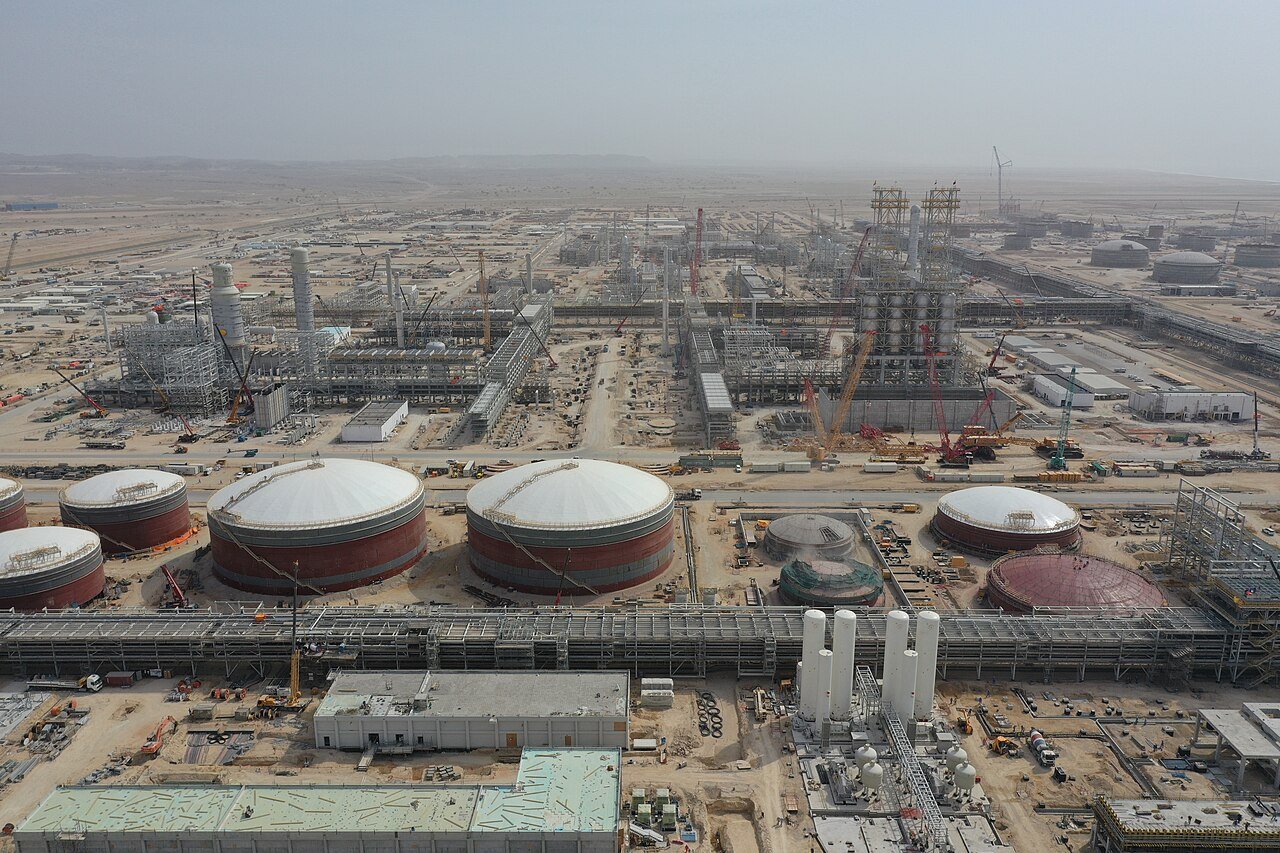
Heavy process plant comparable in complexity to an integrated nickel site.
Hierarchy of Authority: Who Signs, Who Stops
Live leak repair needs an unambiguous authority structure, because the crew at the point sees things the permit issuer does not.
The plant issues the permit and owns the process risk. Operations confirm the isolation, the line identification and the process condition. The plant’s engineering authority decides whether the repair method is acceptable on that equipment.
The contractor owns the method and its execution. The crew decides how the enclosure is fitted and injected, and is responsible for stopping the work when the conditions depart from the JSA.
Anyone can stop the job. This is not a slogan; it has to be written into the JSA. The person closest to the leak is often the first to notice a change in sound, temperature or spray pattern. A permit system that requires a supervisor’s approval to stop work is a permit system that will get somebody injured.
Only the plant can restart after a stop. Once work has stopped because of a gas reading or a change in the leak, the decision to resume belongs to the plant, not to the crew that wants to finish.
Management of Change: When a Repair Becomes Permanent
There is a quiet transition in leak repair work that triggers management of change, and it is frequently missed. A temporary seal installed to stop a leak until the next shutdown is maintenance. The same seal, left in place for years with no review date and no engineering assessment, has become a permanent modification to a pressure boundary.
The line is crossed when the repair is no longer tracked as temporary. The practical control is to record every seal with a review date in the asset register, and to require MOC when a seal passes its review without being replaced or formally re-approved. This is also an inspection requirement in most process safety regimes — a permanent repair needs a design basis, and an injected seal rarely has one.
Documentation a Competent Crew Leaves Behind
- The permit and JSA, signed, with the actual conditions recorded rather than the planned ones.
- Gas test records with instrument identification and calibration status.
- Material certificates for the enclosure, sealant and bolting.
- The repair record: location, method, injection pressures and quantities, verification result.
- A monitoring log covering the observation period.
- A recommendation: replace at next opportunity, monitor, or permanently acceptable with engineering review.
That package is what allows the plant’s inspection function to close the item, and it is what distinguishes a contractor who understands process safety from one who understands only sealant. The same discipline runs through the online leak sealing methods used across the industry, and it is the reason a live repair programme reduces risk rather than accumulating it.
FAQ: Permit to Work for Live Leak Repair
Is live leak repair hot work or cold work?
Normally cold work, because the standard methods — clamping, enclosure fitting and sealant injection — do not generate sparks. But it is not “ordinary” cold work: it requires a live-equipment supplement or a site-specific permit, a JSA describing the actual intervention, gas testing at the work point, and ignition source control if the service is flammable.
Who signs the permit for a live leak repair?
The plant issues the permit, with operations confirming the line identification and isolation availability, and HSE or the plant’s authorised signatory accepting the JSA. The contractor’s supervisor signs to confirm the method and the crew’s competence. The plant’s engineering authority must also accept the repair method where it affects a pressure boundary.
How often should gas testing be repeated?
Before work starts at minimum, and continuously where the area is confined, congested or the service is toxic. A single pre-work reading is a snapshot that becomes invalid when wind, process conditions or the enclosure itself change the local atmosphere. Instruments must be bump tested on the day of use.
Can a technician stop the job without approval?
Yes, and the JSA must say so explicitly. The person nearest the leak is best placed to notice a change in sound, spray pattern or temperature. Requiring approval to stop work inverts the safety hierarchy and is a recognised weakness in permit systems.
When does a leak seal require management of change?
When it stops being tracked as temporary. A seal installed to reach the next shutdown is maintenance; a seal left in place indefinitely without review date, engineering assessment or design basis is an unauthorised permanent modification. Recording every seal with a review date, and triggering MOC when that date passes, is the practical control.
What should the JSA include that generic JSAs miss?
The specific leak characterisation, the position of each crew member relative to the jet direction, the failure scenarios during fit-up and injection, explicit stop criteria, the fallback isolation, and the post-repair monitoring plan. A JSA that could apply to any job on the plant is not a JSA for this one.
The Bottom Line
Live leak repair is one of the few maintenance activities where a permit can be the difference between a controlled intervention and an incident, because the crew works directly against a live pressure boundary with a fluid that is escaping. The regime that works is specific: a permit for this job, a JSA describing this leak, gas testing at the right point with a proven instrument, explicit stop criteria, and an authority structure where the person at the leak can stop the work.
For plants building a live repair capability, the permit discipline is also the cheapest quality filter available. A contractor who arrives with a site-specific JSA and asks the right questions about isolation, detection and stop criteria is demonstrating competence before touching the line. One who asks for “a permit, any permit” is telling you something about how the job will go.