In the oil, gas, and industrial sectors, pipe connections that leak, fail prematurely, or produce poor welds are almost always traceable to poor weld preparation. Getting the pipe end geometry exactly right — cut square, beveled to the correct angle, and finished to the specified surface quality — is the foundation of a high-integrity weld joint. This is why pipe cutting and beveling services Indonesia are a critical component of pipeline construction, plant maintenance, turnaround programs, and offshore operations across the country.
This guide covers everything you need to know about pipe cutting and beveling services in Indonesia: the types of cuts and bevels used, the equipment and methods employed, the standards that govern this work, and how to select the right service provider for your project.
Why Pipe Cutting and Beveling Quality Matters in Oil and Gas Indonesia
A welded pipe joint in a high-pressure oil and gas system carries significant responsibility. Process piping at Indonesian refineries, LNG facilities, and offshore platforms operates under combinations of high pressure, high temperature, corrosive media, and cyclic loading that test weld integrity continuously. A weld made on an improperly prepared bevel — wrong angle, poor surface finish, out-of-square cut — may pass visual inspection but harbor fusion defects that will ultimately cause a leak or failure.
Indonesia’s industrial safety record in the O&G sector makes this more than an academic concern. Leaks and failures at refinery piping joints can result in fires, explosions, and environmental incidents with severe consequences for operations, personnel, and regulatory compliance. Investing in quality pipe cutting and beveling services Indonesia is fundamentally a risk management decision.
Where Pipe Cutting and Beveling Services Are Used in Indonesia
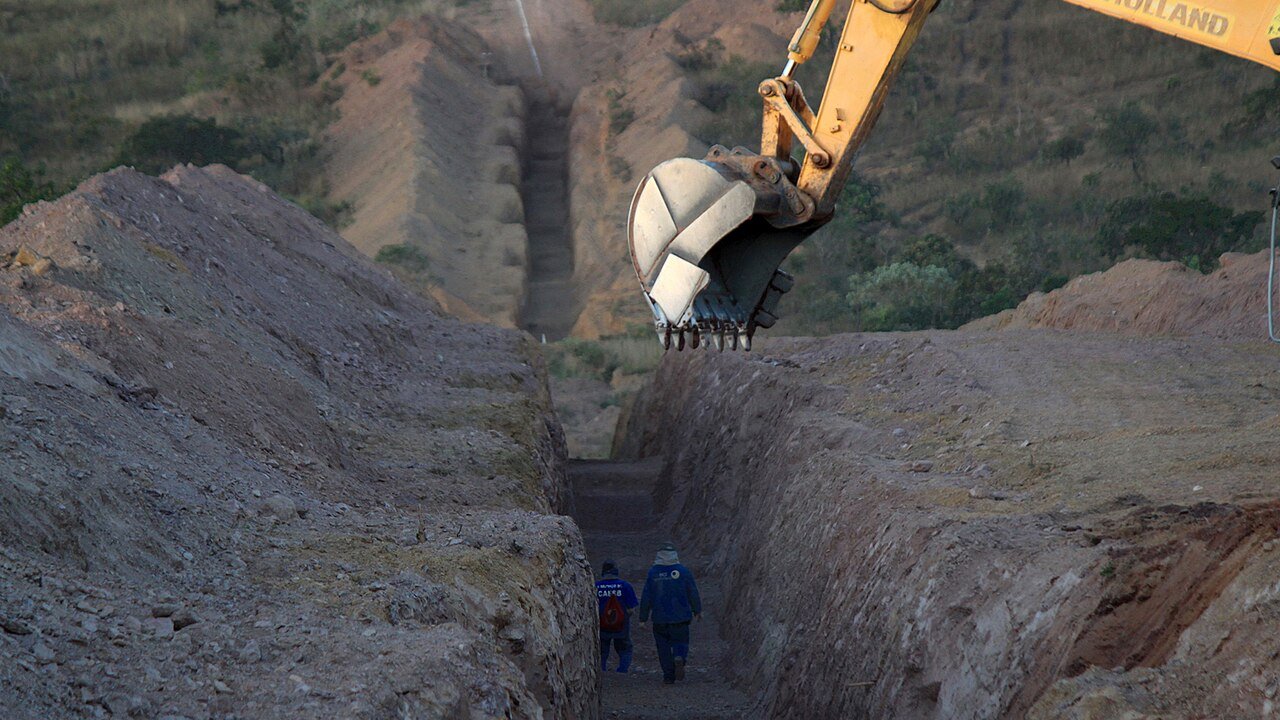
- Pipeline construction: New pipeline projects (gas distribution, crude oil, product pipelines) require precise bevel preparation on every joint weld.
- Plant turnarounds: Refinery and petrochemical plant shutdowns involve extensive pipe replacement and repair, all requiring proper cutting and beveling.
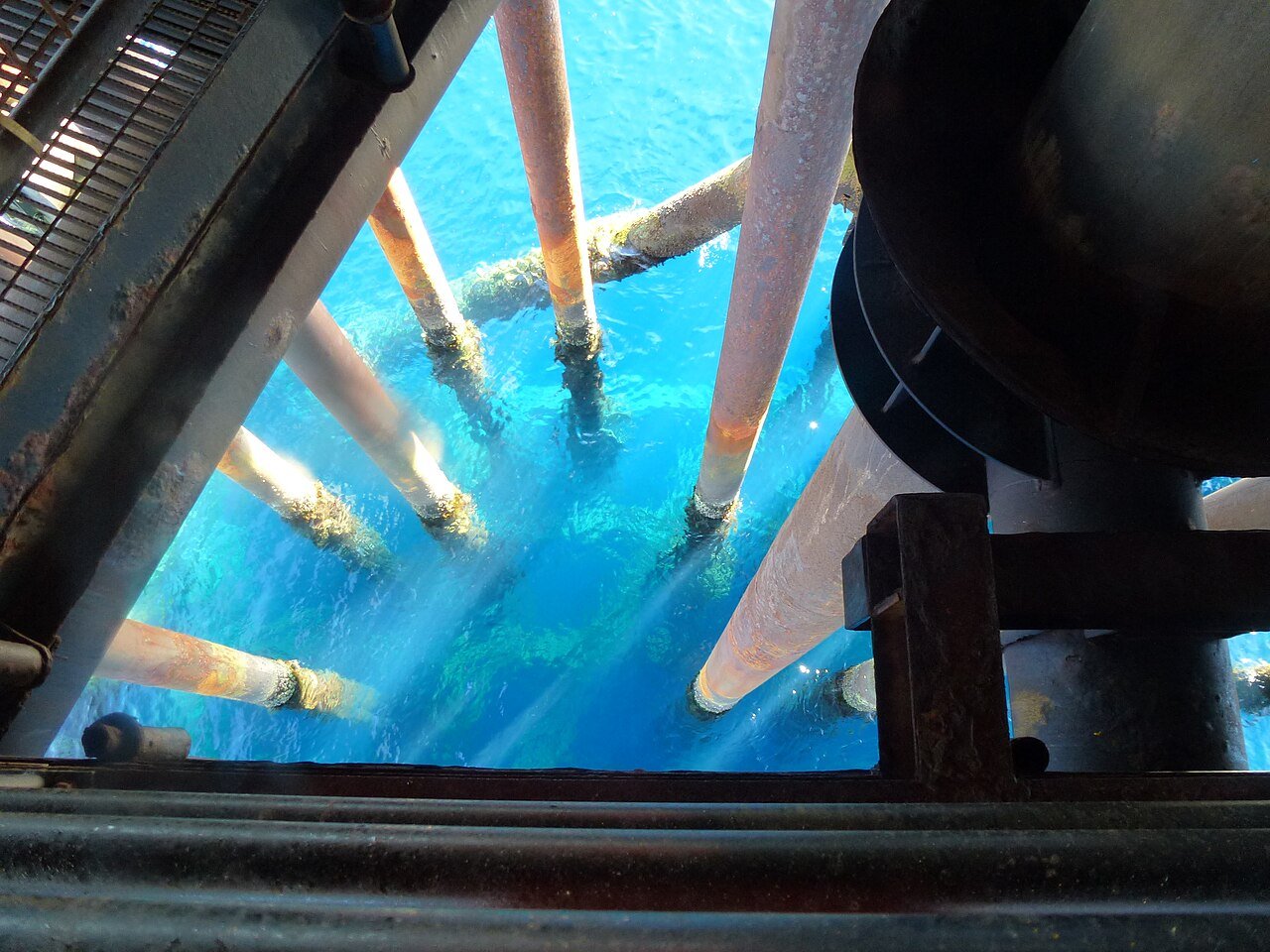
- Offshore platform maintenance: Process and utility piping on platforms requires ongoing repair and modification, often in restricted access environments.
- Offshore decommissioning: Cutting pipework and conductors during platform removal requires precise mechanical cuts. See our overview of diamond wire saw technology for offshore decommissioning in Indonesia.
- New project construction: Fabrication of new skids, modules, and piping systems at Indonesian fabrication yards (Batam, Karimun, Cilegon) relies on high-quality pipe cutting and beveling.
Types of Pipe Cuts and Bevels Used in Oil and Gas
The specific bevel geometry required for a weld joint is defined in the Welding Procedure Specification (WPS). Pipe cutting and beveling services Indonesia providers must be capable of producing all standard weld groove types:
Single V-Groove Bevel
The most common bevel type for butt welds in process piping. A single bevel angle (typically 30-37.5 degrees from vertical, producing a 60-75 degree included angle) is machined on one or both pipe ends. Standard for pipe wall thicknesses up to approximately 25mm in ASME B31.3 process piping applications.
Double V-Groove (X-Groove) Bevel
Used for thick-wall pipe where a single V-groove would require excessive weld metal volume. Both the outside and inside of the pipe end are beveled, producing an X-shaped groove profile when two pipe ends are brought together. Reduces weld volume, distortion, and residual stress compared to single V for heavy-wall applications.
J-Groove Bevel
The J-groove provides a narrow, deep weld groove with a radiused root that promotes full fusion with less weld metal than a V-groove. Required for high-toughness applications (subsea pipelines, sour service) where root defects must be minimized. Requires a more sophisticated cutting setup and tighter dimensional control.
Compound Bevel
Combines two bevel angles in a single cut — for example, a steep bevel near the root transitioning to a shallower bevel near the face. Used in specialized welding procedures for high-pressure, high-temperature piping systems.

Equipment Used for Pipe Cutting and Beveling Services in Indonesia
Pipe cutting and beveling services in Indonesia are performed using several types of equipment, selected based on pipe size, material, service environment, and required quality level:
Split-Frame Clamshell Lathes
The premier tool for high-quality in-situ pipe cutting and beveling. Clamshell lathes produce consistent, high-precision bevel geometry and surface finish across the full pipe circumference, using a mechanical single-point cutting tool. They are the preferred method for all high-integrity process piping applications in Indonesian refineries and offshore installations. Cold cutting with no heat input is especially important where the pipe material’s heat-affected zone properties must be preserved.
Orbital Cutting and Beveling Machines
Orbital machines also mount on the pipe OD and use a rotating cutting head, but in a more compact, lighter-weight package than a full clamshell lathe. They are useful for smaller-diameter piping (under 150mm OD) where a full split-frame lathe would be overengineered.
Plasma Arc Cutting
Plasma cutting can produce reasonably clean bevels on carbon steel pipe at high speed, and is widely used in fabrication shop environments. However, plasma-cut surfaces require grinding to remove the heat-affected zone before welding — an extra step that reduces the speed advantage in field applications. Not suitable for stainless steel bevel prep where contamination with the plasma gas could cause weld quality issues.
Cold Saw Systems
Cold circular saws produce a clean, square cut with a good surface finish suitable for weld preparation in many applications. They are faster than clamshell lathes for simple square cuts but cannot produce compound bevel geometries without additional tooling.
Industry Standards Governing Pipe Cutting and Beveling in Indonesia
All pipe cutting and beveling services Indonesia in the oil and gas sector must comply with the applicable code of construction for the piping system being worked on:
ASME B31.3 — Process Piping
The primary standard for process piping in Indonesian refineries, petrochemical plants, and LNG facilities. ASME B31.3 specifies bevel geometry requirements, surface finish standards (maximum Ra values for the weld preparation surface), permitted cutting methods, and inspection requirements for pipe end preparation.
API 1104 — Welding of Pipelines and Related Facilities
Governs pipeline construction welding in Indonesia’s oil and gas transmission system. API 1104 qualifies the welding procedures (WPS) that specify the required bevel geometry for each weld joint. Pipe cutting and beveling service providers must be capable of producing the bevel types called up in the applicable WPS.
ASME B31.4 and B31.8
Cover liquid hydrocarbon transmission (B31.4) and gas transmission and distribution piping (B31.8). Both standards reference API 1104 for welding and pipe preparation requirements.
For full access to the current editions of these standards, refer to the American Petroleum Institute (API) and ASME.

Pipe Cutting and Beveling in Offshore and Remote Indonesian Locations
One of the most challenging aspects of pipe cutting and beveling services Indonesia is working in offshore and remote locations. Platforms in the Java Sea, Makassar Strait, or offshore Papua present logistics, access, and safety challenges that onshore facilities do not:
- Equipment transport: Cutting and beveling equipment must be packed for offshore transport (helicopter or vessel), with weight and dimension constraints on lifts.
- Work area restrictions: Platforms have limited deck space and height restrictions that may require compact machine configurations.
- Hot work permit requirements: Thermal cutting methods are heavily restricted on live offshore platforms due to hydrocarbon risk. Cold cutting clamshell lathes are the preferred choice in offshore environments.
- Environmental conditions: High humidity, salt atmosphere, and tropical temperatures accelerate corrosion on cutting tool edges. Quality rental providers maintain their equipment with appropriate tropical storage and servicing protocols.
For combined cutting and on-site machining services to offshore facilities, see our comprehensive guide to on-site machining solutions for O&G facilities in Indonesia.
Get Expert Consultation
Our team provides pipe cutting and beveling services across Indonesia for oil, gas and industrial projects.
Frequently Asked Questions About Pipe Cutting and Beveling Services Indonesia
What is pipe cutting and beveling?
Pipe cutting severs pipe to a required length or angle. Pipe beveling machines the end to a specified weld groove angle. Together they prepare pipe ends for fusion welding per ASME B31.3, API 1104, and other applicable standards.
What bevel types are used in Indonesian O&G pipeline work?
Single V-groove, double V-groove, J-groove, compound bevel, and square cut — selected per the Welding Procedure Specification (WPS) for each joint and service condition.
What equipment is used for pipe cutting and beveling in Indonesia?
Split-frame clamshell lathes, orbital cutting machines, plasma arc systems, and cold saws — selected based on pipe size, material, location, and required quality level.
What standards govern this work in Indonesia’s oil and gas sector?
ASME B31.3 for process piping, API 1104 for transmission pipelines, ASME B31.4/B31.8 for liquid and gas lines, and SKK Migas PTK requirements for upstream facilities.
Can pipe cutting and beveling be performed offshore in Indonesia?
Yes. Portable clamshell lathes can be mobilized to offshore platforms and FPSOs. Cold cutting is preferred offshore due to hydrocarbon risk restrictions on hot cutting methods.